Videos

You are currently browsing the archive for the Videos category.

There are all sorts of entertainment for all sorts of occasions, but I’ll always like best the kind that upsets conventions and makes the audience want to tear down the stage. Do not please the people–the people are already far too pleased. Playwright Alfred Jarry angered ticket buyers in just such a fashion in 1896. An excerpt about the tumult from Karl Whitney at 3:AM Magazine:

“Arguably Jarry’s greatest literary creation, and certainly his best known, was the character of Père Ubu, the corpulent and vulgar ‘King of Poland’ who emerged, swearing forcefully, in Ubu Roi (performed onstage in 1896, but printed versions predate the theatrical performances). The first performances of the play caused a stir. Partly, this was because of the shock of the new – as Brotchie points out: ‘it was as though a modernist play from the middle of the next century had been dropped on the stage without all the intervening theatrical developments that might have acclimatized the audience to its conventions.’ On the other hand, many of Jarry’s friends in the avant-garde weren’t leaving anything to chance: they turned up with mischief in mind, and caused – or at least contributed to – an uproar in the theatre. At one point the poet Fernand Gregh shouted out his opinion: ‘It’s as beautiful as Shakespeare,; to which his own brother shot back from the balcony: ‘You’ve never even read Shakespeare, you imbecile!'”

•••••••••

“Bon jour, Père Ubu”:

Tags:

Beck interviewed by a robot voice as Mutations is released, 1998.

Tags:

Looking back to an odd incident from 1981, as “The Greatest” turns 70.

Tags: ,

How can you have stunning science fiction when science itself is so stunning? From “Superstuff: When Quantam Goes Big,” a Michael Brooks article at New Scientist:

“FOR centuries, con artists have convinced the masses that it is possible to defy gravity or walk through walls. Victorian audiences gasped at tricks of levitation involving crinolined ladies hovering over tables. Even before then, fraudsters and deluded inventors were proudly displaying perpetual-motion machines that could do impossible things, such as make liquids flow uphill without consuming energy. Today, magicians still make solid rings pass through each other and become interlinked – or so it appears. But these are all cheap tricks compared with what the real world has to offer.

Cool a piece of metal or a bucket of helium to near absolute zero and, in the right conditions, you will see the metal levitating above a magnet, liquid helium flowing up the walls of its container or solids passing through each other. ‘We love to observe these phenomena in the lab,’ says Ed Hinds of Imperial College, London.

This weirdness is not mere entertainment, though. From these strange phenomena we can tease out all of chemistry and biology, find deliverance from our energy crisis and perhaps even unveil the ultimate nature of the universe. Welcome to the world of superstuff.” (Thanks Browser.)

••••••••••

It’s only a trick, for now–1900:

Tags: ,

Clint Eastwood interviewed in 1974 in New Orleans for Canadian TV. Eastwood has, of course, usurped much of his own violent, macho image in late-career work, but he remains a staunch conservative politically, recently extolling the virtues of Herman Cain.

Tags:

Astronauts Grissom, White and Chaffee perished during the Space Race. From ABC News on January 27, 1967, the day after their accidental deaths.

See also:

Tags: , , ,

A couple of interesting bits from “Big, Bigger, Best,” Nick Summers’ new Daily Beast article about ESPN, that sports-programming behemoth.

••••••••••

“With revenue of $8.5 billion last year, ESPN has become the principal cash spigot of the Walt Disney Co., the network’s 80 percent parent. To the largest entertainment corporation on earth, the backwater of Bristol has become more important than Disney World and Disneyland combined.”

••••••••••

““ESPN, through … sheer muscle, has been able to say to us, ‘You will carry this service on the lowest level subscription you offer, and you will make all of them pay for it,’ says Matt Polka, CEO of the American Cable Association, a trade group. ‘My next-door neighbor is 74, a widow. She says to me, ‘Why do I have to get all that sports programming?’ She has no idea that in the course of a year, for just ESPN and ESPN2, she is sending a check to Disney for about $70. She would be apoplectic if she knew … Ultimately, there’s going to be a revolt over the cost. Or policymakers will get involved, because the costs of these things are so out of line with cost of living that someone’s going to put up a stop sign.'”

••••••••••

The first SportsCenter, 1979, hosted by Lee Leonard:

Tags: ,

The sometimes maddening and always provocative film critic Pauline Kael dishing on Cecil B. DeMille and others in 1982. She is still missed.

Tags: ,

RFK in Indiana, 1968: “I have some very sad news for all of you.”

Early MLK TV spot, 1957: “I think it’s better to be aggressive at this point.”

Tags: ,

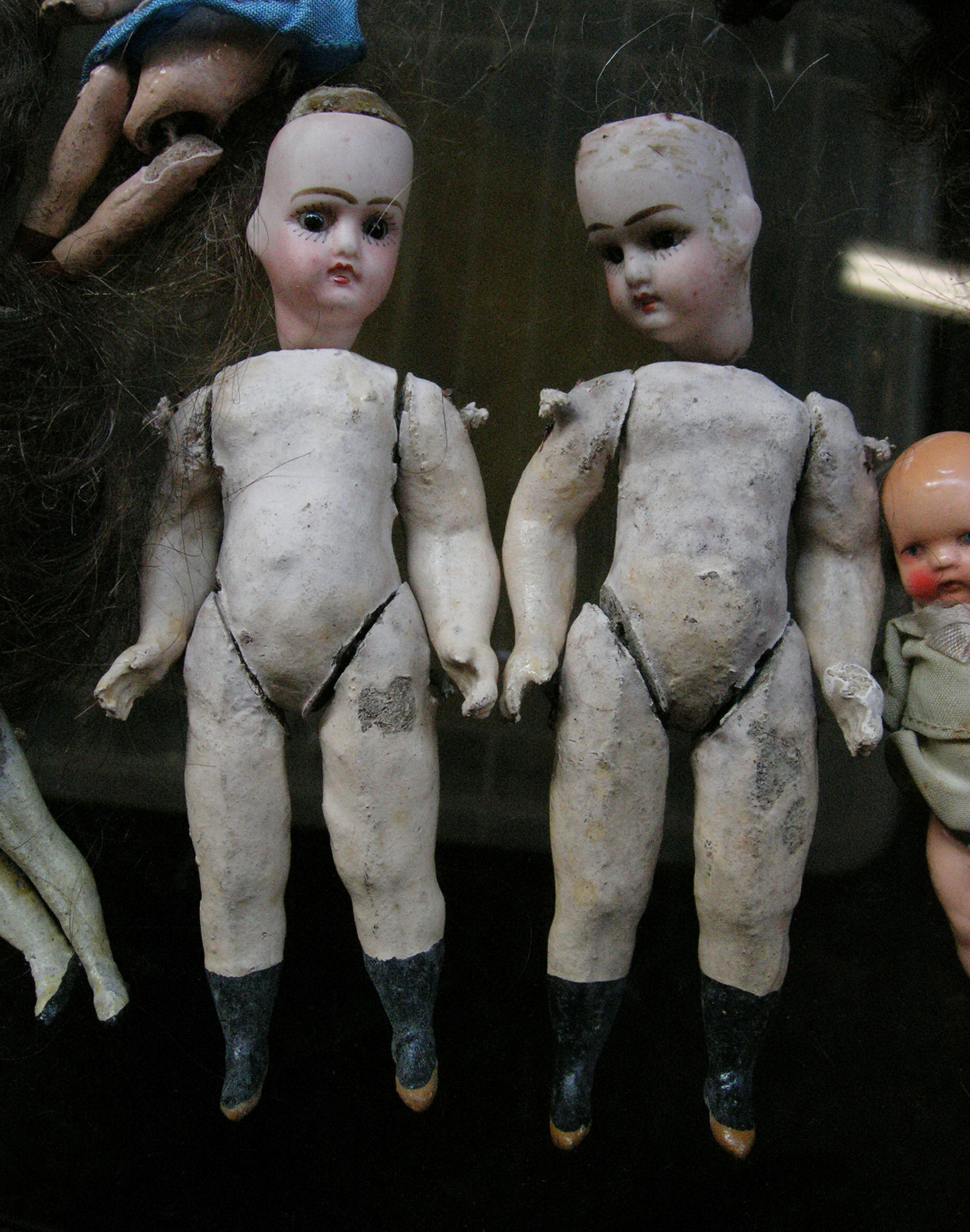
"Have animals had, in the past, a literature of their own?"

Eccentric composer Erik Satie published some odd humor pieces in Vanity Fair. They were more strange than funny. From “A Learned Lecture on Music and Animals,” which ran in 1922, three years before his death:

“Indeed we have no example either of painting or of sculpture made by an animal. Their taste does not lead them towards these two arts.

Architecture and Music, however, have attracted them–the rabbit constructs tunnels–both for himself and the beagle hound.

The bird builds a nest, a marvel of art and industry, wherein he himself may live with his family–

Even the cuckoo is a fairly good judge of architecture.

We would continue to cite similar examples indefinitely.

So much for architecture.

I know of no literary work written by an animal–and that is very sad.

Have animals had, in the past, a literature of their own?

It is quite possible. No doubt, it was destroyed by a fire–a very, very large fire.”

••••••••••••

“Gymnopédie No.1,” which was the end music for My Dinner With Andre:

Tags:

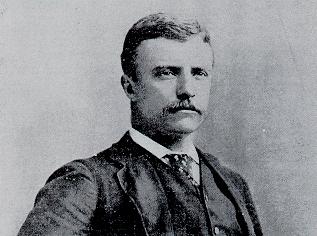
Theodore Roosevelt, NYC Police Commissioner, 1895.

File this one under unintended consequences. Theodore Roosevelt attempted to reduce drunkenness in 1890s New York City while he was police commissioner and instead encouraged vice of all kinds. From “How Dry We Aren’t,” Richard Zacks’ new Opinion piece in the New York Times:

During the November elections in 1895, corrupt Tammany Democrats won in a landslide by campaigning against Rooseveltism and dry Sundays. Undaunted, Roosevelt lobbied the Republican-dominated legislature to pass even tougher excise laws. On April 1, 1896, the Raines Law went into effect, expanding the Sunday shut-down hours from midnight Saturday to 5 a.m. Monday, banning “free lunch” counters, and requiring that saloon doors be kept locked and blinds raised to let police peer inside. The law also exempted hotels with 10 rooms, which could serve guests liquor with a meal 24 hours a day, seven days a week.

In a New York minute (actually the next few months), more than 1,000 saloons added 10 dinky rooms. Tammany building inspectors didn’t care if some had four-foot-high ceilings or were in former coal bins. “Ten beers and one hard-boiled egg scarcely constitute a meal,” complained Roosevelt, but local judges disagreed, allowing most anything to pass for food. The playwright Eugene O’Neill once described on a saloon table “an old desiccated ruin of dust-laden bread and mummified ham or cheese which only the drunkest yokel from the sticks” would ever dream of eating.

New York — already awash in illegal casinos and brothels — was transformed into the city that never sleeps. These Raines Law saloon-hotels could serve round the clock. Even the Metropolitan Opera added 10 bedrooms to be able to offer late-night wine. And those saloon bedrooms, located a drunken stagger from the bar, provided a haven for prostitutes and a temptation to couples who’d had a few too many drinks. Adding 10,000 cheap beds was bound to loosen the city’s morals.

Roosevelt’s liquor crackdown backfired; so did the Raines Law. The city’s spirit of place, what Stephen Crane once dubbed New York’s ‘wild impulse,’ refused to be tamed.”

••••••••••••

Roosevelt is interred on Long Island, 1919:

Tags: ,

Drew Berry uses computer graphics to illuminate the molecular world, at TED.

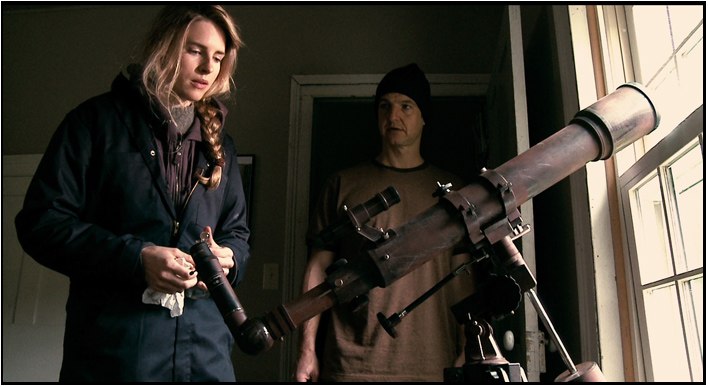
Galileo drawing from video, 1610.

Tags:

Certified Copy
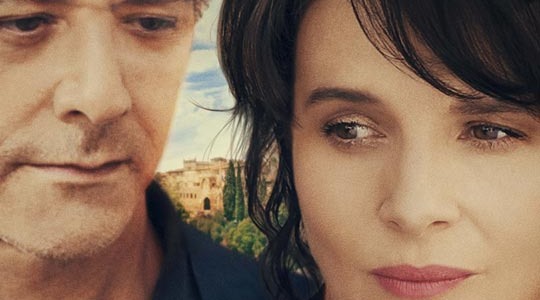
Abbas Kiarostami has trafficked in painful alienation for most of his career, but it still surprises how close to the bone this puzzling movie cuts. An English intellectual (William Shimell) is in Tuscany to read from his new book and is introduced to a French single mother (Juliette Binoche) who drives him around the day he is to leave. The two exchange philosophies on art and life before stopping in a café in which the proprietor mistakes them for a married couple. From that moment the pair begin to speak to one another as if they are husband and wife at odds. Are they playacting or is it something deeper? It’s something deeper. Watch trailer.

••••••••••

Another Earth
Really fascinating indie that uses a helping of science fiction to ask questions about accidents of life and love. Rhoda Willaims (Brit Marling, also co-writer) is a 17-year-old science whiz headed to MIT until she kills two people in drunken car accident on the very night that a parallel Earth is discovered. The whole world is buzzing about the amazing discovery, but Rhoda’s world has gone silent. She is sent to prison for several years. When released, Rhoda insinuates herself into the life of composer John Burroughs (William Mapother), whose wife and child she killed. John has shrunk into hermitage, and his dim life is buffed and shined by this mysterious cleaning woman who says she’s been sent to his home by a service. The two become friends and lovers, but will the awful truth, which eventually must come out, ruin their relationship? And will this other Earth play a role in determining their futures? Director Mike Cahill keeps the film on track as it hurtles toward a sneaky, perfect ending.
Watch trailer.

••••••••••

The Arbor
First-time filmmaker Clio Barnard’s devastating and unconventional documentary tells the deeply painful story of British playwright Andrea Dunbar, who became famous at the tender age of 15 but was never able to escape the pernicious influence of the infamous Butterfield Estates in West Yorkshire. Dunbar passed away in a barroom at age 29 in 1990, but not before turning out several scathing plays and damaging her own offspring, especially her mixed-race daughter, Lorraine, whom she regretted having. Barnard spent a couple of years interviewing Lorraine and others and employs “verbatim theater” in which actors lip-synch their words. The director also has performers act out versions of Dunbar’s plays outdoors in the shadows of the housing project. A fascinating creation in which artifice communicates the truth better than a simple reality could.  Watch trailer


Tags: , , , , , ,

Because of some scurrilous remarks he made (including in this 1963 video), Malcolm X never got the recognition he deserved in mainstream culture. He had a brilliant mind and cut through all the bullcrap, and it’s still painful that one of our best and brightest sons lived in a situation that forced him to turn against his country. Shame on all these well-heeled reporters for giving him such a difficult time over his name change. Shame also on all the journalists who kept referring to Muhammad Ali as “Cassius Clay” after his own name change. When people have had their history stolen from them, they have the every right to remake their present and future.

Tags:

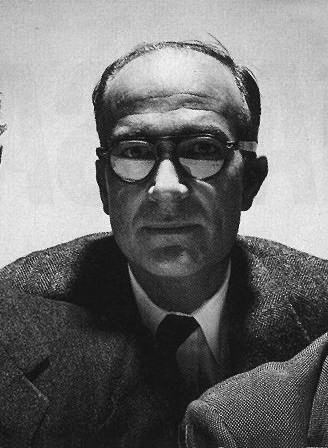
A description of William Shockley from Tom Wolfe’s 1983 Esquire article about Robert Noyce, who worked for a time for the Bell Labs genius and boss from hell, whose erratic nature alienated pretty much everyone, and that was before he dirtied himself with nonsense eugenics theories: 

The first months on Shockley’s Ph.D. production line were exhilarating. It wasn’t really a production line at all. Everything at this stage was research. Every day a dozen young Ph.D.’s came to the shed at eight in the morning and began heating germanium and silicon, another common element, in kilns to temperatures ranging from 1,472 to 2,552 degrees Fahrenheit. They wore white lab coats, goggles, and work gloves. When they opened the kiln doors weird streaks of orange and white light went across their faces, and they put in the germanium or the silicon, along with specks of aluminum, phosphorus, boron. and arsenic. Contaminating the germanium or silicon with the aluminum, phosphorus, boron, and arsenic was called doping. Then they lowered a small mechanical column into the goo so that crystals formed on the bottom of the column, and they pulled the crystal out and tried to get a grip on it with tweezers, and put it under microscopes and cut it with diamond cutters, among other things, into minute slices, wafers, chips; there were no names in electronics for these tiny forms. The kilns cooked and bubbled away, the doors opened, the pale apricot light streaked over the goggles, the tweezers and diamond cutters flashed, the white coats flapped, the Ph. D.’s squinted through their microscopes, and Shockley moved between the tables conducting the arcane symphony.

In pensive moments Shockley looked very much the scholar, with his roundish face, his roundish eyeglasses, and his receding hairline; but Shockley was not a man locked in the pensive mode. He was an enthusiast, a raconteur, and a showman. At the outset his very personality was enough to keep everyone swept up in the great adventure. When he lectured, as he often did at colleges and before professional groups, he would walk up to the lectern and thank the master of ceremonies and say that the only more flattering introduction he had ever received was one he gave himself one night when the emcee didn’t show up, whereupon – bango!- a bouquet of red roses would pop up in his hand. Or he would walk up to the lectern and say that tonight he was getting into a hot subject, whereupon he would open up a book and – whump! -a puff of smoke would rise up out of the pages.

Shockley was famous for his homely but shrewd examples. One day a student confessed to being puzzled by the concept of amplification, which was one of the prime functions of the transistor. Shockley told him: ‘If you take a bale of hay and tie it to the tail of a mule and then strike a match and set the bale of hay on fire, and if you then compare the energy expended shortly thereafter by the mule with the energy expended by yourself in the striking of the match, you will understand the concept of amplification.’

On November 1,1956, Shockley arrived at the shed on South San Antonio Road beaming. Early that morning he had received a telephone call informing him that he had won the Nobel Prize for physics for the invention of the transistor; or, rather, that he was co-winner, along with John Bardeen and Walter Brattain. Shockley closed up shop and took everybody to a restaurant called Dinah’s Shack over on El Camino Real, the road to San Francisco that had become Palo Alto’s commercial strip. He treated his Ph. D. production line and all the other employees to a champagne breakfast. It seemed that Shockley’s father was a mining engineer who spent years out on remote durango terrain, in Nevada, Manchuria and all over the world. Shockley’s mother was like Noyce’s. She was an intelligent woman with a commanding will. The Shockleys were Unitarians, the Unitarian Church being an offshoot of the Congregational. Shockley Sr. was twenty years older than Shockley’s mother and died when Shockley was seventeen. Shockley’s mother was determined that her son would someday ‘set the world on fire,’ as she once put it. And now he had done it. Shockley lifted a glass of champagne in Dinah’s Shack, and it was as if it were a toast back across a lot of hardwrought durango grit Octagon Soap sagebrush Dissenting Protestant years to his father’s memory and his mother’s determination.

That had been a great day at Shockley Semiconductor Laboratory. There weren’t many more. Shockley was magnetic, he was a genius, and he was a great research director–the best, in fact. His forte was breaking a problem down to first principles. With a few words and a few lines on a piece of paper he aimed any experiment in the right direction. When it came to comprehending the young engineers on his Ph.D. production line, however, he was not so terrific.

It never seemed to occur to Shockley that his twelve highly educated elves just might happen to view themselves the same way he had always viewed himself: which is to say, as young geniuses capable of the sort of inventions Nobel Prizes were given for. One day Noyce came to Shockley with some new results he had found in the laboratory. Shockley picked up the telephone and called some former colleagues at Bell Labs to see if they sounded right. Shockley never even realized that Noyce had gone away from his desk seething. Then there was the business of the new management techniques. Now that he was an entrepreneur, Shockley came up with some new ways to run a company. Each one seemed to irritate the elves more than the one before. For a start, Shockley published their salaries. He posted them on a bulletin board. That way there would be no secrets. Then he started having the employees rate one another on a regular basis. These were so-called peer ratings, a device sometimes used in the military and seldom appreciated even there. Everybody regarded peer ratings as nothing more than popularity contests. But the real turning point was the lie detector. Shockley was convinced that someone in the shed was sabotaging the project. The work was running into inexplicable delays, but the money was running out on schedule. So he insisted that one employee roll up his sleeve and bare his chest and let the electrodes be attached and submit to a polygraph examination. No saboteur was ever found.•
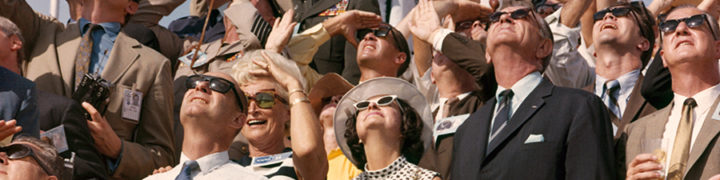
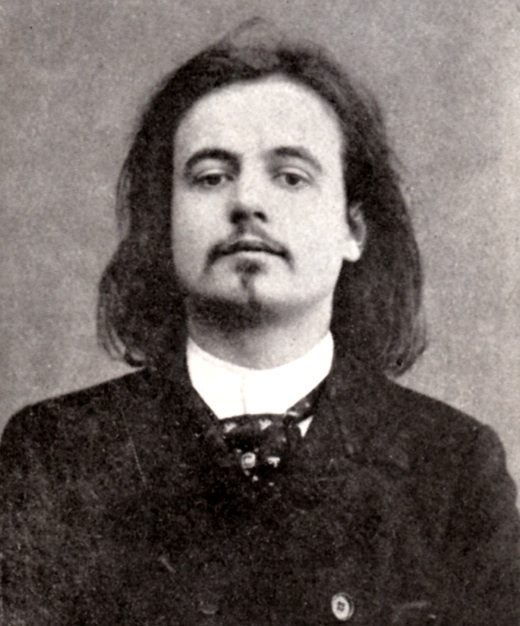
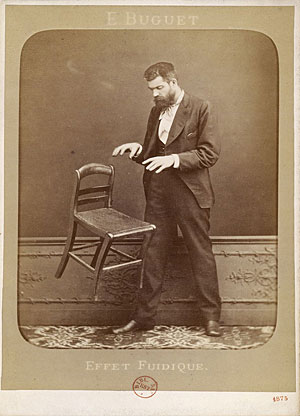
A 1974 Firing Line with Shockley, who at this point was sadly tarnishing his reputation with a second act as a quack trying to link race, class and IQ, with African-Americans not faring too well in his theories nor anyone who was an unskilled laborer.

Tags: , , ,

How cool. A clip of William F. Buckley with great Southern writers Walker Percy and Eudora Welty in 1972. I think my favorite Welty short story is “Music From Spain,” which takes place not in the South but in San Francisco.

From a Paris Review Q&A with Welty:

INTERVIEWER
‘Music from Spain’ takes place in San Francisco.

WELTY
That’s using impression of place. I was in San Francisco for only three or four months—that’s seeing it in a flash. That story was all a response to a place, an act of love at first sight. It’s written from the point of view of the stranger, of course—the only way to write about a strange place. On the other hand, I couldn’t write a story laid in New York, where I’ve come so many times—because it’s both familiar and unfamiliar, a no-man’s-land.”

Tags: , ,

The opening of a Techcrunch article by Vinod Khosla about his extreme faith in the efficacy of algorithms, believing they can even supplant our most basic institutions:

“I was asked about a year ago at a talk about energy what I was doing about the other large social problems, namely health care and education. Surprised, I flippantly responded that the best solution was to get rid of doctors and teachers and let your computers do the work, 24/7 and with consistent quality.

Later, I got to cogitating about what I had said and why, and how embarrassingly wrong that might be. But the more I think about it the more I feel my gut reaction was probably right. The beginnings of ‘Doctor Algorithm’ or Dr. A for short, most likely (and that does not mean ‘certainly’ or ‘maybe’) will be much criticized. We’ll see all sorts of press wisdom decrying ‘they don’t work’ or ‘look at all the silly things they come up with.’ But Dr A. will get better and better and will go from providing ‘bionic assistance’ to second opinions to assisting doctors to providing first opinions and as referral computers (with complete and accurate synopses and all possible hypotheses of the hardest cases) to the best 20% of the human breed doctors. And who knows what will happen beyond that?” (Thanks Browser.)

••••••••••

“Maybe the way to innovate schools is to eliminate schools”:

Tags:

The first movie I can remember seeing as a child was a TV showing of The Hunchback of Notre Dame, starring Charles Laughton. Here he is in 1956 on What’s My Line?, when he was appearing on Broadway.

Quasimodo provides sanctuary:

Tags:

For all my interest in Marshall McLuhan, I never realized until now that there was an experimental audio version of The Medium Is the Massage that was released by CBS Records in the late 1960s. It’s a pastiche that upends itself, by design. I bet Zappa knew it well.

Tags:

Short old-school movie about the Houston Astrodome, the world’s first roofed, air-conditioned stadium, which opened in 1965. Even back then, there were luxury suites. Audio is patchy.

"Who is The Foreigner? Is it a guru? A person?" (Image by William McElligott.)

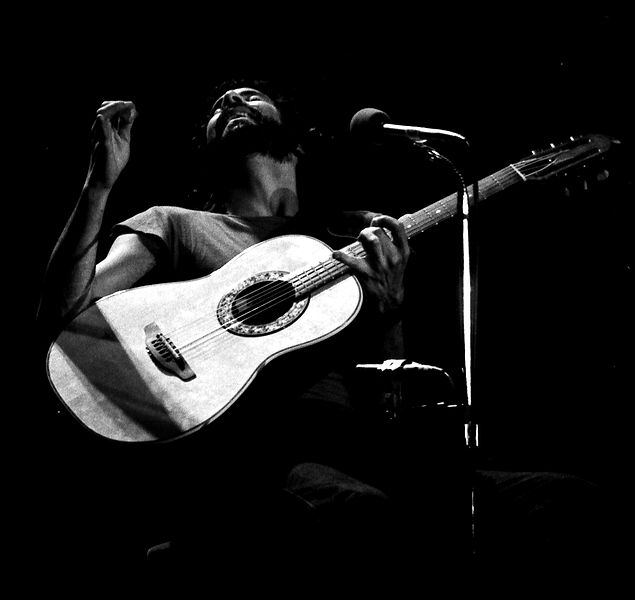
Before religious conversion, a name change, disgraceful comments about the fatwa declaring death to Salman Rushdie, a no-fly list with his new name (Yusuf Islam) on it and a couple of libel lawsuits, Cat Stevens was a wildly popular yet skittish rock star whose work suggested a burgeoning spirituality but could not predict the many permutations ahead. In 1973, as he was releasing his album Foreigner, Stevens was profiled by Paul Gambaccini in Rolling Stone. An excerpt:

“Stevens is a person who obeys his instincts. He went to Jamaica to record Foreigner not so much for studio facilities as ‘for sunshine. I couldn’t get it in England, and I didn’t want to go to America.’ He didn’t work with longtime producer Paul Samwell-Smith because, ‘I wanted an immediate feel to it. He is a great producer, but he is very clean, if a note is wrong he wants to fix it up. This time I wanted to do a certain part, I wanted to just play it, and let it be.’

Veteran musician Phil Upchurch was selected to play because, ‘I was listening to the radio and this long track was playing and it was just getting better and better and I wanted it to end so I could see who it was by and yet it just kept getting better. They said it was Phil Upchurch and I went out and bought an album. I knew from that that he was right to work with.’

‘Foreigner Suite,’ he said, was not a pre-planned opus. ‘It happened. I wrote fragments that came together and as they did I said, what’s happening here? And it turned out to be what I now consider to be not the many parts, but one song.

The only thing left to do was to title the work. Although the word never appears in the suite, ‘foreigner’ was chosen, because: ‘We’re all foreigners. Say to a foreigner that he’s a foreigner and he’ll say you’re a foreigner! We’re all foreigners here, in a wider sense. One hundred years from now I won’t be here, there’ll be nothing left of me, but the earth will still exist. People ask me, ‘Who is The Foreigner? Is it a guru? A person?’ It’s wider than any single person.”

••••••••••

The complete 18-minute “Foreigner Suite,” 1973:

“I’d try to phone Ayatollah Khomeini and tell him exactly where this man is”:

Tags: , ,

HAL 9000 + Siri.

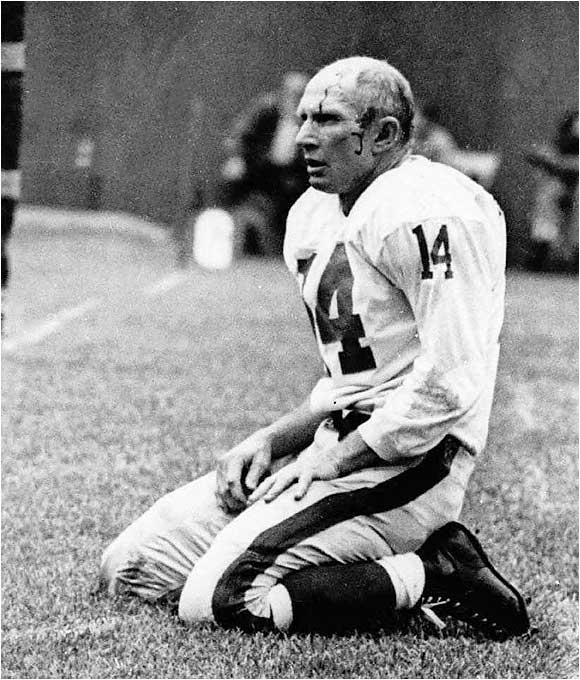
The opening of “The Fragile Teenage Brain,” neuroscientist Jonah Lehrer’s devastating Grantland examination of football’s concussion problem, a plague not only on the NFL but also on high schoolers playing under the lights on Friday nights:

“If the sport of football ever dies, it will die from the outside in. It won’t be undone by a labor lockout or a broken business model — football owners know how to make money. Instead, the death will start with those furthest from the paychecks, the unpaid high school athletes playing on Friday nights. It will begin with nervous parents reading about brain trauma, with doctors warning about the physics of soft tissue smashing into hard bone, with coaches forced to bench stars for an entire season because of a single concussion. The stadiums will still be full on Sunday, the professionals will still play, the profits will continue. But the sport will be sick.

The sickness will be rooted in football’s tragic flaw, which is that it inflicts concussions on its players with devastating frequency.”

••••••••••

Colt McCoy gets concussion, returns to game two plays later:

Tags:

Playing the 3-D first-person shooter game, Maze War, on the Xerox Alto, the trailblazing 1970s networked computer that influenced young Steve Jobs.

Tags:

I have a neurological disorder that makes it difficult for me to recognize faces out of context, even of people I know well. The average brain, however, is wired to do a pretty remarkable job at such a task–but how? The opening of “How the Brain Spots Faces,” a post by Mark Brown at Wired UK that reports on MIT face-recognition experiments:

“Our brains are made to find faces. In fact, they’re so good at picking out human-like mugs we sometimes see them in a jumble of rocks, a bilious cloud of volcanic ash or some craters on the Moon.

But another amazing thing about our brain is that we’re never actually fooled into thinking it’s a real person looking back at us. We might do a second take, but most normal brains can tell the difference between a man and the Moon.

Neuroscientists from the Massachusetts Institute of Technology wanted to investigate how the brain decides exactly what is and is not a face. Earlier studies have shown that the fusiform gyrus, located on the brain’s underside, responds to face-like shapes — but how does it sort flesh from rock?”

••••••••••

A parade of faces from “Cry,” Godley & Creme, 1985:

Tags:

« Older entries § Newer entries »