
Videos

You are currently browsing the archive for the Videos category.

From Steven Trasher’s new Village Voice profile of composer Philip Glass, whose music is great and repetetive and great and repetitive and great:

Yet despite his extensive uptown showcasing lately (his opera Satyagraha was at the Met and a live concert of his Koyaanisqatsi score was at Carnegie Hall within a week of each other last fall), Glass still has deep roots in the East Village. He has lived quite near the Voiceoffices for the past four decades. Many weekdays find him walking around the neighborhood and cutting a stoic, solitary profile; the prolific composer seems oblivious to furtive glances from nerdy fans as he dreams his mathematical scores.

Regardless of success, neither Glass’s life nor his music have ever abandoned their East Village sensibilities. He worked as a cab driver and furniture mover until he was in his early forties, and his identification (politically and artistically) has never left theidea of downtown (even though most of the struggling artists, drug addicts, and alcoholics who inhabited it when he arrived in the late ’60s largely have).

And when Occupy Wall Street confronted Satyagraha at Lincoln Center last December, he was happy to come out and give the General Assembly a ‘mic check.'”

••••••••••

A bit of Glass from Koyaanisqatsi:
Tags: ,

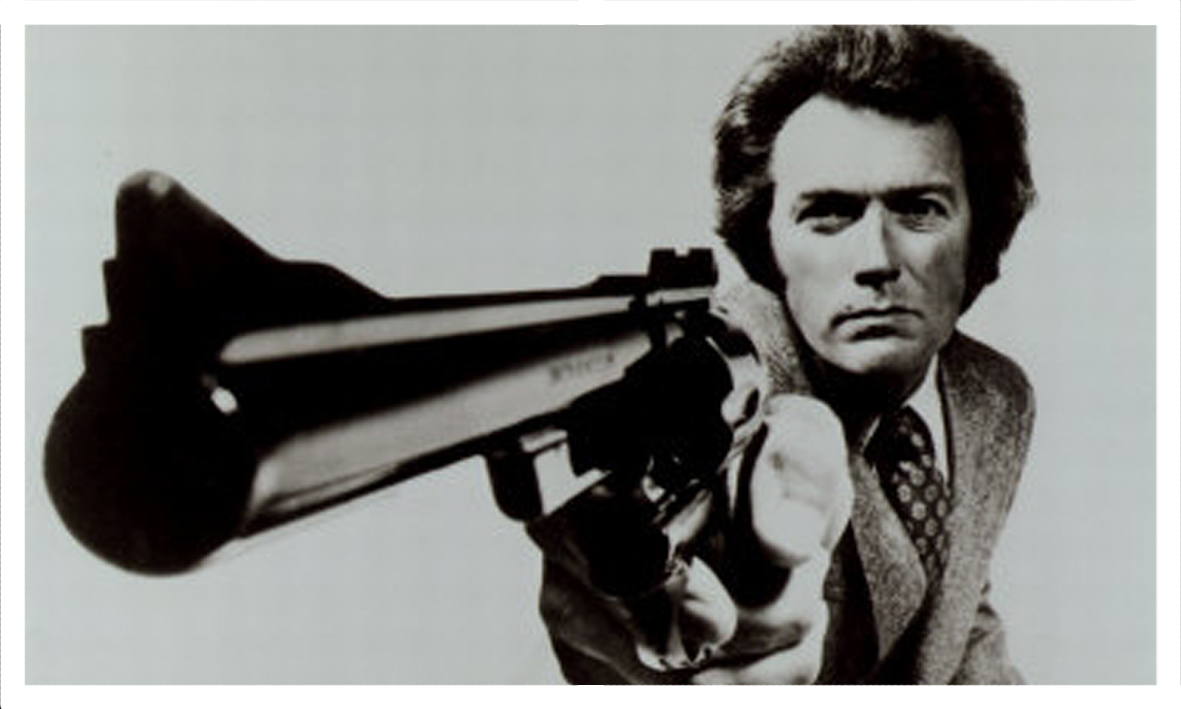
It’s funny that some conservatives are upset about Chrysler’s “Halftime in America” Super Bowl ad, the best commercial of the night. Clint Eastwood, a Herman Cain-loving conservative himself, ambles around all Dirty Harry-ish in the spot, extolling the reversal of fortune that the U.S. auto industry has enjoyed, promising that America is headed back to greatness, and seemingly threatening to murder other countries with his bare hands. I suppose some right-wingers see it as tacit support of Obama.

But it is completely tacit. The commercial conveniently doesn’t mention that without the intervention of the government, the Detroit recovery would likely have never occurred. Those jobs probably would have been gone for good if people like the politicans Clint supports had gotten their way. Sometimes big government is good and sometimes it is not, and anyone who doesn’t realize that we need to figure out these things on a case-by-case basis is too ideological for their own good–and America’s.

Tags:

Skipper has lupus just like Flannery O’Connor. She’ll likely die because Dr. Barbie and Dr. Ken are too busy with their courtship. They’re beautiful and irresponsible, with a dubious commitment to medicine. Enjoy your cocktails, assholes. Rest in peace, Skipper.

Tags: , ,

Louis CK, with his wonderful, wonderful mind, hating on Twitter.

Tags:

Legendary Vietnam War reporter George Esper just passed away at 79. He famously refused to be called back to the U.S. by the Associated Press so that he could stay and witness the Fall of Saigon. There’s sadly little of his work online. From the Washington Post:

While he considered his coverage of the dramatic end of the 15-year Indochina conflict the high point in a 42-year career of deadline reporting, it was far from the only one. Esper was legendary for his dogged persistence in covering news in war and in peace.

‘You don’t want to be obnoxious and you don’t want to stalk people, but I think persistence pays off,’ Esper said in an interview in 2000.

So when he was assigned to write a story for the 20th anniversary of the 1970 shootings of four students by National Guardsmen at Kent State University and could find no phone number for the mother of one of the victims, Esper drove an hour through a snowstorm to knock on her door.

‘She just kind of waved me off, and she said, ‘We’re not giving any interviews.’ Just like that,’ Esper recalled. ‘I didn’t really push her. On the other hand, I didn’t turn around and leave. I just kind of stood there, wet with snow, dripping wet and cold, and I think she kind of took pity on me.’

Like so many others over the years, she opened up to Esper.”

••••••••••

Fall of Saigon, 1975:

Tags:

The music wanted to be portable, 1967.

Frank Lloyd Wright, on Omnibus, being spectacularly wrong on three topics: skyscrapers in cities, population concentration and New York City’s future.

Wright as a metaphor for Simon and Garfunkel’s split, 1970:

Tags: , ,

Gene Kelly performing some steps with boxer “Sugar” Ray Robinson on Omnibus, 1958.

Tags: ,

“Nano-quadrotors”–or tiny drones–operating within a swarm, at the GRASP Lab at the University of Pennsylvania. (Thanks Physorg.)

“Design” is a fun 1969 pitch film that the legendary designer Saul Bass made for Bell Telephone when he was reimagining the company’s logo.

The great Kurtis Blow, 1980, Soul Train: “And Ma Bell sends you a whopping bill / With eighteen phone calls to Brazil.”

Tags: ,

I’m always posting clips from What’s My Line?, the 1950-67 quiz show in which a panel attempts to guess the identity of mystery guests. It’s incredibly addicting Youtube viewing because the program had an amazing roster of guests, from Eleanor Roosevelt to Brian Epstein to the last living witness of the Lincoln assassination. But the show on November 7, 1965 was particularly poignant, even though the celebrity guest was merely Joey Heatherton, who was best known for being breathy and blond.

That episode marks the final appearance of longtime panelist Dorothy Kilgallen, a New York newspaper columnist. A few hours after the live broadcast, Kilgallen overdosed on alcohol and barbiturates, dying alone in her apartment. The following morning her hairdresser discovered her lifeless body.

That would have been the end of the story, a drug-related death, an accident or, perhaps, suicide, except that Kilgallen had been an outspoken critic of the Warren Commission and had become a confidante of Jack Ruby. She promised publicly that she had information which would explode the commission’s findings about the JFK assassination and complained privately to friends that she believed she was under surveillance. In the wake of a shadowy murder of an American President, many wondered–some still do–if Kilgallen was silenced by foul play. My assumption is that her death was simple and sad, but the conspiracy theory speaks to the distrust people had for the government at the time.

The final guest, after Heatherton, is pioneering female sportswriter, Elinor Kaine

Tags: ,

Alistair Cook brought his Omnibus TV show into the New York Times newsroom in 1954 to see how men–and only men–published news in that era. Listen to those clunky typewriter keys tapping. Notice the lack of a healthy blue glow on the faces of the editors.

A piece of this Cook clip was included in the excellent doc about the latter-day Gray Lady, Page One:

Tags:

This classic photograph from the early 1900s captures a group breathing activity at the Battle Creek Sanitarium in Michigan, which became one of the most famous health resorts in the world under the stewardship of Dr. John Harvey Kellogg, a brilliant if eccentric doctor, a holistic enthusiast and an enterprising Adventist. Originally established in 1866 as the Western Health Reform Institute, Kellogg’s spa offered restorative hydrotherapy, diet, exercise, enemas and vibratory chairs. The good doctor also was co-inventor of the cornflake with his brother, Will Keith Kellogg. The sanitarium remained open until the 1940s when it was purchased by the U.S. government and converted into an Army hospital. An excerpt from the 1943 New York Times obituary for Kellogg, who lived until 91:

“A determined practitioner of the rules for simple eating and living he preached for all humanity, Dr. Kellogg was perhaps the best example of the truth of his own dogmas.

When he became a physician Dr. Kellogg determined to devote himself to the problems of health, and after taking over the sanitarium he put into effect his own ideas. Soon he had developed the sanitarium to an unprecedented degree, and he launched the business of manufacturing health foods. He gained recognition as the originator of health foods and coffee and tea substitutes, ideas which led to the establishment of huge cereal companies besides his own, in which his brother, W. K. Kellogg, produced the cornflakes he invented. His name became a household word.

Dr. Kellogg’s youth was one of hard work. Born in Tyrone, N. Y., on Feb. 26, 1852, he moved to Battle Creek with his parents, John Preston and Ann Jeanette Kellogg, at an early age. He worked in his father’s broom factory and also served as a ‘printer’s devil’ in Battle Creek publishing houses.”

••••••••••

Anthony Hopkins as Kellogg in the 1994 film adaptation of T.C. Boyle’s novel, The Road to Wellville:

Tags: ,

Conversational bot with a brain that’s a mesh of wires. Just like you and I.

Jacques Cousteau, surfacing briefly in 1956 to appear on What’s My Line? Just-retired Yankee Phil Rizzuto on the panel.

Tags: ,

It’s amazing how little effect a disgraced Richard Nixon’s resignation had on the future of the GOP. It cost the Republicans the White House in 1976, but his party has held the Oval Office more often than not since. And Nixon’s brand of conservatism, which at least had some room for environmentalism and Affirmative Action, has all but vanished from the Right. In 1967, before he was President, Nixon discussed the GOP’s future with William F. Buckley, Jr.


Tags: ,

Elsa Lanchester, most famously Frankenstein’s bride in 1935, chatting up Dick Cavett in 1970. Her longtime husband, Charles Laughton, was famously childish in his recreational tastes, often dragging people, including Ray Bradbury, to Disneyland, one of his favorite places.

Woman notices streak of gray in hair, settles for brain-dead douchebag with bolts in neck:

Tags: , ,

As Kevin Kelly is wont to say, no tool or technology we’ve ever created has become completely extinct. The following reports concern the “last” typewriter repairman. After they’re all gone, there will still somehow be a few typewriters and a few people who can fix them. Likely, someone will continue manufacturing typewriters for a niche market. They will exist in the margins, but they will never end.

••••••••••

Jacksonville:

Chicago:

Houston:

Read also:

Tags:

Former heavyweight champ Jack Dempsey, the “Manassa Mauler,” the most famous athlete on earth during the 1920s, on What’s My Line?, 1965. During the interview segment, Dempsey suggests that the Ali-Liston fight was bogus.

In 1927, at the end of his run of dominance thanks to age and Gene Tunney, while he was training for a return to greatness which would never arrive, Dempsey suffered a personal tragedy when his brother, John, murdered his wife and committed suicide. An excerpt from a July 3, 1927 New York Times article:

“Schenectady–Apparently in a spell of temporary insanity due to a recurring attack of an illness to which he had been subject for several years, John Dempsey, brother of the former heavyweight champion, fatally shot his 21-year-old wife, Edna, in a rooming house here today. He turned the gun on himself, dying instantly.

The Dempseys had been estranged for about a year. They are survived by a two year-old son, Bruce.

Jack Dempsey was deeply affected when notified at his training camp at White Sulphur Springs, Saratoga Lake. He came at once to Schenectady and positively identified the bodies.

The boxer ordered his brother’s body to be sent tonight for burial to Salt Lake City, his former home, and Mrs. Dempsey’s body to be taken to Green Island.

It was announced that Jack Dempsey would cease his training activities for a few days because of the tragedy, but would not cancel his match with Sharkey, set for July 21 in New York City.”

See also:

Tags:

Industry has poisoned the environment in the past, so it’s possible mysterious illnesses can arise from chemical dumping or such behaviors. But more often we simply want to believe that the cause of our trouble is outside of ourselves, that there is a culprit somewhere else. And clusters can form. We saw it just recently with the nonsense about immunizations supposedly causing autism. The brain is mysterious and we’re often at the mercy of it, to its demands and delusions.

“Here in my car / You know I’ve started to think / About leaving tonight / Although nothing seems right.” Created by OgilvyWest for Cisco Systems.

Carrie Brownstein, now a comedy star for Portlandia and already an indie rock icon for Sleater-Kinney, had a wordless role in Miranda July’s odd, haunting 2001 short, “Getting Stronger Every Day.”

Tags: ,

At the Institute of Robotics and Mechatronics of the German Aerospace Center.

James Gleick, author of The Information; A History, a Theory, a Flood, explaining how the shift from oral communications to the written word impacted humanity.

Tags:

Chris Elliott as a robot designed to be slenderer than Shelley Winters, 1986.

Tags:

« Older entries § Newer entries »