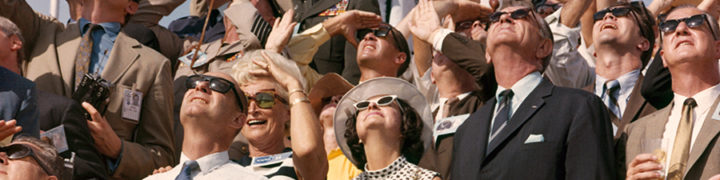
Eleanor Roosevelt for Good Luck Margarine, in 1959.
You are currently browsing the archive for the Videos category.
Tags: Eleanor Roosevelt
Bots that pool their talents.

Originally, the pinball machine was a flipperless game that had to be jostled to direct the ball. It wasn’t a truly perfected contraption until it was tweaked by Steve Kordek in 1948. The inventor just passed away at 100. From his New York Times obituary:
“In 1947, two designers at the D. Gottlieb & Company pinball factory in Chicago, Harry Mabs and Wayne Neyens, transformed that rudimentary game into one called Humpty Dumpty, adding six electromechanical flippers, three on each side from the top to the bottom of the field.
It was an instant hit — until, at a trade show in Chicago 1948, Mr. Kordek introduced Triple Action, a game that featured just two flippers, both controlled by buttons at the bottom of the table. Mr. Kordek was a designer for Genco, one of more than two dozen pinball manufacturers in Chicago at the time.
Not only was Mr. Kordek’s two-flipper game less expensive to produce; it also gave players greater control. For someone concentrating on keeping a chrome-plated ball from dropping into the ‘drain,’ two flippers, one for each hand, were better than six.
‘It really was revolutionary, and pretty much everyone else followed suit,’ David Silverman, executive director of the National Pinball Museum in Baltimore, said in an interview. ‘And it’s stayed the standard for 60 years.'”
••••••••••
Curly, tempestuous by nature, frustrated by a pre-Kordek machine in 1942:
Tags: Steve Kordek
A demo of Goodyear’s “Inflatoplane” on I’ve Got A Secret, 1956 or so. Yes, a flying machine that could be brought down with a hairpin. Crappy footage, but interesting.
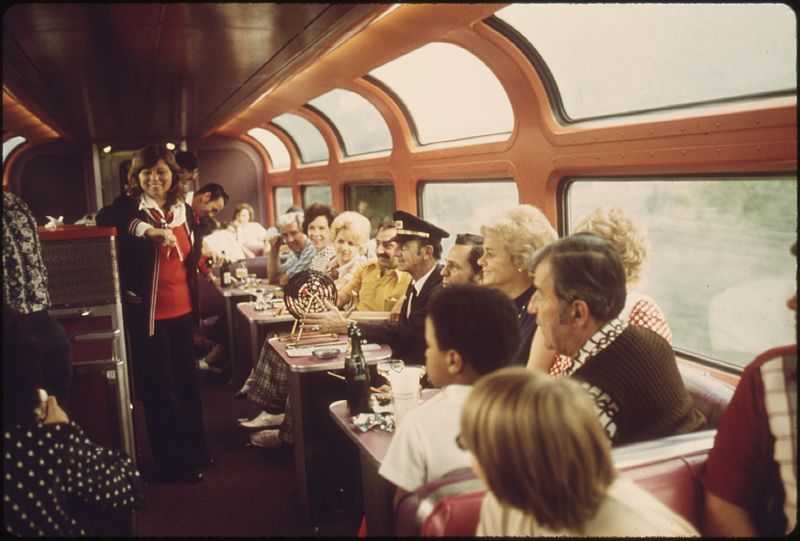
A new and horrifying way to keep “undesirables” away so that we can become even bigger jackasses–airport seating based on social network profiles. From Nicola Clark’s smart piece in the New York Times:
“This month, the Dutch carrier KLM began testing a program it calls Meet and Seat, allowing ticket-holders to upload details from their Facebook or LinkedIn profiles and use the data to choose seatmates.
The concept is a step beyond the not always successful efforts a few years ago by some airlines — including Air France, Virgin Atlantic and Lufthansa — to build ‘walled’ social networks out of their existing frequent flier memberships.
‘For at least 10 years, there has been this question about serendipity and whether you could improve the chances of meeting someone interesting onboard,’ said Erik Varwijk, a managing director in charge of passenger business at KLM. ‘But the technology just wasn’t available.’
Relative latecomers to the social media party, airlines are quickly becoming sophisticated users of online networks, not only as marketing tools, but as a low-cost way to learn more about their customers and their preferences.”
••••••••••
Aisle seat next to a penguin, please:
Tags: Erik Varwijk, Nicola Clark
In a report about utter bullshit, Mike Wallace interviews Major Donald Keyhoe about an alleged UFO cover-up, in 1958.
Tags: Donald Keyhoe, Mike Wallace
I recently posted a classic 1937 photo of surrealist designer Elsa Schiaparelli and her amazing shoe hat. Here’s her 1952 appearance on What’s My Line?
Tags: Elsa Schiaparelli
Yes, that sounds accurate. From 1966.
Tags: Salvador Dali
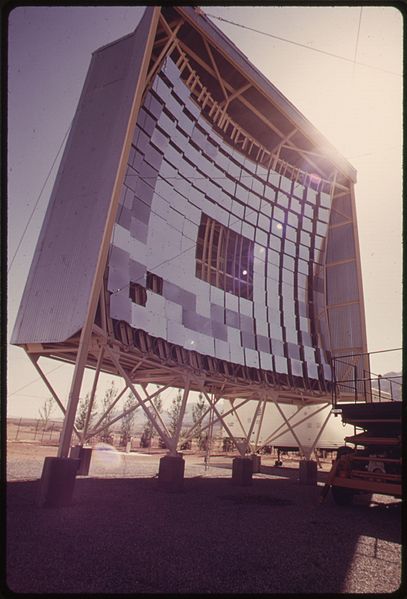
According to a new Businessweek piece, there are some green shoots in the U.S. solar industry. But it’s been an agonizingly slow-to-develop energy source for Americans and everyone else because of the price of the hardware. Two videos about earthlings trying to harness the sun.
A 1970s NASA film from Huntsville, Alabama:
A contemporary suburban Tokyo experimental solar city:
Anthony Burgess joins William F. Buckley in 1972 to discuss radical students.

"He doesn’t go out of his way to convince Republicans that he is one of them." (Image by R. DeYoung.)
Ron Paul has made only slight concessions to the mainstream, pretending he wasn’t responsible for the racist, extremist newsletters that funded his national political career, but in the last five years or so, the center has moved quite a ways to meet him. Rigidly doctrinaire to the point of absurdity, Paul has somehow captured the hearts and minds of a reasonably sizable portion of the American public. But he’s a Libertarian, not a Republican any more than a Democrat, which makes him even more of an odd duck in the GOP field. He’s a third-party candidate running for one of the first two. But is he the beginning of a serious strain of post-party politics?
Some of you read the New Yorker before you read Afflictor (bastids!), so you may have already taken in Kelefa Sanneh’s smart piece about Paul this week. But in case you haven’t gotten to it yet, here’s an excerpt:
“‘I think parties are pretty irrelevant,’ Paul says, and he doesn’t go out of his way to convince Republicans that he is one of them. He firmly opposed Obama’s health-care plan, and he might win a few more votes if he made this opposition the centerpiece of his stump speech. Instead, he tends toward arguments that are almost perversely nonpartisan—elaborating, say, the similarities between Bush’s war on terror and Obama’s. He asks, ‘Have you ever noticed that we change parties sometimes, but the policies never change?’ Even during that first Tea Party appearance, in Texas in 2007, Paul passed up a chance to reassure Republican voters. Skipping over the ‘United Nations’ and ‘I.R.S.’ barrels, he picked up one marked ‘Iraq War’ and heaved it into the river. He was seventy-two at the time, and surely relished the physical act as much as the symbolic one. ‘Start with that, and then we can solve the rest of the problems,’ he said.”
••••••••••
Paul on Morton Downey, Jr.’s screamfest, 1988:
Tags: Kelefa Sanneh, Ron Paul
Evelyn Wood Reading Dynamics was the pre-Adderall way to cram. Steve Allen doing hosting duties, 1979.
Tags: Evelyn Wood, Steve Allen
Fifty years ago, the great John Glenn orbited the moon and America was on its way in the Space Race. Behind the scenes, things were murkier, as erstwhile Nazi Wernher von Braun was leading the program. The scientist collaborated with Walt Disney on the 1955 short film, “Man in Space.”
See also:
- Norman Mailer profiles Von Braun. (1969)
Tags: John Glenn, Walt Disney, Wernher von Braun
How disgraceful!

I would never mock an American hero, Mavis.
Tags: Abraham Lincoln, Conan O'Brien
The Harvard Monolithic Bee is a tiny winged insect created with a pop-up manufacturing process.
Brief clip of Che Guevara on Face the Nation, 1964. Castro, Guevara and their fellow revolutionaries had a righteous cause, but ended up making things far worse, entrapping Cuban people in poverty for decades.
Tags: Che Guevara
Sony founder Akio Morita dreamed of lifting Japan from the ashes of WWII by selling the best consumer electronics in the world, and he made it happen. By 1985, when he filmed this American Express commercial, he was legend all over the world.
Tags: Akio Morita
A consequence of our information-rich world is that we forget a lot more than we used to, though that doesn’t mean our memories have grown worse. We likely also remember as much as ever–it’s just that the information we possess at any given time shifts more now. The Internet is a “brain” outside of our brain, and some people worry about that the way Socrates was concerned that the written word was an affront to oral tradition. He was right to think that writing would alter who we are, but that’s probably just a natural part of the evolution of the species. From Evan Selinger’s new Slate article about technology-enhanced memory:
“Ubiquitous information and communication technology is a major player in the memory enhancement game. I’m not alluding to products that target impairments, like the iPhone app for combating dementia. Rather, I mean commonplace software that people use to make recall less taxing, more extensive, or easier to visualize.
For instance, Wikipedia’s anti-SOPA protest made 162 million users, accustomed to turning to the site for those idle questions that crop up every day, feel absent-minded. Nobody messed with my hippocampus or your prefrontal cortex. Rather, Wikipedia’s actions were jarring because Internet use affects transactive memory, which is ‘the capacity to remember who knows what.’ If we know information is available online, we’re inclined to remember where it can be found, rather than struggle to retain the facts. This evolutionary tendency to off-load taxing aspects of cognition into the environment—natural or built—extends beyond using devices to recall information we’re already familiar with.
This is called ‘extended cognition,’ and it plays a crucial role in a controversial view called the ‘extended mind’ thesis. Advocates argue that data-management technologies, from low-tech pads to high-tech computers, don’t always function as mere memory-prompting tools. Sometimes, they deserve to be understood as parts of our mind. “
••••••••••
“What would it mean to have no place in time?”:
Tags: Evan Selinger
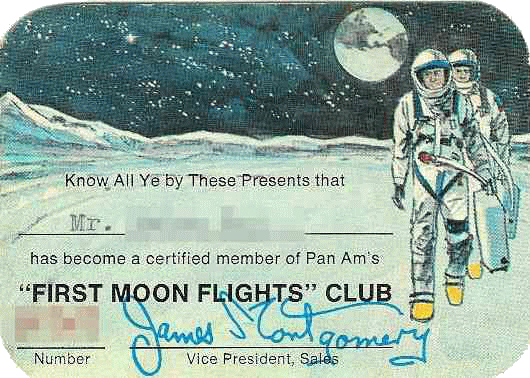
Pan Am began the “First Moon Flight’s Club” in 1968, a waiting list for civilian space travel before we even landed a man on the moon. It wasn’t just a gimmick–it was something that the airline’s founder Juan Trippe believed would happen in the near future. From Cosmos:
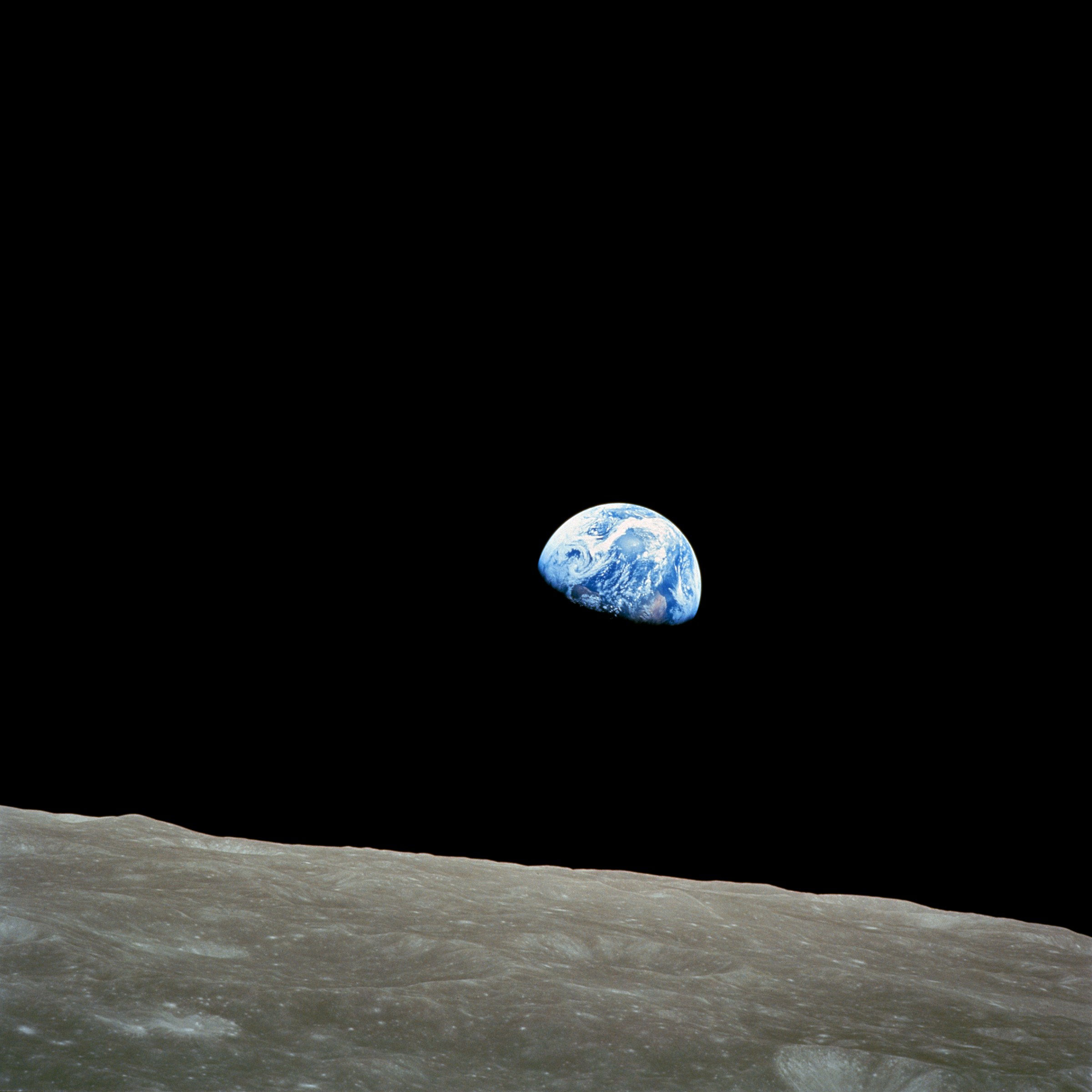
“IT WAS CHRISTMAS EVE 1968. Three men — Frank Borman, James Lovell and William Anders — were coasting 100 km above the Moon, the first astronauts to ever circle it. From inside their tiny Apollo 8 command capsule, they pointed a TV camera toward Earth, showing millions of viewers back home what no one had ever seen before. They snapped a famous picture — Earthrise — of our blue world ascending above the lunar horizon. And then they read aloud the story of creation according to the Book of Genesis.
Back home, a record TV audience was watching. When transmission ended 17 minutes later, an announcer broke the reverie to breathlessly report that Juan Trippe, the founder of Pan American — one of the world’s largest airlines at the time — had announced that Pan Am would start taking reservations for commercial passenger flights to the Moon.
The next day, The New York Times reported that Pan Am had been deluged with inquiries and had established a First Moon Flights Club — effectively, a glorified waiting list for space tourists. Within days, Trans-World Airlines followed suit.”
••••••••••
“In the beginning…”:
“I’m so tired and I wish I was the moon tonight”:
Tags: Juan Trippe
Dialogue about solar energy from You Can’t Take It With You, 1938.
Sparsh, the brainchild of Pranav Mistry at MIT Labs, allows you to transfer data through touch. No cutting, no pasting, no mouse, no keystrokes, no nothing.
Tags: Pranav Mistry
If I was asked to name a single recent book that best crystallizes the media-drenched world we live in today, the clever things we’ve done to ourselves and each other, the way the sun never sets nor rises anymore in our endless stream of flickering images, the way we’re smarter and dumber, closer together and further apart, I would choose Douglas Coupland’s Marshall McLuhan: You Know Nothing of My Work! That may seem like an odd thing to say about a book written about someone who died in 1980, but Coupland’s brilliant first chapter analyzes the contemporary media landscape with rare insight and then proceeds to march forward from McLuhan’s birth as the philosopher grows to understand the signs and symbols and links of a brave new world that was in its infancy (and still is). Coupland is mostly known for his fiction, and that’s a proper match for McLuhan, whose ideas were fantastic–they couldn’t be true, yet, more often then not, they were.
The 1962 McLuhan quote that Coupland uses at the book’s outset:
“The next medium, whatever it is–it may be the extension of consciousness–will include television as its content, not as its environment, and will transform television into an art form. A computer as a research and communication instrument could enhance retrieval, obsolesce mass library organization, retrieve the individual’s encyclopedic function and flip it into a private line to speedily tailored data of a saleable kind.”
••••••••••
“You know nothing of my work”:
Tags: Douglas Coupland, Marshall McLuhan