Urban Studies

You are currently browsing the archive for the Urban Studies category.

"She said she was Miss Pauline Chase, a member of the 'Cadet Girl' company. She went out to secure bail for the prisoner."

Wearing a disguise and pretending to be a Harvard man, a lad who had been obsessively following a troupe of chorus girls and who’d caused a disturbance at one of their performances gets arrested for “masquerading” at a Brooklyn theater. A story about the unusual crime from the December 16, 1900 edition of the Brooklyn Daily Eagle:

“A young man who said he was a Harvard student was arrested last night at the Amphion Theater, charged with masquerading.

At the Lee avenue police station, where he was taken by Officer Thomas Carroll, he gave his name as William Kibbey and his address as 43 West Twenty-seventh street, Manhattan. He gave his age as 21 years, and said his parents lived in Iowa.

Kibbey, it is said, has been following the ‘Cadet Girl’ company from place to place. Early in the week, it is claimed, he created a disturbance in the theater and was ejected, it is said. Last night in order to get by the doorekeeper he wore a red beard.

Soon after the young man was locked up in the Lee avenue station a young woman appeared there and asked about Kibbey. She said she was Miss Pauline Chase, a member of the ‘Cadet Girl’ company. She went out to secure bail for the prisoner.”

Tags: , ,

Estée Lauder: "When you stop talking, you've lost a customer. When you turn your back, you've lost her." (Image by Bill Sauro.)

Estée Lauder’s cosmetics empire was built more on her makeup as a person than on the kind that’s applied to faces. Raised in Queens, Lauder simply outhustled everyone in her field and never grew complacent. She provides the personal touch for a customer in this great 1966 picture by World Journal Tribune photographer William Sauro. (Sauro had already won the George Polk Memorial Award for his amazing shot of Helen Keller “listening” to Eleanor Roosevelt with her fingertips; he would subsequently work for the New York Times for the last three decades of his career.)

An excerpt from Grace Mirabella’s 1998 Time article about Lauder, on the occasion of her being the only woman selected for the magazine’s list of 20th-century business geniuses:

“You more or less know the Estée Lauder story because it’s a chapter from the book of American business folklore. In short, Josephine Esther Mentzer, daughter of immigrants, lived above her father’s hardware store in Corona, a section of Queens in New York City. She started her enterprise by selling skin creams concocted by her uncle, a chemist, in beauty shops, beach clubs and resorts.

No doubt the potions were good–Estée Lauder was a quality fanatic–but the saleslady was better. Much better. And she simply outworked everyone else in the cosmetics industry. She stalked the bosses of New York City department stores until she got some counter space at Saks Fifth Avenue in 1948. And once in that space, she utilized a personal selling approach that proved as potent as the promise of her skin regimens and perfumes.

‘Ambition.’ Ask Leonard for one defining word about his mother, and that’s his choice.”

Tags: , ,

A completely useless and amazing talent. (Thanks Reddit.)

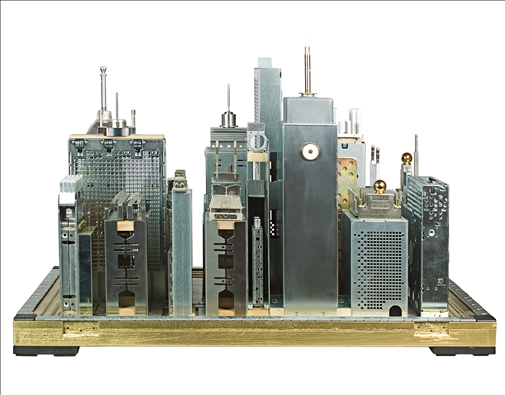
Mixed-media sculpture of Manhattan.

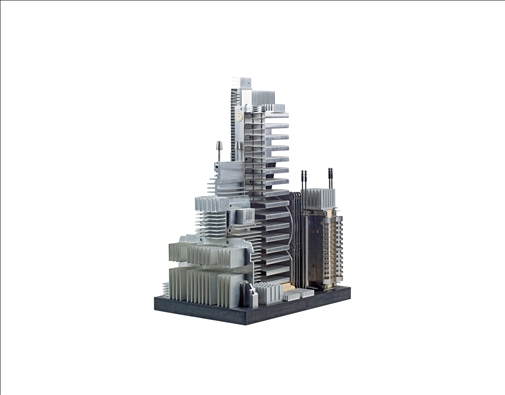
Italian artist Franco Recchia twists discarded transistors, motherboards and other technological detritus into stunning sculptures of cityscapes. Junk is renewed and recycled into things of beauty, something actual cities need to do more and more. Look here to see additional Recchia cityscapes, which will soon be on display in New York at Agora Gallery. (Thanks Boing Boing.)

Pittsburgh, a city that wisely downsized and reimagined itself in the waning days of the Industrial Age, gets the Recchia treatment.

Tags:

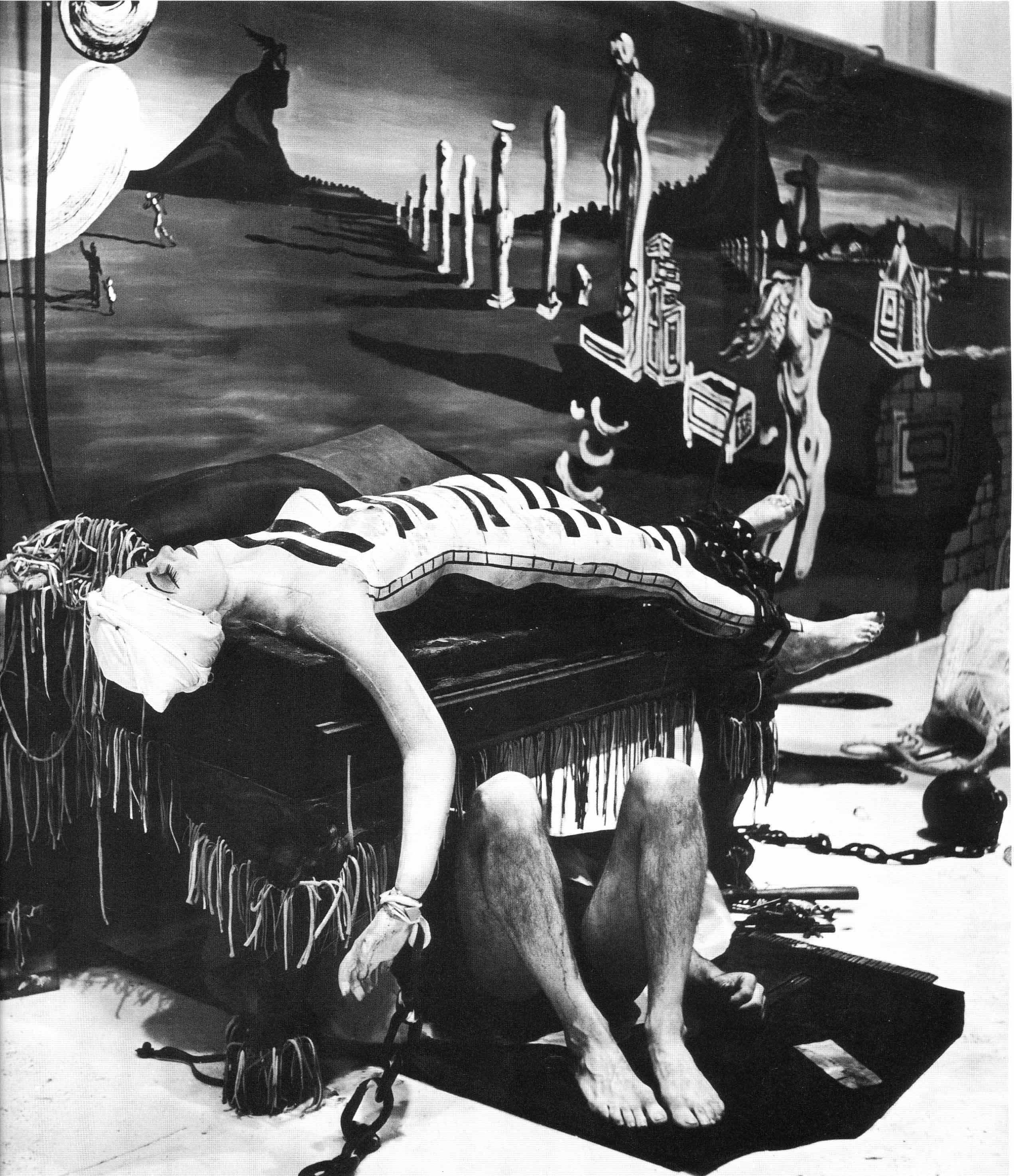
Salvador Dali brings surrealism to the masses at New York's 1939 World's Fair.

Elizabeth Lowry of the Wall Street Journal has a fun article about Jessica Kerwin Jenkins’ Encyclopedia of the Exquisite, a new book that seems right up the alley of language-loving, factoid-obsessed Afflictor readers. It’s an idiosyncratic reference book in which Jenkins, a writer for Vogue, offers histories on milk baths, the word “hello,” and cloud names, among other topics. An excerpt about what Lowry considers the book’s most offbeat entry:

Salvador Dali and friend in 1939. (Image by Carl Van Vechten.)

“The most outré entry of all, however, is the one on things ‘subaquatic,’ which includes a delirious description of Salvador Dalí’s deranged installation at the New York World’s Fair in 1939. Dalí’s underwater artwork, called the Dream of Venus, was a ‘panorama of the unconscious,’ the artist explained. Inside a grotto, visitors found a topless actress lying on a vast bed of red satin strewn with lobsters and champagne bottles. Behind her in a giant aquarium, glimpsed through a window, naked women posing as mermaids with rubber tail fins, the artist’s ‘living liquid ladies,’ played a woman-shaped piano and tapped away at floating rubber typewriters.

Time magazine dubbed the performers ‘Lady Godivers.’ When World’s Fair officials insisted that Dalí get rid of an image advertising the performance—a reworking of Botticelli’s Venus with a fish-head torso—he retaliated by hiring a plane and pelting the city with copies of a manifesto called the ‘Declaration of the Independence of the Imagination and the Rights of Man to His Own Madness.’ It is a man’s right, he wrote, ‘to love women with ecstatic fish heads.'”

Tags: , ,

"This collection includes over 1000-1200 cans."

Vintage Beer Can Collection – $400 (Lindenhurst)

I’m looking to sell my vintage beer can collection. This collection includes over 1000-1200 cans. I have no room left and need to unload some of my collectibles. Price is negotiable. Ask for Tom.

Orson Welles narrates this 1972 documentary that McGraw-Hill produced about sociologist Alvin Toffler‘s gargantuan 1970 bestseller, Future Shock. Toffler caused a sensation with his views about the human incapacity to adapt in the short term to remarkable change, in this case of the technological variety. The movie is odd and paranoid and overheated and fun.

Tags: ,

It’s been 17 years since Wired sent sci-fi legend William Gibson to chronicle the spotless dystopia that is modern Singapore, but it’s hard to believe much has changed. The resulting article,Disneyland with the Death Penalty,” looks at a country that’s run with the brutal efficiency of a corporate theme park, and one that has disappeared any trace of its own history. An excerpt:

“Singapore is a relentlessly G-rated experience, micromanaged by a state that has the look and feel of a very large corporation. If IBM had ever bothered to actually possess a physical country, that country might have had a lot in common with Singapore. There’s a certain white-shirted constraint, an absolute humorlessness in the way Singapore Ltd. operates; conformity here is the prime directive, and the fuzzier brands of creativity are in extremely short supply.

The physical past here has almost entirely vanished.

There is no slack in Singapore. Imagine an Asian version of Zurich operating as an offshore capsule at the foot of Malaysia; an affluent microcosm whose citizens inhabit something that feels like, well, Disneyland. Disneyland with the death penalty.

But Disneyland wasn’t built atop an equally peculiar 19th-century theme park – something constructed to meet both the romantic longings and purely mercantile needs of the British Empire. Modern Singapore was – bits of the Victorian construct, dressed in spanking-fresh paint, protrude at quaint angles from the white-flanked glitter of the neo-Gernsbackian metropolis. These few very deliberate fragments of historical texture serve as a reminder of just how deliciously odd an entrepot Singapore once was – a product of Empire kinkier even than Hong Kong.

The sensation of trying to connect psychically with the old Singapore is rather painful, as though Disneyland’s New Orleans Square had been erected on the site of the actual French Quarter, obliterating it in the process but leaving in its place a glassy simulacrum. The facades of the remaining Victorian shop-houses recall Covent Garden on some impossibly bright London day. I took several solitary, jet-lagged walks at dawn, when a city’s ghosts tend to be most visible, but there was very little to be seen of previous realities: Joss stick smouldering in an old brass holder on the white-painted column of a shop-house; a mirror positioned above the door of a supplier of electrical goods, set to snare and deflect the evil that travels in a straight line; a rusty trishaw, chained to a freshly painted iron railing. The physical past, here, has almost entirely vanished.”

Tags: ,

"Perhaps the Frankensteins owned it, who knows." (Image by Universal Studios.)

Cadaver stand with enamel bowls – $150 (trenton nj)

This is your every day cadaver parts holder. Would make a lovely addition to your every day ‘operations’ or sun porch garden plant holder. I am guessing this is from the 1920’s or 30’s. When I originally purchased this it was explained to me what it was used for in the medical profession. I thought it would be a nice addition to a porch as a plant holder but never got around to stripping and painting it. The top piece is removable and spins. The stand is on wheels. Construction is solid cast metal. The whole piece looks as if it comes from Austria as indicated on the bowls. Perhaps the Frankensteins owned it, who knows.

Denis Johnson was paranoid about both the government and the anti-government militia movement in 1990s America when he wrote the chilling article “The Militia in Me,” which appears in his non-fiction collection, Seek. The violence of Ruby Ridge and Waco and the horrific Oklahoma City bombing had shocked the nation into realizing the terror within, so Johnson traveled the U.S. and Canada to find out how and why militias had come to be. Sadly, the unsettling subject is as timely as ever. Three brief excerpts from the piece.

••••••••••

The people I talked with seemed to imply that the greatest threat to liberty came from a conspiracy, or several overlapping conspiracies, well known to everybody but me. As a framework for thought, this has its advantages. It’s quicker to call a thing a crime and ask Who did it? than to call it a failure and set about answering the question What happened?

••••••••••

I’m one among many, part of a disparate–sometimes better spelled “desperate”–people, self-centered, shortsighted, stubborn, sentimental, richer than anybody’s ever been, trying to get along in the most cataclysmic century in human history. Many of us are troubled that somewhere, somehow, the system meant to keep us free has experienced a failure. A few believe that someone has committed the crime of sabotaging everything.

Failures need correction. Crimes cry out for punishment. Some ask: How do we fix it? Others: Who do we kill?

••••••••••

They told me they made furniture out of antlers and drove around anywhere and everywhere, selling it. For the past month I’d been reading about the old days, missing them as if I had lived in them, and I said, “You sound like free Americans.”

“No,” the smaller man said and thereafter did all the talking, while the other, the blond driver changed my tire. “No American is free today.”

“Okay, I guess you’re right, but what do we do about that?”

“We fight till we are,” he said. “Till we’re free or we’re dead, one or the other.”

“Who’s going to do the fighting?”

“A whole lot of men. More than you’d imagine. We’ll fight till we’re dead or we’re free.”

Tags:

Not a picture of a Kansas school, but a class photo from a California grade school in 1890.

In 1895, eighth graders in Salina, Kansas, had to pass a mighty tough exam to be promoted. (The full questions from the test were posted by Morehead State and linked to by Marginal Revolution.) I wonder how many adults today could pass this exam. Sure, part of the difficulty stems from the changes in language and priorities as we’ve transitioned from an agrarian economy to the Industrial Age to the Information Age. But looking at this test is a reminder that education and intelligence don’t necessarily improve just because time marches on. Some sample questions:

  • Give nine rules for the use of Capital Letters
  • If a load of wheat weighs 3942 lbs., what is it worth at 50 cts. per bu., deducting 1050 lbs. for tare?
  • What is the cost of 40 boards 12 inches wide and 16 ft. long at $20 per m?
  • Name events connected with the following dates: 1607,  1620,  1800, 1849, 1865.
  • Give four substitutes for caret ‘u’.
  • Give two rules for spelling words with final ‘e’. Name two exceptions under each rule.
  • Mark diacritically and divide into syllables the following, and name the sign that indicates the sound: Card, ball, mercy, sir, odd,cell, rise, blood, fare, last.
  • Describe the mountains of North America.
  • Name and describe the following: Monrovia, Odessa, Denver, Manitoba, Hecla, Yukon, St. Helena, Juan Fermandez, Aspinwall and Orinoco.
  • Why is the Atlantic Coast colder than the Pacific in the same latitude?
  • Describe the movements of the earth. Give inclination of the earth.

In 1955, TWA produced this 30-minute film to promote its cross-country flights. The fictional short follows a couple of college students who travel from California to the Big Apple for sightseeing. As one of the beaming students excitedly tells her mom, “You can fly coast to coast in only eight hours!”

The kids tour Fifth Avenue, Coney Island, Central Park, etc. JFK was still, of course, called Idlewild and the Empire State Building was then the tallest edifice on the planet. The film provides a great look at period cars and clothes.

The movie was written by Agnew Fisher, who was also a photographer and cinematographer. Fisher was an avid sailor who chronicled the America’s Cup races with his camera for a couple of decades.

Tags:

"We have nothing to say, but we hope you will be lenient."

It wasn’t so easy being a judge in Brooklyn back in the day. The accused could use aliases and there was no way to check on them. But a pair of convicted lady shoplifters couldn’t escape their criminal past after being pinched while trying to steal a camel’s hair shawl at a Flatbush Avenue shop. The Brooklyn Daily Eagle ran a story about their sentencing on December 23, 1876. An excerpt:

“The two female shoplifters who stole the camel’s hair shawl from Journeay & Burnham’s, and who were convicted last Thursday, were sentenced in the Court of Sessions this morning. Quite a crowd were in waiting to see what Judge Moore would do with them. Another woman said to be a sister was with them.

Deputy Clerk York opened the Court of Sessions and the prisoners, Mary Martin and Catharine Martin, were called to the bar. Mary is tall and skinny with sallow skin and dark eyes. She was dressed in a cotton velvet cloak trimmed with beads and a dark dress. The other is short and fleshy, with round face, fat chin and wore a woolen shawl around her shoulders.

They were sworn and the tall one gave her name as Mary Martin, said she was thirty-seven years old, born in Germany and a dressmaker by trade. The other woman said her name was Catherine Martin, thirty-three years old, born in Pennsylvania and a dressmaker by trade. Both denied they had ever been in State Prison. It is not known what their real names are.

These preliminaries settled, the clerk asked them whether they had anything to say why the judgement of the Court should not be pronounced. Catherine, the younger woman replied, ‘We have nothing to say, but we hope you will be lenient.’

Camel: String 'em up. (Image MaddiyK.)

In passing the sentence Judge Moore said: ‘If it were not for the fact that you two women have been for years past known to the police authorities as two of the most expert professional shoplifters in the country, the plea of leniency would have a good deal of force, but when we know the fact that for years past you have been engaged in the commission of crimes, as professional criminals, that you are notorious from one end of the country to the other, in your case we cannot abate much of the extreme penalty prescribed by the law for your offense. One of you, at least, has been in the State Prison and I think both of you.

‘This attempt to steal their goods from merchants in this city and to deprive them of their property was a bold attempt, but was fortunately frustrated. Considering your character and the character of your offense, we have concluded that the sentence should be this: That each of your shall be imprisoned in the Penitentiary of this county for four years and six months.’

The prisoners received the sentence without emotion, save wiping their eyes with their handkerchiefs, and were removed in the custody of the officers. They won’t trouble the shopkeepers of Fulton street for some time to come.

On the eve of the trial, after recess, two children were brought into Court, ostensibly as the children of the older woman, and she received them very pathetically. It had a curious effect on the jury. One juryman said afterward that he didn’t believe the children were her’s, as they had blue eyes, and another juryman said he knew them, they were thieves, for the children were dressed too well.”

Judge Judy: I once found an avocado guilty of being too succulent. (Image by Susan Roberts.)
Tags: , , ,

Too dumb to drive on their own, but very friendly.

Cnet has a Q&A with Atari co-founder Nolan Bushnell, who has returned to the board of the once-storied, long-struggling gaming company. In addition to comparing Atari to a successful child that graduated to drug addiction and jail as an adult, Bushnell waxes enthusiastic about auto-cars, the kind of vehicles that use software to do the driving. Google acknowledged recently that it has self-steering cars tooling around busy California streets and highways, monitoring traffic and god knows what else.

I know planes routinely use auto-pilot, but I think Bushnell is a little too sanguine about auto-cars in the near term, since a major psychological aspect of car ownership (in America at least) has to do with control and autonomy. (Thanks Newmark.) An excerpt:

Nolan Bushnell: But the biggest thing for the near future is auto-cars, which will change everything.

Cnet: Tell me about that. Why do you think they’ll change everything, and how so?

Nolan Bushnell: It’ll be within five years, somewhere. The costs are there right now. The Google car actually was cost-effective. Think of no traffic congestion, highways that can hold 30 times as much traffic. Half the energy costs. It just goes on and on. The only issue is how powerful will be the Luddites.

Cnet: What do you imagine would be the chief objection of the Luddites?

Nolan Bushnell: The Schumpeterian creative destruction of entrenched interests. For example. every Teamster, cab driver, UPS driver, all these drivers will need to be retrained. Insurance will drop to a fraction of what it costs now. People don’t understand how horrible the average driver is. The number of body shops will be 20 percent of today. It’ll be disruptive, and they will not go away without a fight. Of course, bars will do a great business because drunk driving will be OK.”

Tags:

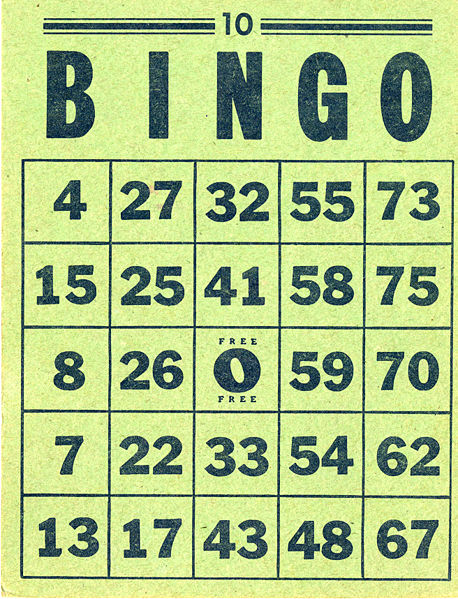
The modern version of Bingo was created in 1929. The origins of the game date back to 1530. (Image by Abbey Hendrickson.)

I missed this smart November 28 article about the last Brooklyn bingo parlors that N. R. Kleinfield wrote for the New York Times, but thankfully Longform pointed me to it. Fun fact from the piece: New York State law requires bingo games to be run for charitable purposes. An excerpt about veteran bingo devotee Cynthia Klivan:

“Ms. Klivan, a companionable retired parole-board clerical supervisor, usually comes to Nostrand Bingo Hall in the Midwood section of Brooklyn six days a week. Nostrand is one of the enduring relics of a fading game long cherished by those long done working. Play happens twice a day — at 11:30 a.m. and 7 p.m. — but not on Sunday mornings.

Ms. Klivan is a day player. Bingo is her fixation, her delight, the center around which her 74-year-old life rotates, as is true of thousands of believers who gravitate to the remaining commercial halls in the city in pursuit of human interaction and a little extra money.

Bingo has been a rite for Ms. Klivan for 30 years. To understand its galvanic pull, one need only rewind a few years, to the day her sister picked her up from the hospital after cancer surgery and asked, ‘Where do you want to eat?’ Ms. Klivan told her she didn’t want to eat. And her sister, looking hard at her, said, ‘You’re not thinking the bingo hall?’

Oh yes, she was.

And when she shambled in the door, surgical drains still in place, everyone had to chuckle. They told her: ‘Cynthia, you’re pale as a ghost. What are you doing here?’

Ignoring them, Ms. Klivan bought her cards and began marking the numbers.”

Tags: ,

"I am aware the government thinks they could be an invasive species." (Image by J.M.Garg.)

wanted: giant african land snail

I want to buy/adopt a Giant African Land Snail to keep as a pet. Please let me know if you have one or know where I can find a breeder.

I am aware the government thinks they could be an invasive species but they’re idiots and the snails are tropical and would die instantly in this climate during winter. I would never let it go and would rather kill it than set it free, but would never do either.

Hairstyle from the '70s.

The Orlando Sentinel has an odd feature about Kaylin Ransom, a 22-year-old woman who is serving a 90-day jail sentence over weekends. Ransom is required to take a booking mugshot each weekend and has used the photos to show off a different glamour pose every time. View her many looks.

Tags:

In 1977, Bell Labs produced this commercial to introduce consumers to its new Call Forwarding phone technology. Call Waiting, Speed Calling and Three-Way Calling are mentioned almost as an afterthought by the announcer.

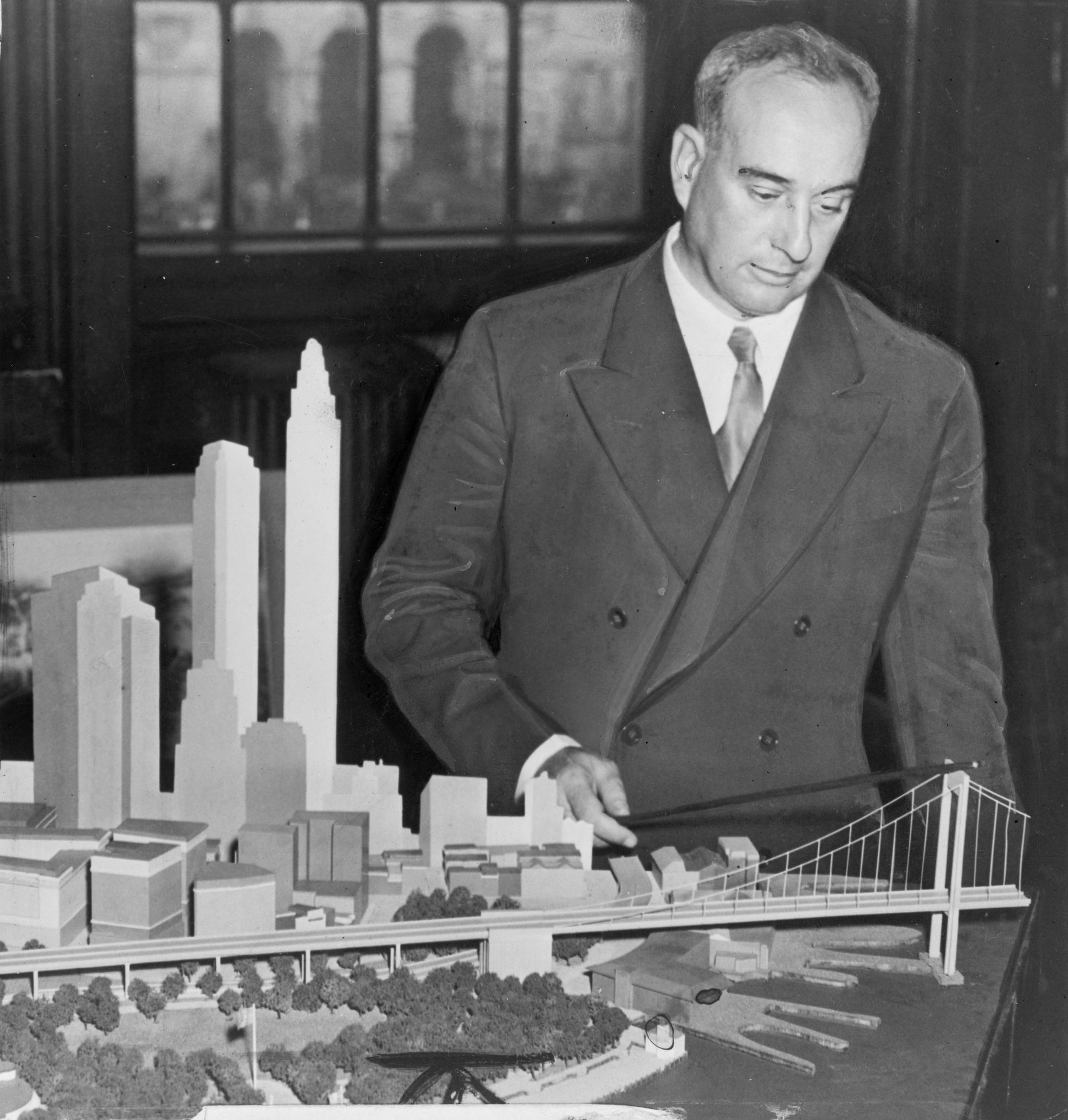
Robert Moses plans the Battery Bridge in 1939. (Image by C.M. Stieglitz.)

Robert Moses was never elected, but then kings don’t need to be. Moses was the master builder of New York City who held sway over the creation of bridges, parks, highways, museums and skyscrapers for several decades last century. As head of numerous public authorities (most of which he created), Moses was insulated from public opinion and had the type of control over the city’s fate that no single person will ever have again. Even though he created many new acres of park lands, Moses’ passion for automobiles and towers over public transportation and small neighborhoods eventually made him a reviled figure and Jane Jacobs, his arch-foe, a leading urban theorist.

C.M. Stieglitz’s 1939 World Telegram image of Robert Moses looking down on a scale model of the proposed Battery Bridge as if it were a child’s toy may say as much about Moses as Robert Caro did in his sprawling, devastating 1974 biography, Power Broker. That’s no small praise since Caro’s book may be the single best history about New York City in the 20th century.

From Paul Goldberger’s 1981 New York Times obituary about Moses:

“Robert Moses, who played a larger role in shaping the physical environment of New York State than any other figure in the 20th century, died early yesterday at West Islip, L.I. Mr. Moses, whose long list of public offices only begins to hint at his impact on both the city and state of New York, was 92 years old.

A spokesman for Good Samaritan Hospital said he had been taken there Tuesday afternoon from his summer home in Gilgo Beach. The cause of death was given as heart failure.

‘Those who can, build,’ Mr. Moses once said. ‘Those who can’t, criticize.’ Robert Moses was, in every sense of the word, New York’s master builder. Neither an architect, a planner, a lawyer nor even, in the strictest sense, a politician, he changed the face of the state more than anyone. Before him, there was no Triborough Bridge, Jones Beach State Park, Verrazano-Narrows Bridge, West Side Highway or Long Island parkway system or Niagara and St. Lawrence power projects. He built all of these and more.”

Tags: , , ,

"I was born into a family of IDIOTS." (Image by RMajouji.)

When it comes to the STOCK MARKET, some can + most can’t (I CAN)

What I am saying with this post is simple MANY MANY PEOPLE CAN’T turn a consistent profit in the market. VERY VERY FEW PEOPLE CAN

The best and truest way (I believe) to figure out who can and who can’tit’s not educational background or financial status. Rather, take a person who claims to be able to trade for profit, give this person a set time frame, monitor his ups and downs, and at the end of the exercise there will be profit or loss. That is the ONLY way to know if one is a good trader.

I AM HERE SAYING I CAN TRADE – I WAS BORN INTO POVERTY MY FAMILY IS FULL OF GREEDY SELFISH PEOPLE WHO REFUSE TO HELP ME PULL MYSELF OUT OF POVERTY + SUGGEST THINGS LIKE LEARN A TRADE !! THEY CONSIDER TRADING GAMBLING !!

For instance – my uncle, my father’s brother, has over $600,000 sitting in bonds RIGHT NOW earning an annual rate of 2.97% !! While here I am, quite possibly one of the futures GREATEST TRADERS (top 1% at least), living rent free in his house (while I “look for work”) and he thinks this is helping me!!!!

I was born into a family of IDIOTS no two ways about it ! I even think there was a mix up at the hospital, for there is no way I can think so differently from thesepeople and have the same blood line.

ANYWAY I AM A GREAT TRADER – I HAVE NEVER HAD THE REAL CHANCE TO PROOVE IT BUT I BELIEVE IN AMERICA AND THE AMERICAN DREAM AND I KNOW SOMEWHERE OUT THERE – SOMEONE IS GOING TO GIVE ME A CHANCE PLEASE CONTACT ME IF YOU ARE WILLING TO GIVE ME A CHANCE – HONESTLY I DONT WANT YOUR MONEY I WANT MY CHANCE, ALL I NEED + YOU CAN LOOK INTO WHAT I AM SAYING, IS TRADING AUTHORIZATION ON AN ACCOUNT with NO WITHDRAWLING RIGHTS = THEN I CAN SHOW YOU WHAT I CAN DO AND BEGIN THE LIFE I WAS MEANT TO LEAD, AND GET OUT OF THIS HORRIBLE PLACE. THANK YOU

“All the stern giving up of beer and potatoes…”

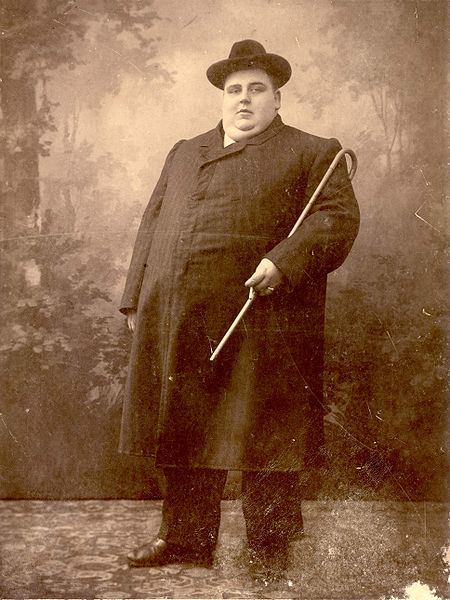
Obesity was apparently hilarious in the 1870s. No one was wringing their meaty hands over having a huge ass–they celebrated their rolls of flesh. Hence, the existence of clubs specifically for the big-boned. In the August 30, 1872 Brooklyn Daily Eagle, there was vital coverage of a Connecticut clam bake held by one such club. (The Times also filed a report.) An excerpt:

“The formation of the celebrated Fat Men’s Club was in accordance with a well received rule in the economy of fat men’s lives. There is a time in the affairs of fat men, or rather of men who are growing fat, when they view the approach of the fleshly enemy with undisguised dread. Tell Jones at thirty-two that he is getting fat and he says, ‘ah, why bless my soul!’ and views his own proportions with comic alarm; tell him so at forty, and it will be found that he has long since ceased to worry about it; tell him so at forty-five, and lo! it is more than probable that he has begun to pride himself on his bulk.

What can’t be cured must be endured. All the stern giving up of beer and potatoes, all the perspiring exercise in the world, is of no weight against the steady advance–and we say it with all due respect–of one’s own ‘corporation.’ And so, as fat men are pretty generally, philosophers, it occurred to them that it might be a good idea to make a virtue of necessity, and club their fat together for convivial purposes.

“There be none so humorous as your fellows of paunch.”

Thus the fat men’s club. And certainly if there be one thing more than another, in this sad world, likely to provoke the twinkle of the eye and the smile of satisfaction, it is the contemplation of the jolly fat man. There be none so humorous as your fellows of paunch. But what a pity it is that Falstaff knew nothing of clam bakes! How royally he might have presided yesterday at South Norwalk, Conn., where the annual feast of the neighboring Brobdignagi on the succulent bivalves of the Sound took place! It is true that there were some ostentatious light weights present, who apparently were anxious for the reputation of fat men with barely good pretences, while against one snip of a fellow we see recorded only 199 pounds. How on earth he ever got into such a society we are at a loss to imagine, and if he doesn’t speedily make up the other pound (for 200 pounds, as we are advised, is the minimum weight upon which one may legitimately arrogate to himself the proud title of fat man), we shall feel bound to agitate his exclusion from this weighty society.

Politically, as becomes such philosophers as fat men are, the South Norwalk great ones are ‘sound.’ Nineteen of them only go for Grant, while 73 of them pant sympathetically for Greeley, (who, himself, is by no means a slim person, or a lean.)  Thus, mark the concomitants of a reasonable bulk: Good nature, jovial clambakes, their names in the paper (and their weight), and sound political principles. Who wouldn’t be a fat man?”

Found Footage Festival serves up this 1988 TV spot for Isaac Asimov’s Robots VCR Mystery Game. According to Board Game Geek, the action was set in the 23rd century, as a detective attempted to solve the first murder in 100 years.

Tags:

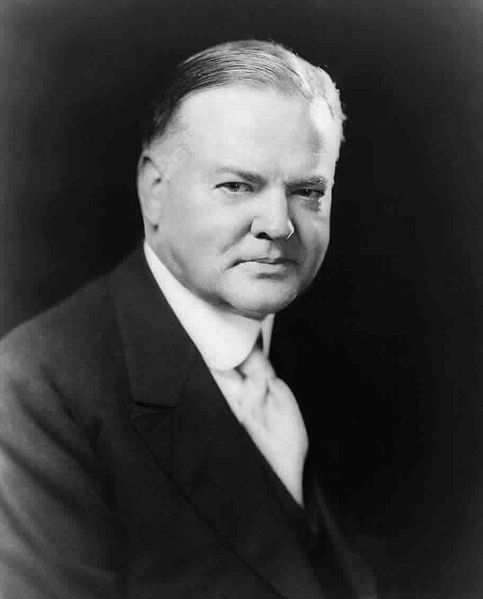
Herbert Hoover: Would it kill you to call?

This fun excerpt from Ammon Shea’s The Phone Book: The Curious History of the Book That Everyone Uses But No One Reads, comes courtesy of the great Marginal Revolution:

“The first American president to have a telephone on his desk was Herbert Hoover, who had one installed in 1929. The White House did have a telephone well before most of the country, as Rutherford B. Hayes had had one installed in the telegraph room of the executive mansion in 1878. It received little use at first, since so few other people had telephones at that time. The very first telephone book for the city of Washington, D.C. lists this presidential telephone simply as ‘No.1.'”

Tags: ,

Watching, always watching. (Image by noodlesnacks.com.)

In the future, we will be killed in new and interesting ways. Currently in development are weapons that are as fascinating as they are frightening. Business Insider has a rundown of ten such science fiction-ish weapons systems. One that’s being worked on right now that doesn’t commit murder–not yet, anyhow– is HI-MEMS, equal parts bug and bot, which is intended as a pesky reconnaissance agent. (Thanks Newmark’s Door.) An excerpt:

“The HI-MEMS is part insect, part machine. First, a micro-mechanical system is placed inside the insect during early stages of metamorphosis. The bugs operate similarly to a remote control car — the goal is to be able to control the bugs movement and location through the implanted microsystem. HI-MEMS will be used for gathering information using its sensors, such as a microphone or a gas detector.”

"My poor turtle and fish and shrimp are in a salad bowl right now." (Image by Mary Hollinger.)

broke my turtle/fish tank. anyone can drop one off for a price? – $30 (soho/i know this is a weird request)

My poor turtle and fish and shrimp are in a salad bowl right now, because I was cleaning their habitat, scrubbed to hard and cracked the glass. Look at this handsome little dude, he needs a new casa. A 10 or 12 gallon LONG tank would be perfect, but any comfy home besides the glass bowl will be better. It would be a miracle if someone could help me out tonight. I will pay you of course.

If you are even considering this, I thank you gracefully…

I’ve attached some pics from happier days (when they weren’t living in a saladbowl)

« Older entries § Newer entries »