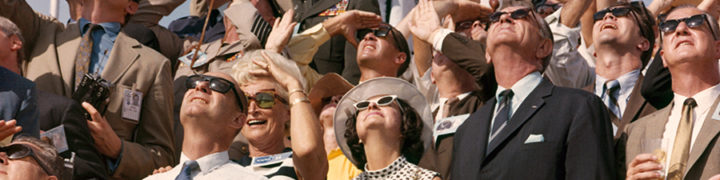
Trippy, evocative ABC Evening News promo, 1969.
You are currently browsing the archive for the Urban Studies category.

From a Time Techland story about IBM’s cognitive computing project with DARPA, which aims at building a “human” brain within ten years, though skeptics think it’s unlikely:
“Not content with building a computer that can win Jeopardy without breaking an electronic sweat, IBM has announced plans to create a ‘cognitive computer’ that will simulate the same number of neurons as the human brain, yet run on less energy than the supercomputer that made Ken Jennings look like an average human being.
The company’s SVP and Director of Research John Kelly explained during a Capitol Hill briefing yesterday that ‘Computer systems are becoming more bioinspired,’ which may also account for the desire to create a supercomputer that runs on less than the 85 KW of electricity that WATSON needed; the human brain ‘runs on 20 watts of electricity,’ Kelly said.
The project, expected to be completed within the next ten years, is being worked on in cooperation with the Defense Advanced Research Projects Agency (DARPA). The two have already created a computer that simulated the same number of neurons found in a cat.”
Footage of Macy’s Thanksgiving Day Parade, 1939. Pinocchio’s nose–whoa!

"He has learned not to let premonitions of apocalypse spoil his good mood." (Image by David Shankbone.)
If you haven’t read it already, the new issue of the New Yorker has a brief article by Mattathias Schwartz about Kalle Lasn, the odd duck publisher of Adbusters magazine who gave Occupy Wall Street its name and vision, though I doubt many protesters see things the same why he does. An excerpt:
“Lasn is sixty-nine years old and lives with his wife on a five-acre farm outside Vancouver. He has thinning white hair and the small eyes of a bulldog. In a lilting voice, he speaks of ‘a dark age coming for humanity’ and of ‘killing capitalism,’ alternating gusts of passion with gentle laughter. He has learned not to let premonitions of apocalypse spoil his good mood.
The magazine, which he founded twenty-two years ago, depicts the developed world as a nightmare of environmental collapse and spiritual hollowness, driven to the brink of destruction by its consumer appetites. Adbusters’ images—a breastfeeding baby tattooed with corporate logos; a smiling Barack Obama with a clown’s ball on his nose—are combined with equally provocative texts and turned into a paginated montage. Adbusters is not the only radical magazine calling for the end of life as we know it, but it is by far the best-looking.”
Tags: Kalle Lasn, Mattathias Schwartz
As the tragic final chapter of Natalie Wood’s life is reopened, here’s her 1966 What’s My Line appearance, with Peter Ustinov on the panel.
Tags: Natalie Wood, Peter Ustinov

"The turkeys weighed from twenty-two to twenty-seven pounds each."
Coroners have big hearts. They usually keep them in jars. A brief article about one coroner who had a different kind of big heart, from the December 24, 1892 edition of the Brooklyn Daily Eagle:
“Coroner Phillip T. Williams delighted the hearts of his employees to-day in presenting to each one a turkey. The turkeys weighed from twenty-two to twenty-seven pounds each. Coroner Williams in presenting the turkeys made a neat little speech, in which he spoke of the work of his employees during the past year and wished them a merry Christmas.”

E.O. Wilson wondered if we’re programmed to do away with ourselves in his 2005 Cosmos article, “Is Humanity Suicidal?” An excerpt:
“Unlike any creature that lived before, humans have become a geophysical force, swiftly changing the atmosphere and climate as well as the composition of the world’s fauna and flora.
Now in the midst of a population explosion, this species has doubled in number to more than 6 billion during the past 50 years. It is scheduled to double again in the next 50 years. No other single species in evolutionary history has even remotely approached the sheer mass in protoplasm generated by humanity.
Darwin’s dice have rolled badly for Earth. It was a misfortune for the living world in particular, many of our scientists believe, that a carnivorous primate and not some more benign form of animal made the breakthrough.
Our species retains hereditary traits that add greatly to our destructive impact. We are tribal and aggressively territorial, intent on private space beyond minimal requirements and oriented by selfish sexual and reproductive drives. Cooperation beyond the family and tribal levels comes hard. Worse, our liking for meat causes us to use the Sun’s energy at low efficiency.” (Thanks TETW.)
••••••••••
“It’s doomsday”:
Tags: E.O Wilson
Huntington Hartford was heir to the A&P grocery fortune and at one point one of the richest people in the world. Every bit the eccentric, he lost most of the money during his 97 years to failed marriages, quixotic arts and real estate projects and a handwriting institute.
Hartford tells David Frost about the Bahamian island he purchased:
From Hartford’s 2008 New York Times obit: “Huntington Hartford II, who inherited a fortune from the A. & P. grocery business and lost most of it chasing his dreams as an entrepreneur and arts patron, died Monday at his home in Lyford Cay, Nassau, in the Bahamas, where he had lived since 2004. He was 97.
His death was announced by his daughter, Juliet Hartford.
As a boy Huntington Hartford was treated like a prince, indulged by his mother and a staff of servants and provided with a living of $1.5 million a year. Not content merely to be rich, he longed to be a writer and, more than that, an arbiter of culture and a master builder. But his ambitions were far greater than his reach.
A famous example was the Huntington Hartford Museum, also known as the Gallery of Modern Art, at 2 Columbus Circle in Manhattan. Mr. Hartford opened it in 1964 as a showcase for 19th- and 20th-century work that went against the prevailing current of abstract expressionism, which he detested. The building, designed by Edward Durell Stone, was considered a folly or worse: ‘a die-cut Venetian palazzo on lollipops,’ wrote Ada Louise Huxtable, then the architecture critic of The New York Times.
The art within was generally unremarkable. And far from becoming the self-sustaining museum that Mr. Hartford had envisioned, it cost him $7.4 million before he abandoned the building to a rocky fate. It was occupied for many years by the city’s Department of Cultural Affairs and the Convention and Visitors Bureau and is now undergoing an extensive redesign as the future home of the Museum of Arts and Design (formerly known as the American Craft Museum).
Costlier still was Mr. Hartford’s makeover of Hog Island, in the Bahamas. After buying four-fifths of the place in 1959 and having it renamed Paradise Island, he set about developing a resort with the construction of the Ocean Club and other expensive amenities. Advisers persuaded him to stop short of exotic attractions like chariot races, but, over-extended and unable to get a gambling license, he ultimately lost an estimated $25 million to $30 million on the project.
Then there was the automated parking garage in Manhattan, the handwriting institute, the modeling agency, and his own disastrous stage adaptation of Jane Eyre, among the many lesser ventures that either bombed or fizzled.”
Tags: David Frost, Huntington Hartford

Want to lose 100 lbs….(Yonkers)
Lookin for a way to lose 100lbs in 2 to 3 months. If u kno of any ways or can help. Please feel free to contact me asap. Dieting and working out isn’t helping as much as I expect. Really need to get rid of this drastic weight.

Akio Morita envisioned Sony as a way to lift Japan from the rubble of two atom bombs to world business dominance, and he pulled off the unlikely feat. Morita was as important to his company as Steve Jobs was to Apple, but Sony has not been a player in the Internet Age. An excerpt from Bryan Gruley’s smart Businessweek article on the topic:
“There’s more to Sony’s problems than acts of God and currency traders. The maker of the Walkman and the Trinitron hasn’t driven pop culture for years. Sony thrived in an era of stand-alone electronics. When the Internet arose and digital began to mean connected, iPods became the center of people’s entertainment lives, then smartphones and tablets—which Sony was late to produce. Even the quintessential Sony product—the TV set—has become a millstone. Sony has lost nearly $8.5 billion on TVs over eight years and expects to keep losing at least into 2013. Samsung, Vizio, and other upstarts have driven prices so low that one Sony executive says the company charges less for some TVs than it cost to ship them a few years ago.
Sony has been trying to adapt to the Internet Age for at least a decade, yet remains a gargantuan and unwieldy manufacturer, with 168,200 employees, 41 factories, and more than 2,000 products from headphones to medical printers to Hollywood-grade 3D movie production equipment. Jeff Loff, a senior analyst with Macquarie Capital Securities in Tokyo, points out that Sony sells nine different 46-inch TV models in the U.S. and its mobile-phone joint venture with Ericsson offers more than 40 handsets. ‘Can you imagine how dilutive that is to your R&D?’ he says. A Sony spokesman says the number of phones is being reduced, and notes that Samsung has 15 different 46-inch TVs.
•••••••••••
Ted Koppel interviews Akio Morita about Japan’s tech dominance, in 1990, just a few years before Sony was to be eclipsed by U.S. companies:
Tags: Akio Morita, Bryan Gruley
Orson Welles defending himself, in 1965. You have to assume the interviewer had never seen Touch of Evil.
Tags: Orson Welles
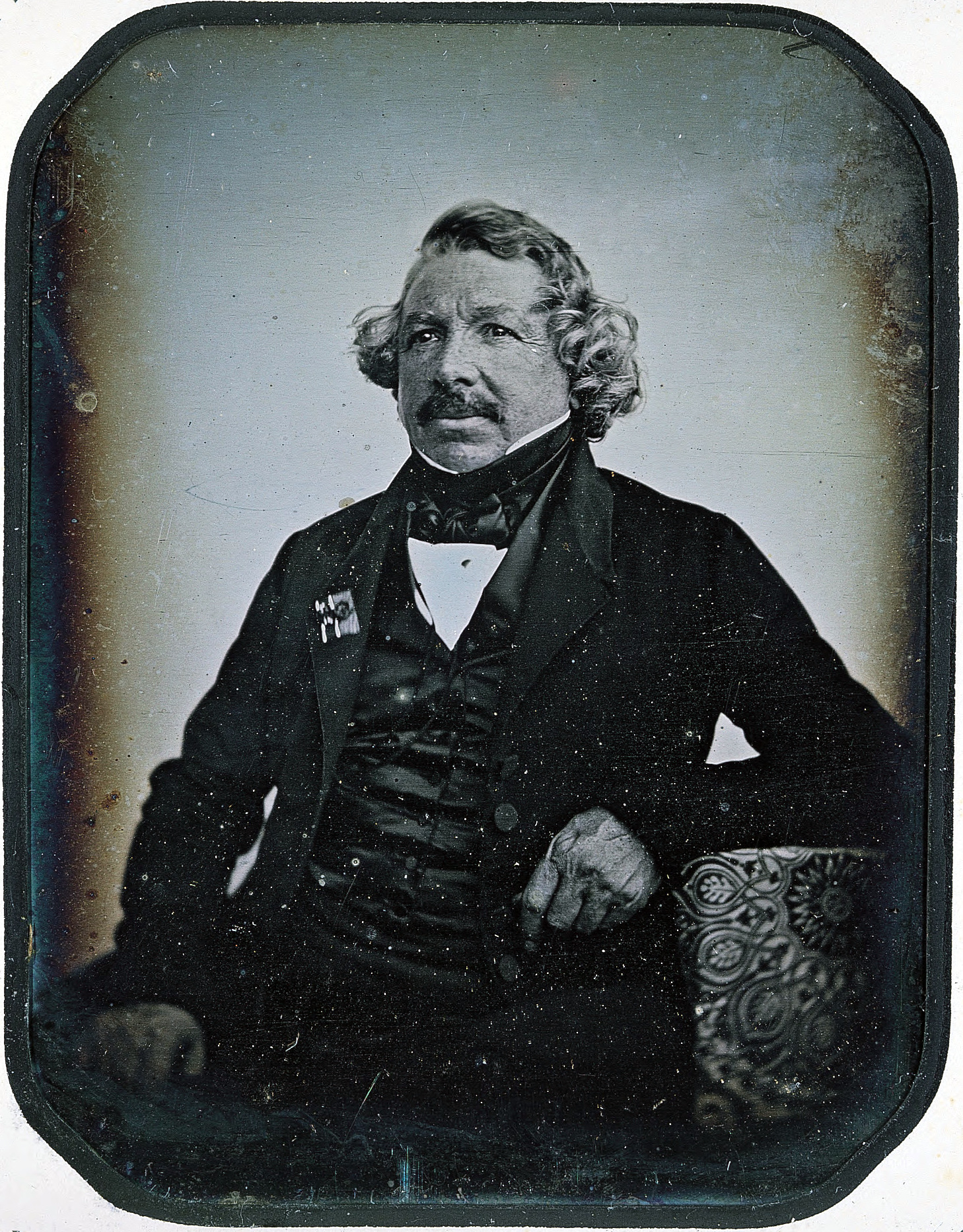
On what is Louis Daguerre’s 224th birthday, here’s a classic 1844 daguerreotype, an image of the man himself that was taken by Jean-Baptiste Sabatier-Blot. Daguerre was an artist and physicist who perfected his method of picture making in 1839, which popularized the art of the photograph. He died in 1851, seven years after this image was made, and by then modern photography had already begun to eclipse the Frenchman’s process. An outline of the rise and fall of the daguerreotype from “Sun Pictures,” published in the January 3, 1886 Brooklyn Daily Eagle:
“Daguerreotype was the name under which printing by light first became generally known, some forty-five years ago; true it is, that pictures had previously been taken by means of the sun by Niepce as far back as 1816, but the method by which these were produced was a very imprefect one, and it was not until 1839, when Daguerre published his improved process, that photography was shown to be an art capable of practical employment. We may consider, therefore, daguerreotype as the first steps in the art of photography. The process consists, as is well known, in rendering a polished silver surface sensitive to the action of light, by treating it with iodine, and thus forming iodide of silver. This compound possesses the power of absorbing, so to speak any image that is reflected upon its surface, an invisible picture being produced, which may afterward be developed or rendered visible by treatment with mercury. By means of this mode of proceeding, therefore, we are enabled to produce upon a metal plate a fixed reflection or image of any object, and pictures thus obtained are termed daguerreotypes. They are very faithful productions and possessed of much detail and delicacy of light and shade, but they possess, unfortunately, many serious disadvantages. They are not permanent, they are costly in production, and the image, being depicted upon a highly polished surface, it is difficult to examine it, excepting when the light falls upon it from a particular direction; lastly, only one picture can be obtained at each operation, and the process must be repeated for the production of every subsequent copy required. In 1851 a new era dawned upon photography.”
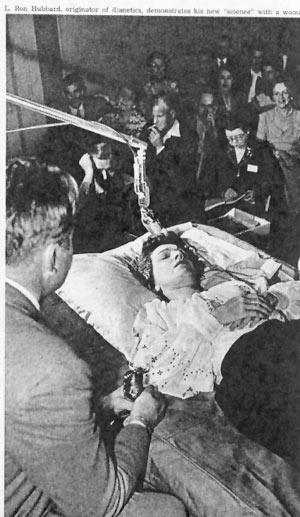
The opening of Albert Q. Maisel’s highly skeptical 1950 Look magazine article about a new pseudoscience, something called “Dianetics,” conceived by pulp writer L. Ron Hubbard:
“A year ago, L. Ron Hubbard was an obscure writer of pseudoscientific pulp fiction. Today he has:
.. Half a million devout followers.
.. A foundation with a chain of bustling branches stretching from Elizabeth, N.J. to far-off Honolulu.
.. The best-selling nonfiction book since Dale Carnegie discovered the secret of success.
.. A swarm of pop-eyed students, who stand in line for the privilege of plunking down 500 bucks for a one-month course which converts them into “professional auditors,” complete with a couch and capable of outpsyching any ordinary psychiatrist.
.. Even larger and faster-growing tribes who pay $200 each for the 15-lecture short course – or $25 an hour to have their ‘cases opened’ by $500 professional auditors.
.. And a small army of associate members, at a mere 15 smackers each, who gratefully keep up with the whirlwind developments of Hubbard’s new ‘science’ of dianetics through the Dianetics Auditors Bulletin.
Dianetics and the Discovery of Fire
Hubbard, you may gather from the foregoing, has discovered the key to success and demonstrated once again that Barnum underestimated the sucker birth rate.
But that, by Hubbard’s own admission, is probably the least of his discoveries.
Unencumbered by the modesty that hog-ties ordinary mortals, Hubbard starts his book – THE BOOK, his followers call it – with the calm assertion that ‘the creation of dianetics is a milestone for Man comparable to his discovery of fire and superior to his invention of the wheel and the arch.’
A few lines beyond, one learns that, with dianetics, ‘the intelligent layman can successfully and invariably treat all psychosomatic ills and inorganic aberrations.’
Farther on, one discovers that these psychosomatic ills, ‘uniformly cured by dianetic therapy.’ include such varied maladies as eye trouble, bursitis, ulcers, some heart difficulties, migraine headaches and the common cold.
But you ain’t heard nothing yet.”
Tags: Albert Q. Maisel, L. Ron Hubbard
I’m not a part of Occupy Wall Street, and I certainly recognize it as a flawed movement, but movements for real change always are. When you search, you make false starts and have to retrace your steps and begin again. Martin Luther King, Jr. led some protests that were utter failures, but his constancy of vision sustained the Civil Rights Movement despite its missteps. My guess is that OWS won’t ultimately change much, whether it be tax codes or politicians using Congress as a cash register, though I hope I’m wrong. I know a lot of forces in the late 19th-century came together in America to cause real economic change, but something like that is the exception and not the rule. However, this incredibly condescending Daily Show piece, which obliviously accuses OWS organizers of being condescending, is too smug to be believed.
I’ll say one thing for Occupy Wall Street: It’s far better than Jon Stewart’s March for Nothing on Washington from last October, which allowed the Daily Show host to practice an inane brand of moral equivalency and spew a few platitudes, before everyone returned to their comfortable homes feeling better about themselves, without having had to confront the complexity of actual social responsibility. Nice and neat, with no chance of progress.
Tags: Jon Stewart
Currency gone plastic.
A brief film about several decades of BMW Art Cars, which began in 1975 with Alexander Calder.

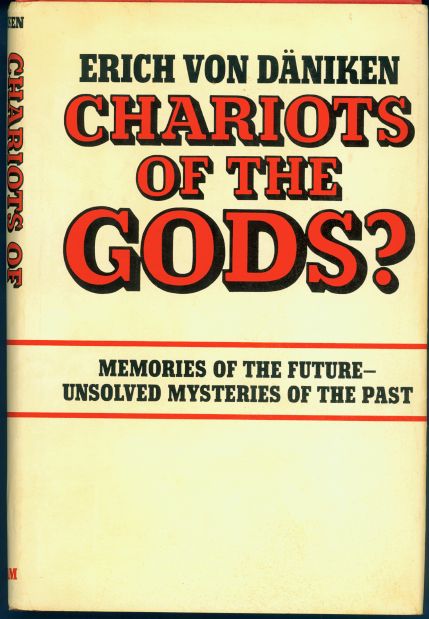 Erich von Däniken is a shifty, good-natured salesman of horseshit who became something of a sensation in the 1960s when he published the best-selling Chariots of the Gods? and kicked off an “ancient astronauts” fad that posited that it was plausible that extraterrestrials had visited Earth at the time of the dawn of humans and had mingled with–and even procreated with–our ancestors. Each time science pointed out the holes in his “theories,” the author was canny enough to revise and reposition his arguments, changing the shoe size of his Bigfoot, packing a little more powder onto his Abominable Snowman. In 1974, an incredulous Playboy magazine interviewed von Däniken–a “stocky Swiss ex-convict” is how they described him. The interview’s opening:
Playboy:
Since your theories appear to change somewhat with the times, can you tell us what you currently believe?
Erich von Däniken:
I say in my books not only that we have been visited from outer space in ancient times but that those visitors had sexual intercourse with our ancestors. Many scientists reply, “That is damned nonsense, because even if we accept that there are extraterrestrial beings and that they can travel in space, why should they come to Earth, out of all the billions of planets? And why should visitors from outer space look like us and have a similar way of thinking?” This point of view–and it is certainly a serious one–is, in my eyes, wrong. If we admit that the visitors had intercourse with us and altered, by artificial mutation, our intelligence, then it means we are the products of them. A child can never ask, ‘Why should my parents look like me?” There is no other possibility; he came from his parents. This does not deny Darwin and his theory; I fully admit that we came from apes. My question is why and how we became intelligent. To this question each mythology, each old religion gives the same answer: The gods created men after their own image.•
Tags: Erich Von Daniken

"Any ideas as to what this dream might mean?"
Snake Dream (New York)
I had a dream that I was taking a **** on the floor of my apartment and a snake or something like it was in the feces. I am a male in my mid-30s and I think my girlfriend was there. I can’t entirely remember if it was her, but definitely a woman. Any ideas as to what this dream might mean? I’ve looked on some dream websites but they say different things.

From James Kirchick’s righteously bruising Foreign Affairs piece about that modern totalitarian hellhole, Belarus, which is lorded over by vicious thugocrat, Aleksandr Lukashenko, who has not only brutalized his opponents but even gone so far as to crack down on (no joke) applause:
“That Belarus has been ruled for seventeen years by a regime that would proscribe clapping is hardly the least of its problems. But as the former Soviet republic faces the worst economic crisis since the dissolution of the Soviet Union, Lukashenko’s ossified leadership is, for the first time, actually beginning to threaten his near-two decade rule. Belarus’s economic predicament is the result of several factors, but was made inevitable once Lukashenko suddenly increased the salaries of public employees by thirty percent just weeks before last year’s presidential election, the results of which were declared on December 19th. In a country where little has changed since Soviet times and where some eighty percent of the public is still employed by the state, the move was Lukashenko’s attempt to literally buy support. Given his near total control over the country’s media, domination of the electoral commission, and harassment of opposition activists, however, he didn’t need to resort to such a Peronist tactic. His regime rigged the ballot in a process widely condemned by international observers, dispatched violent riot police to set upon thousands of peaceful protestors, and imprisoned seven of the nine opposition presidential candidates, two of whom remain in jail to this day.
A former collective farm manager who won a democratic election in 1994 and has withstood both Western sanctions and Russian pipeline politics to stay in power, Lukashenko can definitely boast of possessing certain leadership skills, but basic economic literacy is clearly not among them. Artificially raising the salaries of the vast majority of the country’s citizens was obviously going to boost inflation, which it almost immediately did. By April, the country’s foreign currency reserves had fallen by more than $2 billion to $3.7 billion. The following month, the government devalued the ruble against the dollar by thirty-seven percent. From the time I visited Minsk in December to my return in June, the value of the ruble had been cut in half.
In the aftermath of last year’s brutal post-election crackdown—which saw more than seven hundred people detained—a pall of desperation descended upon the country’s already beleaguered democrats. Many of the Belarusians I spoke to that frigid December night, both those formally affiliated with opposition politics and those who had never taken part but felt inspired to gather outside the main government building and demand an end to Lukashenko’s rule, genuinely felt that they had a chance to bring down the man often described as ‘The Last Dictator in Europe.’The large presence of international media and election observers (welcomed by Lukashenko in a halfhearted bid to prove his democratic bona fides), added to the perception that he would negotiate with the people on the street. That naive hope came crashing down when Lukashenko unleashed truncheon-wielding riot police, expelled representatives from the Organization for Security and Cooperation in Europe, and held a series of Stalinist show trials against his opponents. Many activists fled the country, adding to the already sizable Belarusian diaspora.” (Thanks Browser.)
Tags: Aleksandr Lukashenko
Remarkably creepy. Thank you, Japan.

In HiLoBrow, Peggy Nelson conducts an excellent interview with media ecologist Douglas Rushkoff, which covers currency, corporations and how the word “home” was gradually redefined to have an isolating effect. An excerpt:
“Rushkoff: From the 1920s to the 1970s an iconography was developed that turned corporations into our heroes. Instead of me buying stuff from people I know, I actually trust the Quaker Oat Man more than you. This is the result of public relations campaigns, and the development of public relations as a profession.
Nelson: Did the rise of PR just happen, or did they have to do that in order to prevent things from getting out of control?
Rushkoff: They had to do that in order to prevent things from getting out of control. The significant points in the development of public relations were all at crisis moments. For example, labor movements; it’s not just that labor was revolting but that people were seeing that labor was revolting. There was a need to re-fashion the stories so that people would think that labor activists were bad scary people, so that people would think they should move to the suburbs and insulate themselves from these throngs of laborers, from ‘the masses.’ Or to return to the Quaker Oats example, people used to look at long-distance-shipped factory products with distrust. Here’s a plain brown box, it’s being shipped from far away, why am I supposed to buy this instead of something from a person I’ve known all my life? A mass media is necessary to make you distrust your neighbor and transfer your trust to an abstract entity, the corporation, and believe it will usher in a better tomorrow and all that.
It got the most crafty after WWII when all the soldiers were coming home. FDR was in cahoots with the PR people. Traumatized vets were coming back from WWII, and everyone knew these guys were freaked out and fucked up. We had enough psychology and psychiatry by then to know that these guys were badly off, they knew how to use weapons, and — this was bad! If the vets came back into the same labor movement that they left before WWII, it would have been all over. So the idea was that we should provide houses for these guys, make them feel good, and we get the creation of Levittown and other carefully planned developments designed with psychologists and social scientists. Let’s put these vets in a house, let’s celebrate the nuclear family.
Nelson: So home becomes a thing, rather than a series of relationships?
Rushkoff: The definition of home as people use the word now means ‘my house,’ rather than what it had been previously, which was ‘where I’m from.’My home’s New York, what’s your home?’
Nelson: Right, my town.
Rushkoff: Where are you from? Not that ‘structure.’ But they had to redefine home, and they used a lot of government money to do it. They created houses in neighborhoods specifically designed to isolate people from one another, and prevent men in particular from congregating and organizing — there are no social halls, no beer halls in these developments. They wanted men to be busy with their front lawns, with three fruit trees in every garden, with home fix-it-up projects; for the women, the kitchen will be in the back where they can see the kids playing in the back yard.
Nelson: So you don’t see the neighbors going by. No front porch.
Rushkoff: Everything’s got to be individual, this was all planned! Any man that has a mortgage to pay is not going to be a revolutionary. With that amount to pay back, he’s got a stake in the system. True, he’s on the short end of the stick of the interest economy, but in 30 years he could own his own home.” (Thanks Longform.)
••••••••••
“And now my bags are packed for travelin’ / Glass, concrete, and stone / It’s just a house, not a home”:
“Here’s your ticket, pack your bag / Time for jumpin’ overboard / Transportation is here / Burning down the house”:
Tags: David Byrne, Douglas Rushkoff, Peggy Nelson
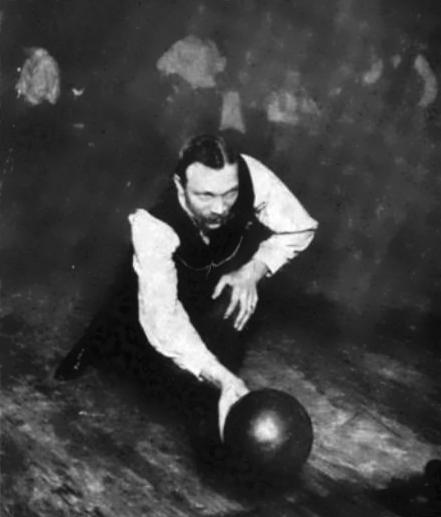
This brief article in the August 13, 1885 Brooklyn Daily Eagle has it all: a remarkable degree of ethnic insensitivity by the editors, a tale of brazen thievery and a bowling-alley proprietor with the most unfortunate name ever. The story in full:
“Two Italians entered the bowling alley of Dick Cummeys’, on Fourth Avenue, Bay Ridge, yesterday afternoon, during the temporary absence of that gentleman, and endeavored to ‘clean out’ the place. Mr. Cummeys returned just in time to see the two foreigners putting the last article of furniture on a wagon. When he demanded an explanation they set upon him and gave him an unmerciful beating. Then they made their escape.”
Tags: Dick Cummeys
Dr. Bonassar of Cornell prints human ears.
Tags: Lawrence Bonassar

In what is ostensibly a New York Times op-ed piece about Mitt Romney bringing Mormonism to the U.S. political mainstream, but is actually a condemnation of the widespread worship of greed, Harold Bloom crystallizes some truly perplexing things about American voting patterns. An excerpt:
“A dark truth of American politics in what is still the era of Reagan and the Bushes is that so many do not vote their own economic interests. Rather than living in reality they yield to what oddly are termed ‘cultural’ considerations: moral and spiritual, or so their leaders urge them to believe. Under the banners of flag, cross, fetus, exclusive marriage between men and women, they march onward to their own deepening impoverishment. Much of the Tea Party fervor merely repeats this gladsome frolic.”
Tags: Harold Bloom, Mitt Romney

The opening of “2050 Or Bust,” Frederick Deknatel’s L.A. Review of Books piece about the bold future of urban planning that Mubarak had envisioned for Egypt, which he never, ever would have delivered:
“This past August in Heliopolis, the Cairo suburb built over desert by a Belgian industrialist in 1905, I sat in an architect’s office, a place called Cube Architectural Consultants, and heard a glowing, impromptu presentation on ‘Cairo 2050.’ Cairo 2050 is a series of outlandish master plans and megaprojects for Egypt’s capital that the regime of Hosni Mubarak began promoting in 2008, with the help of the United Nations and the Japanese government. Its future, an earnest architect informed me gently, was ‘uncertain in the new Egypt.’
Imagine Dubai in the Nile Valley, if instead of building it on empty sand, futurist skyscrapers and business parks rose over what are now the packed, informal neighborhoods that today house the majority of Cairo’s estimated 17 million people. This authoritarian, outsized development ‘vision’ would involve relocating millions to the furthest edges of the desert — areas banally termed ‘new housing extensions’— to make way for ’10 star’ hotels, huge parks, ‘residential touristic compounds,’ and landing-strip-sized boulevards lined with a monotony of towers. It’s unlikely to happen in an Egypt after Mubarak — if it was ever possible at all, given budgets and popular resistance. Still, Cairo 2050 offers a glimpse at the Egyptian government’s approach to urban planning and policy. As David Sims, an economist and consultant who has worked in Cairo since 1974, writes in Understanding Cairo: The Logic of a City Out of Control, the Cairo 2050 project represents ‘a continued penchant for the manufacture of unrealistic dreams’ on the part of ‘government planners and their consultants.'”