Non-invasive diagnostics that tell you about illnesses in your zip code and in your body. From Scanadu.
You are currently browsing the archive for the Urban Studies category.
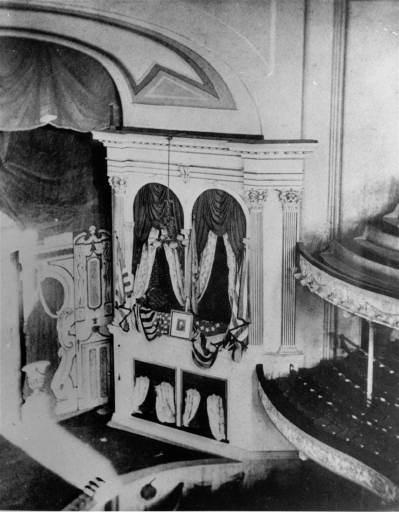
The recent Secret Service fiasco in Colombia made me think about John Frederick Parker, one of the original Washington D.C. police officers, who was fired in 1868 for literally sleeping on the job. (He had earlier been acquitted of charges of dereliction of duty and visiting prostitutes.) It was in 1865, however, when Parker had the costliest lapse of his stumblefuck career. From an article about his death in the July 20, 1890 Brooklyn Daily Eagle:
“The one man in the world who could have prevented the assassination of President Lincoln is dead. John Fredrick Parker, born in Winchester, Va., came to Washington some time before the firing upon Fort Sumter and soon found employment upon the metropolitan police force. When in 1862 it was decided to strengthen the regular force of doorkeepers and watchmen at the White House with a squad of policemen, Parker was one of those selected. It thus happened that when President Lincoln and party entered the old Ford Theater on the night of Good Friday, 1865, they were accompanied by Parker as guard. He took the position at the door to the private box from which President Lincoln watched the performance, where he was expected to remain and prevent the entrance of every one except the members of the party. As the play proceeded Parker from his post could hear just enough of what was said on the stage to arouse his curiosity, and it was not long before he left the door and edged his way toward the auditorium. He finally took a seat in the orchestra, or ‘pit’ as it was then called, where he had scarcely settled himself when the whole audience was surprised by the report of a pistol shot. The assassin, Booth, had stealthily approached the door of the president’s private box, where, finding no one to challenge him, he entered unannounced and fired the fatal shot. There is no question in the minds of those who are familiar with the details that had Parker remained at his post Booth could never had taken President Lincoln unawares.”
The newest breed of information companies (Google excluded) create wealth, not jobs. That’s not an accusation, just a fact. Economist Brian Arthur refers to this dynamic as the “Second Economy,”–new technology shrinking the American workforce in an inversion of how railroad technology increased it during the 19th century. From Bill Davidow’s smart, recent article about the Second Economy at the Atlantic:
“When the disappointing jobs numbers were reported last week (employers added 120,000 jobs in March, about half the number reported in the two previous months), analysts tripped over themselves looking for an explanation. Of course, jobs numbers are bound to vary, but in my view the long-term trend calls for more jobs to disappear, and the reason is clear as day: the exploding Second Economy.
The Second Economy — a term the economist Brian Arthur uses to describe the computer-intensive portion of the economy — is, quite simply, the virtual economy. One of its main byproducts is the replacement of low-productivity workers with computers. It’s growing by leaps and bounds, brimming with optimistic entrepreneurs, and spawning a new generation of billionaires. In fact, the booming Second Economy will probably drive much of the economic growth in the coming decades.
Unfortunately, the Second Economy will not create many jobs.”
••••••••••
“Assembly lines that fix themselves”:
Tags: Bill Davidow, Brian Arthur
Some people move noses of aircrafts into their garages so that they can enjoy a flight simulator hobby. James Price is one of those people. From Zoe Francis at the Mercury News:
“In his spacious three-car garage Price has a well-traveled jetliner cockpit tucked in next to the family car.
Aviation experts say Price, 52, is one of only a handful of people in the world who have built their own flight simulator cockpit in an actual jet nose.
His dream of building a full-sized jet simulator began nearly 20 years ago when Price joined an online group of flight simulator hobbyists — folks who typically use computer flight simulator programs or build fake cockpits at home.
Price, an air traffic controller and a private pilot who’s never flown a jet but dreams of doing so one day, began buying genuine 737 parts and building mock cockpits.
‘My first couple of versions of the cockpit … were just basically made up of wood in my spare room in my house.'”
Tags: James Price, Zoe Francis
Trailer for the Great Rock ‘n’ Roll Swindle. Far better than the actual movie.
Tags: Malcolm McLaren, Sex Pistols
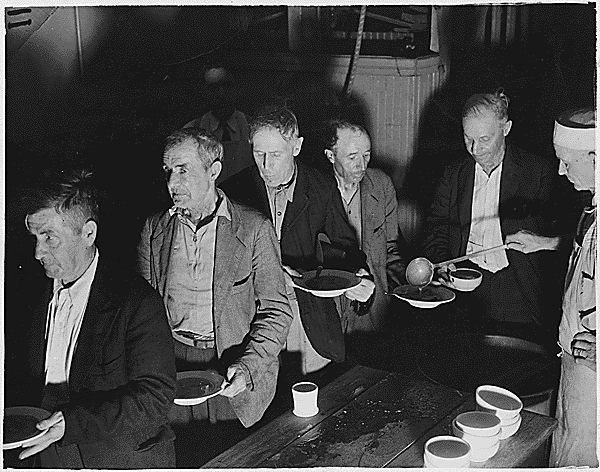
For more than 30 years, American conservative politicians, often bearing flags and crosses, have exploited fears and prejudices and promised to return us to an earlier, grander time that never existed. But they really just wanted our money. As we’ve been led down this dark path, other global economies have progressed, leaving the middle class in the U.S. especially vulnerable. From “Economy Killers,” a Salon essay by Paul Krugman and Robin Wells about the polarized non-response to the Great Recession:
“America emerged from the Great Depression and the Second World War with a much more equal distribution of income than it had in the 1920s; our society became middle-class in a way it hadn’t been before. This new, more equal society persisted for 30 years. But then we began pulling apart, with huge income gains for those with already high incomes. As the Congressional Budget Office has documented, the 1 percent — the group implicitly singled out in the slogan ‘We are the 99 percent’ — saw its real income nearly quadruple between 1979 and 2007, dwarfing the very modest gains of ordinary Americans. Other evidence shows that within the 1 percent, the richest 0.1 percent and the richest 0.01 percent saw even larger gains.
By 2007, America was about as unequal as it had been on the eve of the Great Depression — and sure enough, just after hitting this milestone, we plunged into the worst slump since the Depression. This probably wasn’t a coincidence, although economists are still working on trying to understand the linkages between inequality and vulnerability to economic crisis.
Here, however, we want to focus on a different question: Why has the response to the crisis been so inadequate? Before financial crisis struck, we think it’s fair to say that most economists imagined that even if such a crisis were to happen, there would be a quick and effective policy response. In 2003 Robert Lucas, the Nobel laureate and then-president of the American Economic Association, urged the profession to turn its attention away from recessions to issues of longer-term growth. Why? Because, he declared, the ‘central problem of depression-prevention has been solved, for all practical purposes, and has in fact been solved for many decades.’
Yet when a real depression arrived — and what we are experiencing is indeed a depression, although not as bad as the Great Depression — policy failed to rise to the occasion.”
Tags: Paul Krugman, Robin Wells
Robert Epstein and B.F. Skinner observe humans, train pigeons, in 1982.
Tags: B.F. Skinner, Robert Epstein

Are you looking to start over? (everywhere)
Is your life not going in the direction you wish, to the point that at times you just wish you were someone else and elsewhere? We’ve all been there, so just drop a line and I will listen and help if I can. Talk to you soon!
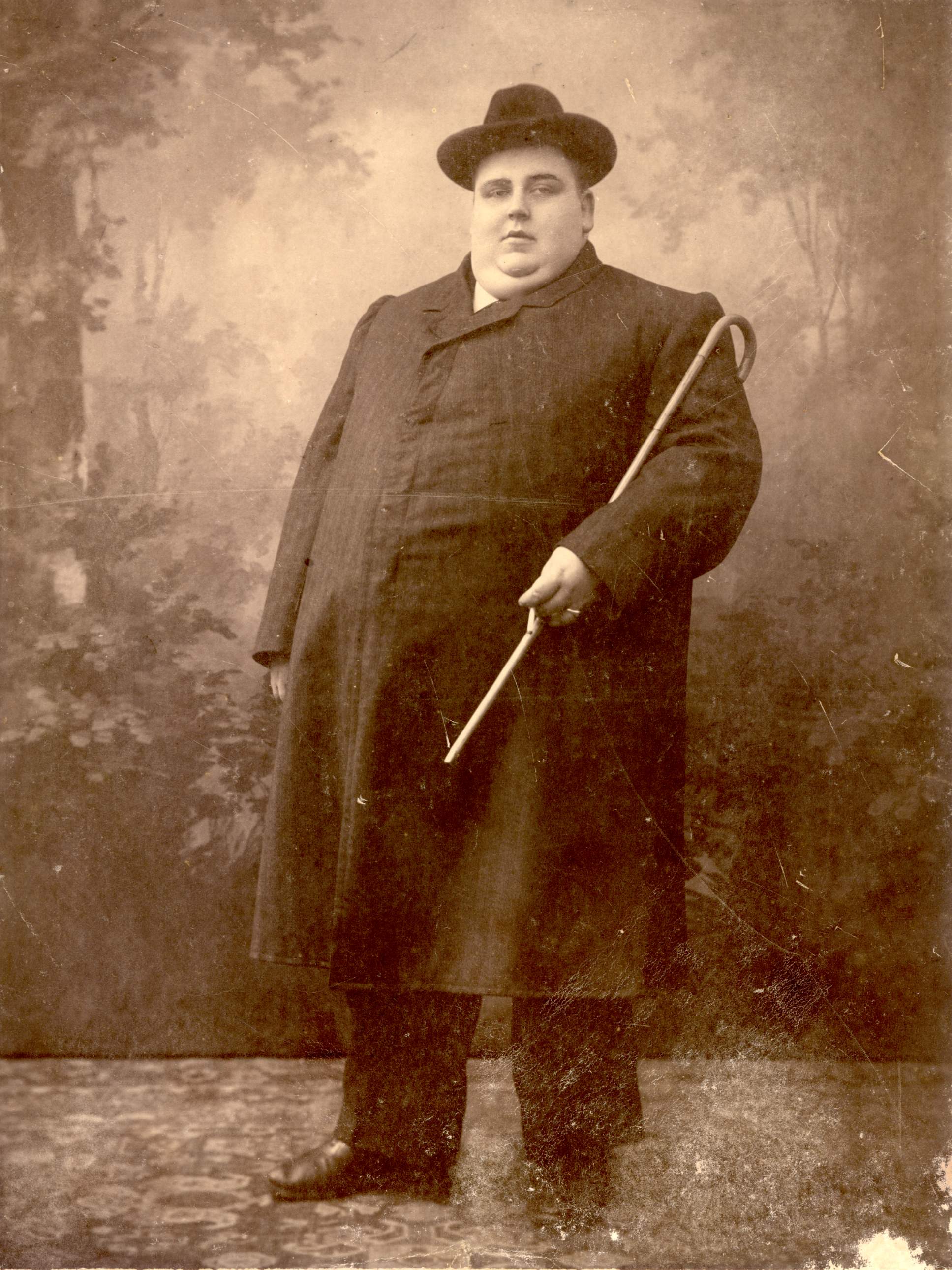
"He says that he will be a scorcher."
From the August 7, 1896 edition of the Brooklyn Daily Eagle:
“The Fat Men’s Bicycle Club, organized by Charles Schwalbach at his academy in the Hanson Place Armory, promises to afford considerable amusement. The latest to signify their intention of joining are Uncle Bill Schenck of Flatlands and John Trot of Bergen Street. Mr. Trot weighs 300 pounds, and he says that he will be a scorcher. Uncle Bill Schenck, who weighs 350 pounds, is one of the wealthiest residents of Flatlands, where he owns a large farm. His farming days are over, so he has plenty of time to devote to the wheel. He wants to be a trick rider.”
The race car driver as philosophical hero, realizing the mission at hand, though repetitive, is essential. Steve McQueen, Le Mans, 1971.
Tags: Steve McQueen
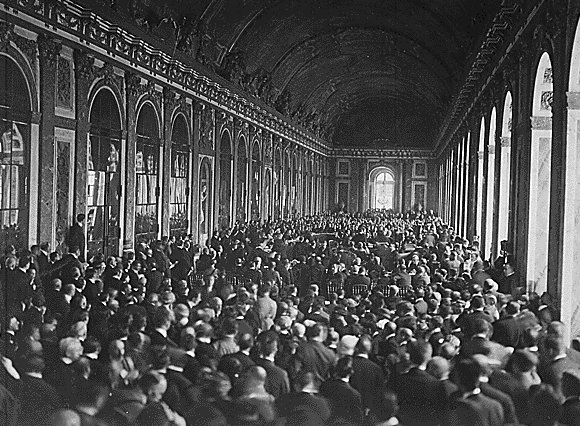
It’s difficult to believe that the average person in China will ever know the same quality of life that Americans enjoy today, even if their economy blows past ours (which doesn’t seem to be a fait accompli). Because of China’s population size, even a super economy probably wouldn’t be able to put three SUVs in every garage. But that’s not to say that a large population foretells poverty, nor do technologies that displace workers. In the long run, a critical mass of people and technology seem to effect a greater prosperity. From “The Population Boon,” Philip E. Auerswald’s anti-Malthusian think piece in the American Interest:
“Almost exactly four years after V-J Day, on August 13, 1949, an MIT professor named Norbert Wiener wrote a letter to Walter Reuther, president of the United Auto Workers (UAW), containing a darkly prophetic message. Within a decade or two, Wiener warned, the advent of automatic automobile assembly lines would result in ‘disastrous’ unemployment. The power of computers to control machines made such an outcome all but inevitable. As a creator of this new technology, Wiener wanted to give Reuther advance notice so that the UAW could help its members prepare for and adapt to the massive displacement of labor looming on the horizon.
Now, if anyone in 1949 grasped the disruptive potential of computing machines, it was Norbert Wiener. A prodigy who earned his Ph.D. from Harvard in mathematical philosophy at age 18, he had contributed to the development of the first modern computer, created the first automated machine and laid the groundwork for a new interdisciplinary science of information and communication that he termed ‘cybernetics.’ His work anticipated and inspired Marshall McLuhan’s heralded studies of mass media, provided the initial impetus for the explorations by James Watson and Francis Crick that led to the discovery of the double helix, and spurred science-fiction writer William Gibson to coin the term ‘cyberspace’ to describe a type of virtual world that Wiener himself had envisioned two decades before the creation of the first web page.
Reuther took Wiener’s letter seriously, responding promptly by telegram: ‘Deeply interested in your letter. Would like to discuss it with you at earliest opportunity following conclusion of our current negotiations with Ford Motor Company. Will you be able to come to Detroit?’ When the two met in March 1950, they pledged to work together to create a labor-science council to anticipate and prepare for major technological changes affecting workers.
At about the same time Reuther and Weiner were meeting, a brain trust was gathering in the orbit of John D. Rockefeller III to address another problem: global overpopulation. The basic concern of this group was both old and simple: Human populations keep growing, but the planet isn’t getting bigger, so sooner or later disaster will be upon us. Funding from the Rockefeller Brothers Fund permitted the creation of the Population Council in 1952. John D. Rockefeller III appointed Frederick Osborn to be the Council’s first president.” (Thanks Browser.)
••••••••••
Frightening you and your children about overpopulation, 1970s:
Tags: Philip E. Auerswald

"The scientists have exploited the natural behavior of soldier crabs to design and build logic gates." (Image by Peter Ellis.)
Using the predictable swarming patterns of soldier crabs, Yukio–Pegio Gunji of Kobe University has designed a very unorthodox analog computer. From David Szondy at Gizmag:
“Thanks to Yukio–Pegio Gunji and his team at Japan’s Kobe University, the era of crab computing is upon us … well, sort of. The scientists have exploited the natural behavior of soldier crabs to design and build logic gates – the most basic components of an analogue computer. They may not be as compact as more conventional computers, but crab computers are certainly much more fun to watch
Electricity and microcircuits aren’t the only way to build a computer. In fact, electronic computers are a relatively recent invention. The first true computers of the 19th and early 20th centuries were built out of gears and cams and over the years many other computers have forsaken electronics for marbles, air, water, DNA molecules and even slime mold to crunch numbers. Compared to the slime mold, though, making a computer out of live crabs seems downright conservative.”
••••••••••
Soldier crabs in the Philippines:
Tags: David Szondy, Yukio-Pegio Gunji

Brian Eno discussing his 1978 sound installation, Ambient 1: Music for Airports.
Tags: Brian Eno
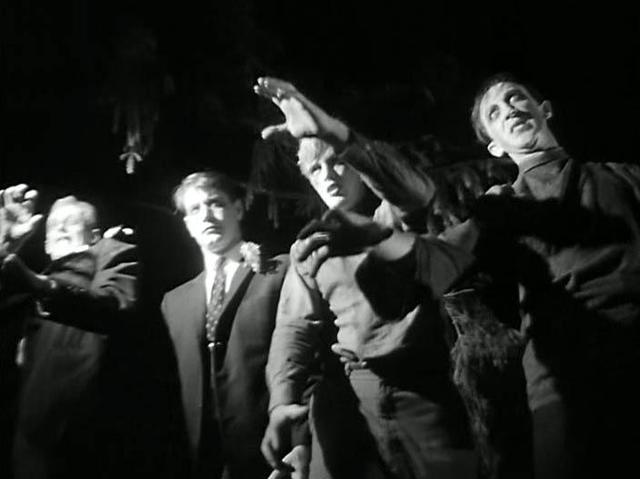
Despite low crime rates, the 1% are spending extravagantly on high-tech security for their homes. Is income inequality making everyone jittery? Is it something else? From Lauren A.E. Shuker’s recent WSJ piece:
“‘We had the worst housing market of all time, but the security business grew right through it,’ says Jeff Sprague, a managing partner who follows the industry at Vertical Research Partners.
There’s no single factor behind the drive to fortify. Crime rates have largely fallen around the country; the murder rate is half what it was in 1991, and robberies fell 10% in 2010 from the year before. Still, some gate-makers note that the proliferation of personal information on the Internet has increased some owners’ feelings of vulnerability and desire for privacy. Others cite the recent focus on income disparity between America’s rich and poor.”
••••••••••
“It is said that the people are revolting”:
Tags: Lauren A.E. Shuker
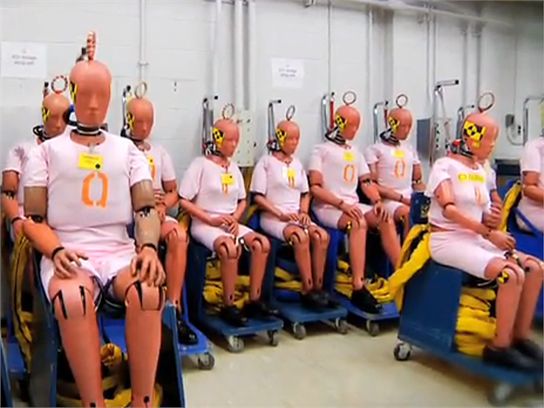
Are you concerned that one person and an ethically dubious one, Mark Zuckerberg, is setting the course for the new connectivity? You should be, because it is concerning. But the modern ways will not be unlearned, even if Zuckerberg himself should fall by the wayside. From “Facebook: Like?” by Robert Lane Greene at Intelligent Life, an essay which analyzes fears about the social networking giant but gives equal attention to the positives it provides:
“So for all the capricious decor and talk of breaking things, Facebook is very well aware that the eyes of the world are on it as an incumbent giant, not an insurgent. Besides ‘Move Fast and Break Things’ there are signs telling employees to ‘Stay Focused and Keep Shipping.’ Visitors are greeted warmly, but also presented with the standard Silicon Valley non-disclosure agreement before they can proceed past security. A billion people connected as never before in history. But Facebook also engenders anxiety on levels from the personal to the political, worries about a world in which private lives are always on display. What is 24-hour social networking doing to our self-expression, our self-image, our sense of decorum? Have we finally landed in the ‘global village’ coined by Marshall McLuhan in the 1960s? What if you don’t like it there? Is there anywhere else to live?
And what is Facebook, anyway? The most obvious point of historical comparison is the social networks that preceded it. First there was Friendster, the flirt-and-forget site of the first half of the 2000s. Then everyone dumped Friendster for MySpace, and MySpace was bought by News Corp for $580m. Its value soared to $12 billion, and the received wisdom was that MySpace would take over the world. Then it didn’t, and News Corp sold it for $35m, because someone else had finally got social networking right. Started by Mark Zuckerberg in 2004, Facebook went from a Harvard dorm room to the rest of teenage America’s bedrooms to hundreds of millions of people all around the world—even parents and grandparents. Along the way, Facebook has fuelled revolutions in the Middle East, and inspired an Oscar-winning movie. Other social networks can only try to build out from the few niches it hasn’t already filled. Facebook is the undisputed champion of the world.
But the real comparison is not with other social networks. To give real credit to its achievement today and its ambitions for the future, it can only be said that Facebook’s true competitor is the rest of the entire internet.” (Thanks Browser.)

From an 1891 edition of the Detroit Free Press:
“A singular freak of nature has manifested itself at Saratoga. Mrs. Francis originally had very black eyes and a beautiful head of very black hair. She is about 70 years old now, in good health and a rich widow. When she was about 50 her hair began to turn white, and in a few years the whole of it was as white as snow, and so remained until about a year ago, when it began to turn black again, and has now, without the use of any artifical means and purely as a freak of nature, almost wholly returned to its original color, and is as long and silky as when she was a young woman.”

Tags: Mrs. Francis
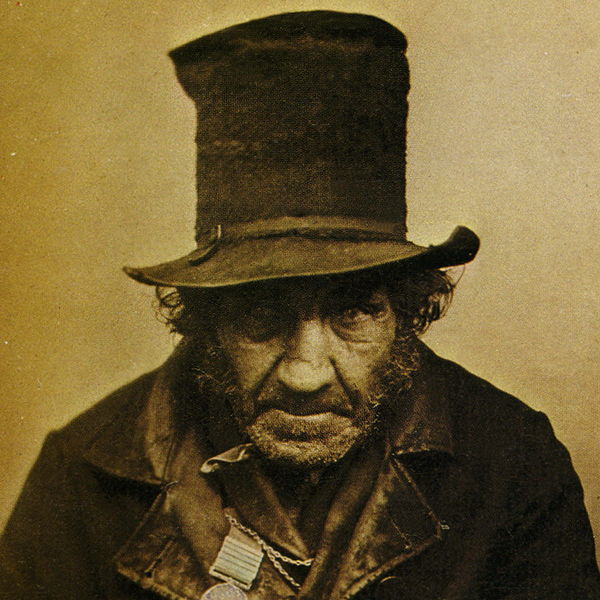
"I will hunt you down and make you miserable."
Turtle Tank for sale – $50 (pearl river)
dimensions are 25 X 25 X 10 inches
Also of you decide to send spam emails or keep my email for fruadulence i am famous for reporting to FBI and FCC….I will hunt you down and make you miserable.
Thanks for your interest.

"Thanks for your interest."
Atul Gawande, great writer and thinker, holds forth at TED on the modern problem of making medical systems–and all complicated systems–work.
Tags: Atul Gawande
"Boom!"
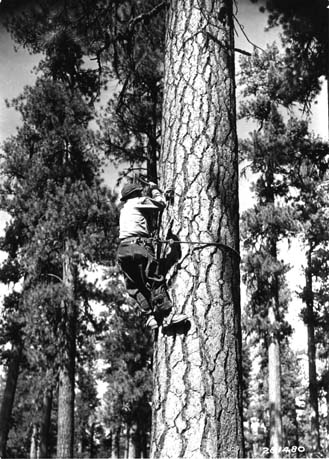
I didn’t realize until five minutes ago that some people are sexually aroused by trees. (If anyone has a time machine that will return me 301 seconds into the past, please let me know.) Apparently it’s a real thing called dendrophilia. An excerpt from an Ask Me Anything on Reddit by someone who claims to be a tree hugger (and far, far worse):
“[–]FABULOUS_fo_sho 17 points ago
[–]TreesMakeMeHappy123[S] 21 points ago
[–]Lilcheeks 59 points ago
[–]chickendodo 24 points ago
[–]TreesMakeMeHappy123[S] 49 points ago
[–]Ghostshirts 45 points ago
[–]whisperedzen 50 points ago
[–]armedrocker 5 points ago
This 1978 product, endorsed by Rod Carew, couldn’t turn your kids into big leaguers, but it could distract them with an idiotic, repetitive task so that you could have a minute. Another cheap piece of plastic from the geniuses at K-Tel.
Tags: Rod Carew
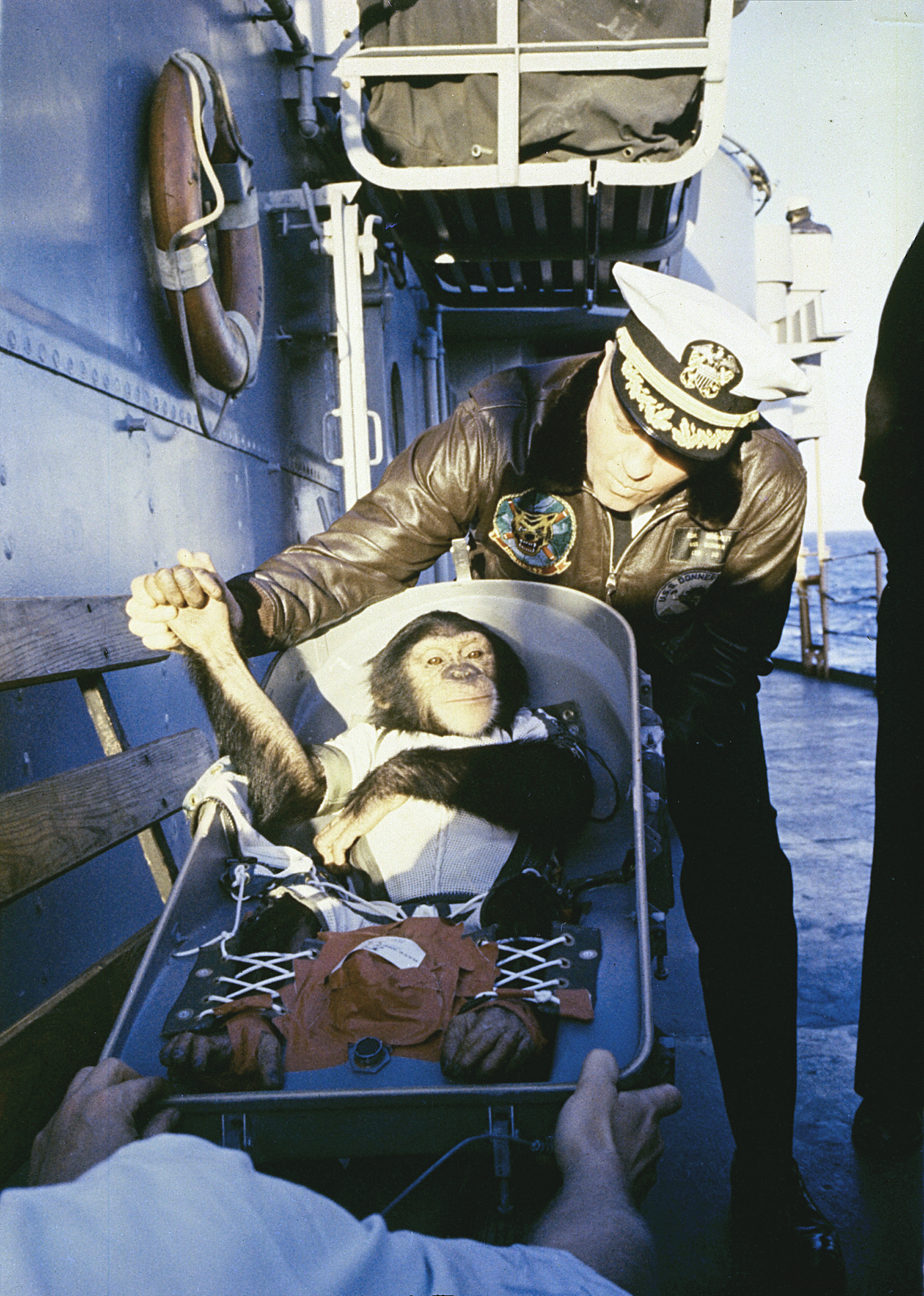
Months before America sent its first astronaut into space in 1961 and kicked the race to the moon into another gear, a chimpanzee named Ham departed Earth on a Mercury mission. Trained beginning in 1959 with behaviorist methods, Ham was not only a passenger but also performed small tasks during his suborbital flight. In the classic NASA photo above, Ham shakes hands with his rescuer aboard the U.S.S. Donner, after his 16-minute mission was successfully completed and he plunged back to his home. The famous chimp lived until 1983 and is buried at the International Space Hall of Fame in New Mexico. From a wonderfully terse account of Ham at Find A Grave:
“The first chimpanzee in space. Born in present-day Cameroon, captured by animal trappers and sent to Miami, FL. Ham’s name is an acronym for the lab that prepared him for his historic mission — the Holloman Aerospace Medical Center, located at Holloman Air Force Base in New Mexico. Purchased by the United States Air Force and brought to Holloman Air Force Base in 1959, he was selected from among a group of six chimpanzees (four female and two male). They trained to perform a series of simple tasks while in space to ascertain whether a human might be able to do the same tasks under space flight conditions. On January 31, 1961, Ham blasted off from Cape Canavaral becoming the world’s first AstroChimp. He proved that it was possible for a human to venture into space by taking a 16½ minute, 2000 mph ride atop an 83-foot Mercury Redstone rocket known as the MR2. Three months later the first American human, Alan Shepard, followed him into space.”
••••••••••
“The chimp has been carefully selected, thoroughly examined and patiently tutored”:
On a 1967 special, Woody Allen (and audience members) interviewed William F. Buckley. The conservative pundit asserted that tensions between Israelis and Arabs “will get tranquilized in time, I suspect.” Not quite.
Tags: William F. Buckley, Woody Allen
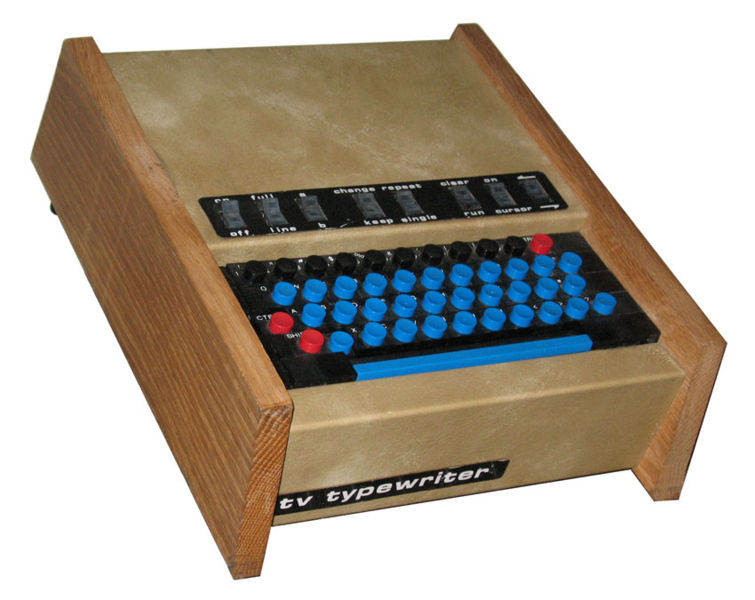
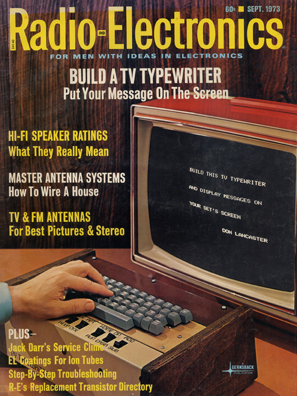
The opening of Don Lancaster’s 1973 Radio & Electronics article about his creation, the TV Typewriter, an early way to transform your television into a computer terminal and open possibilties for connectivity:
“This construction project started out as a, very low cost computer terminal for home use, but as it went together, we became aware of the many possible non-computer uses for such a device, particularly since it is priced right. What can you do with a machine that puts letters and numbers on an ordinary unmodified TV set?
Obviously, it’s a computer terminal for timesharing services, schools, and experimental uses. It’s a ham radio Teletype terminal. Coupled to the right services, it can also display news, stock quotations, time, and weather. It’s a communications aide for the deaf. It’s a teaching machine, particularly good for helping preschoolers learn the alphabet and words. It also keeps them busy for hours as an educational toy.
It’s a super sales promoter, either locally or on a store wide basis. It’s easily converted to a title machine for a video recorder. It’s a message generator or ‘answer back’ unit for advanced two way cable TV systems. Tied to a cassette recorder, it’s an electronic notebook and study aid, or a custom catalog. It’s an annunciator for plant, schools, and hospitals that tells not only that someone is needed, but why and where.
And, if all that isn’t enough, it’s easy to convert into a 12 or 16 place electronic calculator. You can also make a clock out of it, and, with extensive modification, you can even make a 32 register, 16 place serial digital computer out of the beast!
Cost of the project? Around $120 for the basic unit. This is slightly under two month’s normal rental of commercial units that don’t do nearly as much, and less than 1/10 the cost of anything commercial you could buy to do the same job. And we feel that this cost is finally low enough that a lot of new uses are now not only possible, but reasonable as well.”
Tags: Don Lancaster
Long before they wanted to stick a wand up your hoo-haa and scan your ding-a-ling, airports were thought of as places of grand imagination.
Launching the first Boeing 747 Superjet:
Remco’s Voice Control Kennedy Airport toy:
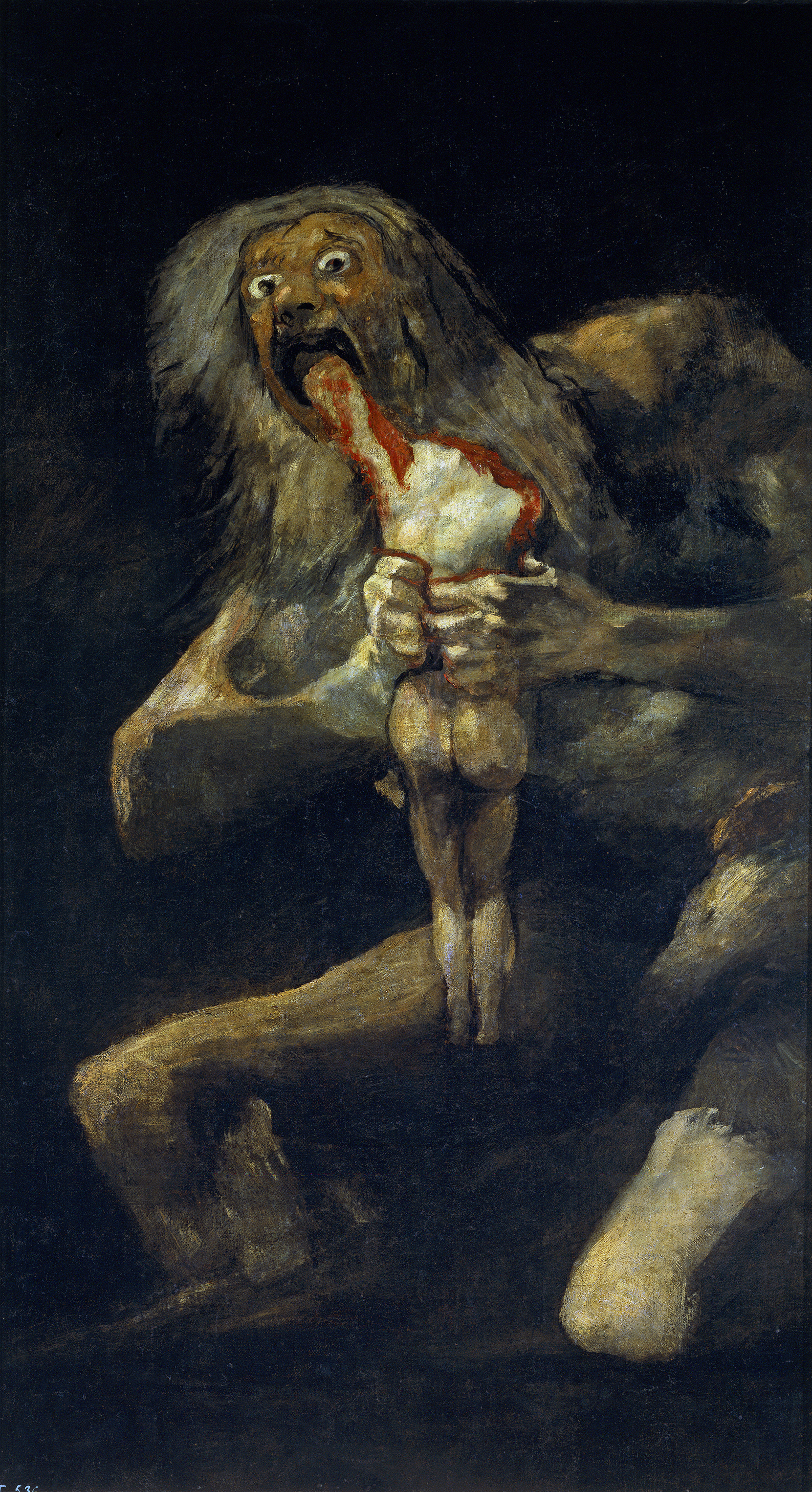
The one thing that doesn’t taste like chicken, apparently, is human. From an insane article in the October 24, 1885 Brooklyn Daily Eagle:
“Washington, D.C.–In the Diocesan Conference of Colored Methodist Episcopal Preachers, which is being held here, Professor A.E. Soloder, a distinguished and highly educated cannibal, upon being introduced, said:
‘I am a native of the Fiji Islands, gentlemen, and I have eaten human flesh many a time. I was born a cannibal and I was accustomed to eat missionaries. In my early days I lived principally on roasted missionaries and boiled rice; but I have been a missionary myself these thirty-five years.’
‘What does human flesh taste like?’ inquired the bishop.
‘Pretty much like a mule,’ explained the distinguished stranger. ‘You can hardly tell the difference,’ said he, ‘between young monkey and squirrel, and boa constrictor is very much like missionary.'”
Tags: A.E. Soloder