Politics

You are currently browsing the archive for the Politics category.

A fun thing to speculate on which will never happen is Florida, that strange entity, splitting into two distinct states à la the Dakotas, with the politically disparate Texas-ish north and New York-esque South going their separate ways, at least metaphorically. From Allie Conti in Vice:

“Florida is like a parfait. The bottom layer is made up of Miami, gays, and rich people; the middle is basically Disney World, stucco palaces, and suburban sprawl; and the top is more or less South Georgia run-off. In the mind of the average citizen, the state is essentially three different places with distinct cultures—or lack thereof. But what would happen if a man with a vision decided he wanted to make the idea of multiple Floridas a reality?

On October 7, the city of South Miami’s vice mayor proposed just that. His resolution, which passed 3-2, suggests that the new state of South Florida would start from Orlando and go all the way to the Keys. And although the city of North Lauderdale passed a similar resolution in 2008, that version was largely symbolic. This one, according to its author, Walter Harris, is deadly serious. But Harris’s determination doesn’t make the split any more plausible, and the likelihood of South Florida becoming the 51st state is slim, to say the least. As the Sun Sentinel notes, ‘In order for secession to be enacted… the measure would require electorate approval from the entire state and Congressional approval.’

Nevertheless, one can’t blame Harris—or anyone, for that matter—for at least trying to secede from Florida. And his issues with his northern neighbors are valid. One of the main themes in the resolution is that, despite generating 69% of the state’s revenue, southern Florida doesn’t feel the government in Tallahassee is doing enough to address the unique problems that climate change pose to them. ‘South Florida’s situation is very precarious,’ the resolution reads, ‘and in need of immediate attention. Many of the issues facing south Florida are not political, but are now significant safety issues.’ One of those issues, of course, is the sea-level change that some say will soon cause places like Miami to sink into the ocean.”

Tags: ,

A multi-planet humanity is a hedge against an Earth catastrophe eradicating our species, sure, but there are financial considerations as well to interstellar development. From Tim Fernholz’s new Atlantic article about Elon Musk’s SpaceX:

“With 33 commercial launches on its manifest in the next four years, a plan to launch manned missions by 2017, and subsidies from Texas to build its own spaceport there after several years of leasing government facilities, SpaceX is now a serious competitor in the launch industry. That’s a validation for NASA’s public-private partnership, which was focused on developing a business, not a product.

But the question for Musk and his investors now is whether he can be more than just a better rocket builder. They want to unlock something far more challenging: A space economy where humans can vastly increase their productivity in the vacuum around our tiny world and beyond, even if nobody is quite sure how yet. Nolan of Founders Fund compares this hopeful uncertainty to the founding of the internet. ‘It wasn’t clear exactly what kind of business can come out of exchanging information really rapidly,’ he says.

For example, if it weren’t so pricey, investors could imagine putting up hundreds of new satellites in lower orbits than existing ones, making their communications and imaging far more powerful. Because of the high launch costs, current satellites aren’t upgraded frequently and are stationed relatively far from earth so that they can last longer—the closer a satellite flies to earth, the faster its orbit decays, leading to its eventual demise. As a result, the electronics in them are relatively old technology.

Cheap enough launches could also enable terrestrial flights that hop up over the atmosphere, turning a day-long flight around the world into a matter of hours. Space tourism is often cited as a possible source of revenue, as is commercial research, even asteroid mining, but making any of those sustainable will mean—you guessed it—far lower costs, as NASA has found in its failure to drum up much commercial research at the ISS.

Can the $6 million launch—or even cheaper—replace the $60 million launch?”

Tags: ,

Understanding today or tomorrow is an almost impossible task, the present being anything but a sitting duck and the future a black swan. Even those who have a better-than-average idea of where things stand and where they’re heading can misread the details, all but neutralizing their knowledge. From “Nothing You Think Matters Today Will Matter the Same Way Tomorrow,” Frank Rich’s New York magazine look at the last 50 years of American history and what it tells us about prognostication:

“It was a time when many in my boomer generation fell in love with the idea that change was something you could believe in—a particularly liberal notion that has taken hold in other generations, too, whether in the age of Roosevelt or Obama. Even as we recognize that the calendar makes for a crude and arbitrary marker, we like to think that history visibly marches on, on a schedule we can codify.

The more I dove back into the weeds of 1964, the more I realized that this is both wishful thinking and an optical illusion. I came away with a new appreciation of how selective our collective memory is, and of just how glacially history moves, despite the can-do optimism of a modern America besotted with the pursuit of instant gratification. Asked at the time of the 1964 World’s Fair to anticipate 2014, Isaac Asimov got some things right (miniaturized computers, online education, flat-screen television, and what we now know as Skype), but many of his utopian predictions were delusional. His wrong calls included not just his interplanetary fantasies but his vision of underground suburbs that would protect mankind from war, rampaging weather, and the tyranny of the automobile. Asimov also thought birth control would find international acceptance. It was no doubt beyond even his imagination that a half-century hence American lawmakers would introduce ‘personhood’ amendments attempting to all but outlaw contraception.

The screenwriter William Goldman famously summed up Hollywood in three words: ‘Nobody knows anything.’ Would that this aphorism were applicable, as he intended, solely to the make-believe of show business. It often seems that nobody knew anything about anything in 1964. Most everyone was certain that the big political developments of the time, epitomized by LBJ’s victories for civil rights and against Goldwater, would be transformational. Many of the same seers saw the year’s cultural upheavals, starting with the Beatles, as ephemera. More often than not, the reverse has turned out to be true. Are we so much smarter in 2014?”

Tags:

While it’s not as serious a suck on California’s water supply as swimming pools, illegal marijuana farming is part of the problem. From Pilita Clark in the Financial Times:

“Jerry Brown, California’s governor, declared a state of emergency in January after the driest year on record in 2013, but as the annual wet season beckons, the prospect of a complete drought recovery this winter is highly unlikely, government officials say.

‘Marijuana cultivation is the biggest drought-related crime we’re facing right now,’ says Lt Nores as he pokes at a heap of plastic piping the growers used to divert water from a dried-up creek near the plantation.

But California’s drought is exposing a series of problems in the US’s most populous state that are a reminder of an adage popularised by Michael Kinsley, the columnist: the scandal is often not what is illegal but what is legal.

Growing competition

The theft of 80m gallons of water a day by heavily armed marijuana cartels is undoubtedly a serious concern, not least when the entire state is affected by drought and 58 per cent is categorised as being in ‘exceptional drought,’ as defined by the government-funded US Drought Monitor.

However, this is a tiny fraction of the water used legally every day in a state that, like so many other parts of the world, has a swelling population driving rising competition for more heavily regulated supplies that have long been taken for granted and may face added risks as the climate changes.”

Tags: , ,

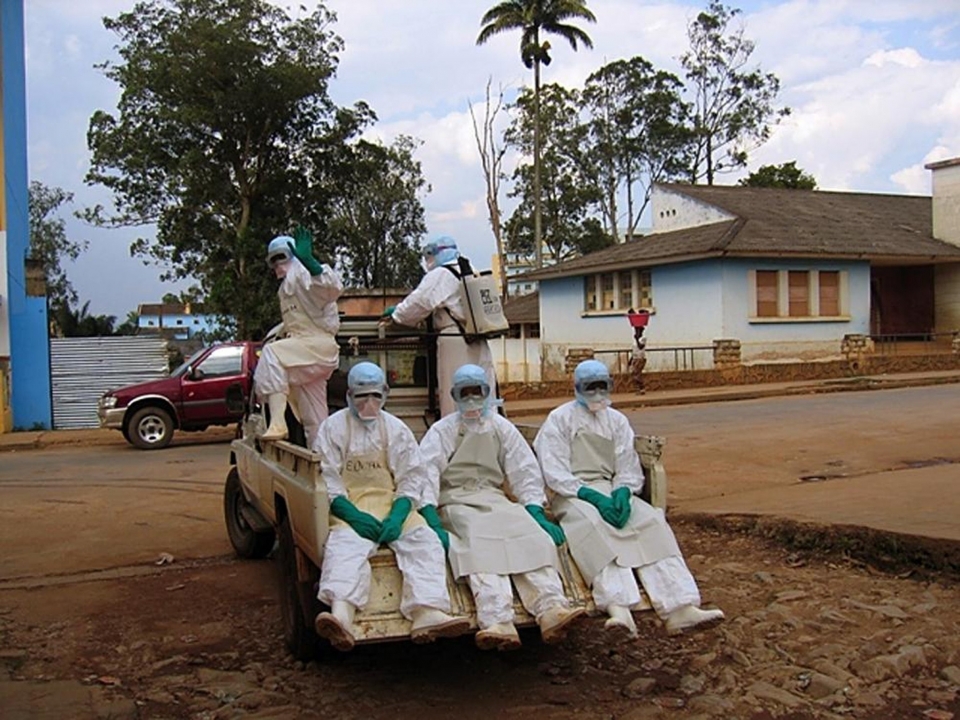
While the number of U.S. citizens who’ve died on American soil from Ebola remains constant, Liberia is truly in the grips of a deadly epidemic. It’s a horror of human suffering and loss and must be surreal for a nation that was starting to rise up economically. Marcus DiPaola, a freelance journalist who just returned from reporting in Liberia, did an Ask Me Anything at Reddit about this modern plague. A few exchanges follow.

___________________________

Question:

Are people optimistic that Ebola will be defeated?

Marcus DiPaola:

Optimistic is… not the right word. They’re expecting it to be defeated. You gotta realize how much public knowledge there is about the outbreak here. NO ONE is shaking hands. NO ONE is touching each other. All the radio stations play Ebola songs.

___________________________

Question:

Is it as bad as the media is making it out to be?

Marcus DiPaola:

I am a member of the media, and I think it’s pretty damn bad.

Locals treat every dead body with suspicion now, a crowd gathered in Central Monrovia as an alleged thief jumped into the river in Monrovia and died. Bystanders say he was not a suspected Ebola case, but many people are unwilling to take the risk associated with pulling out the body. As a result, the Liberian Red Cross Ebola burial team was called and arrived in hazmat suits and collect the body.

Cellcom Liberia, one of the country’s largest cell phone providers, has a worker checking temperatures before shoppers are even allowed to enter Cellcom Liberia’s parking lot. The worker writes down the temperature on a name tag, which is then checked by security guards after entering the parking lot, then again as they line up to enter the store, then again checked at the door to the store.

Many restaurants, hotels, banks, and stores have hand washing stations installed, and require you to wash your hands before entering. Some businesses’ attempts at requiring hand-washing fall short of their goals, as many of the buckets contain water with no soap available, or chlorine mixed into the water.

___________________________

Question:

Do you personally think things will continue to escalate? Or does it seem like things are more under control than the American media is making them out to be?

Marcus DiPaola:

No, I think things are escalating right now– the burial teams are working flat out and there are about 10 of them. I think the numbers are being under-reported, especially from the Liberian government.

___________________________

Question:

Should America be worried about Ebola?

Marcus DiPaola:

Yes. But not in the way you might think… it’s going to keep coming here, I have no doubt of it, but I’m willing to bet we’ll never see a full-blown outbreak. The experts I was with made it clear to me that you really really really have to work at it to get it as a non-caretaker. You have to touch bodily fluids. Fomites can theoretically do it, but everyone there kinda didn’t really worry about that, and they’ve been doing this since March.•

Tags:

Not having a television makes it easier to live outside the idiot broadcast and cable news culture populated by loudmouths like Sean Hannity, who looks like the equipment manager of a lacrosse team that’s been suspended for hazing, and Chuck Fucking Todd, who announced that the President’s administration was “over” when there were still three full years to go. The important work continues apace despite what that sputtering Van Dyke says. The opening of “Obama’s Moonshot Probes the Space Inside Our Skulls,” Anjana Ahuja’s Financial Times piece:

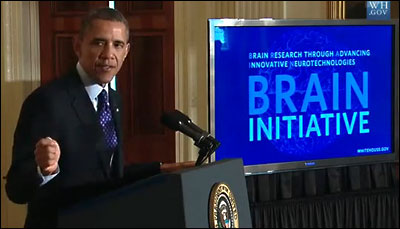
“Every president needs a blockbuster science project to crown his time in the White House. While John Kennedy reached for the stars, Barack Obama decided to reach for the synapses. A year on from his pledge to unravel the secrets of the human brain, researchers are beginning to spell out how they will tackle this challenge.

The breathtaking implications of the research are also becoming clear; within a generation science may acquire the power to predict a person’s future capacities and possibly determine their life chances. The central idea of Mr Obama’s Brain Research through Advancing Innovative Neurotechnologies Initiative is to understand how the human brain choreographs all the astonishing feats it pulls off. It is the seat of learning and the organ of memory. It generates our character and identity, and influences our behaviour. It is our brains, more than anything else, that make us who we are today – and shape who we will become.

But that neural versatility acts as a veil. How does the squidgy, three-pound lump between your ears – filled with nerve cells (neurons) firing tiny impulses of electricity across junctions called synapses – accomplish such a wide array of functions? Research grants announced this month shed light on how Mr Obama’s vaunted cerebral exploration will proceed. One avenue will be to catalogue the differences between healthy neurons and diseased ones. This will spur research into neurodegenerative diseases, such as Alzheimer’s and Parkinson’s, which cast a shadow over ageing societies.”

Tags: , , ,

The anarchic experiment that is the Internet has been viewed with a mixture of awe and fear, but as that unbridled energy careers back into our physical world–something that will happen more and more–the old guard and the new wave are unsurprisingly at odds. A little more on the Sharing Economy, from Claire Cain Miller of the New York Times:

“THE regulatory woes seem to be never ending for the newest wave of tech start-ups — the on-demand apps that connect people who need something (a driver, a house cleaner, a grocery shopper) with people who want to do the job.

On Thursday, the New York State attorney general said most Airbnb listings in the city violated zoning and other laws. Officials in California and Pennsylvania recently warned car services like Uber and Lyft that they might be unlawful. And workers’ rights advocates have questioned whether the people who provide these services should receive benefits, spurred by recent reports that some Homejoy house cleaners are homeless.

Why have these companies run into so many problems? Part of the reason is that they think of themselves as online companies — yet they mostly operate in the offline world.

They subscribe to three core business principles that have become a religion in Silicon Valley: Serve as a middleman, employ as few people as possible and automate everything. Those tenets have worked wonders on the web at companies like Google and Twitter. But as the new, on-demand companies are learning, they are not necessarily compatible with the real world.”

Tags:

A good way to guard against an epidemic in America would be to extend the Affordable Care Act to all citizens, to make it truly universal. But Ebola has flipped the script at the midterm elections, with government-hating Republicans who fought Obamacare and planned to use it as a rallying cry despite its early successes, now decrying the government’s lack of intervention. From Gary Silverman at the Financial Times:

“Republicans are suddenly asking very Democratic questions about what federal government can do to improve public health. Bloomberg News even reported that members of the appropriations committees in the Republican House and Democratic Senate are working on ways to throw more money at the problem. This would be done by increasing anti-Ebola spending in a bill aimed at keeping the government operating after December 11.

Yet the newfound Republican faith in the federal solutions has been accompanied by a hardening of hearts when it comes to the man behind Obamacare.

Conservatives are seizing on the spread of Ebola as evidence of the president’s unreliability – linking it to the advances of Islamic State militants in Syria and Iraq, management deficiencies at the Secret Service and the arrival of illegal immigrants from Mexico.”


Tags: ,

We tend to equate wealth with intelligence in America, and that’s often a false association. Hiltons and Johnsons who inherit money often seem as dumb as posts, and even someone who has basic smarts like Mike Bloomberg has had many points added to his IQ erroneously because he amassed vast wealth by identifying a small shortfall in financial information which could be exploited. He was really great at one particular endeavor, much the same way as Harlan Sanders was with chicken, not an amazing Renaissance Man. It showed in the very uneven job he did as NYC mayor.

So it’s best not to take as gospel the opinions of the super-rich because knowing one thing isn’t knowing everything. That said, I’ll grant Bill Gates is far more intelligent and intellectually curious than your average person, monied or not. Here’s the opening of his review of Thomas Piketty’s Capital in the Twenty-First Century, which he agrees with overall:

“A 700-page treatise on economics translated from French is not exactly a light summer read—even for someone with an admittedly high geek quotient. But this past July, I felt compelled to read Thomas Piketty’s Capital in the Twenty-First Century after reading several reviews and hearing about it from friends.

I’m glad I did. I encourage you to read it too, or at least a good summary, like this one from The Economist. Piketty was nice enough to talk with me about his work on a Skype call last month. As I told him, I agree with his most important conclusions, and I hope his work will draw more smart people into the study of wealth and income inequality—because the more we understand about the causes and cures, the better. I also said I have concerns about some elements of his analysis, which I’ll share below.

I very much agree with Piketty that:

  • High levels of inequality are a problem—messing up economic incentives, tilting democracies in favor of powerful interests, and undercutting the ideal that all people are created equal.
  • Capitalism does not self-correct toward greater equality—that is, excess wealth concentration can have a snowball effect if left unchecked.
  • Governments can play a constructive role in offsetting the snowballing tendencies if and when they choose to do so.

To be clear, when I say that high levels of inequality are a problem, I don’t want to imply that the world is getting worse. In fact, thanks to the rise of the middle class in countries like China, Mexico, Colombia, Brazil, and Thailand, the world as a whole is actually becoming more egalitarian, and that positive global trend is likely to continue.

But extreme inequality should not be ignored—or worse, celebrated as a sign that we have a high-performing economy and healthy society.”

Tags: ,

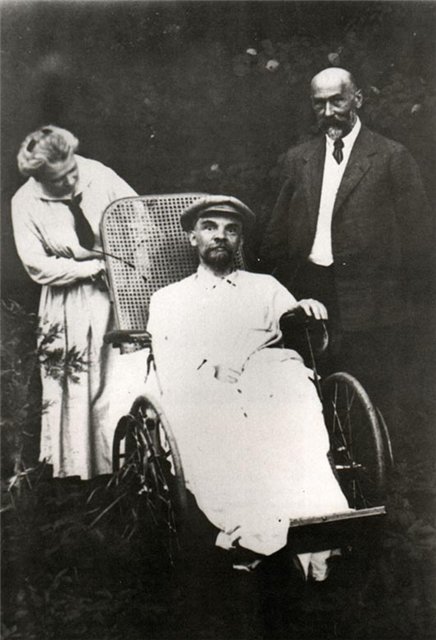
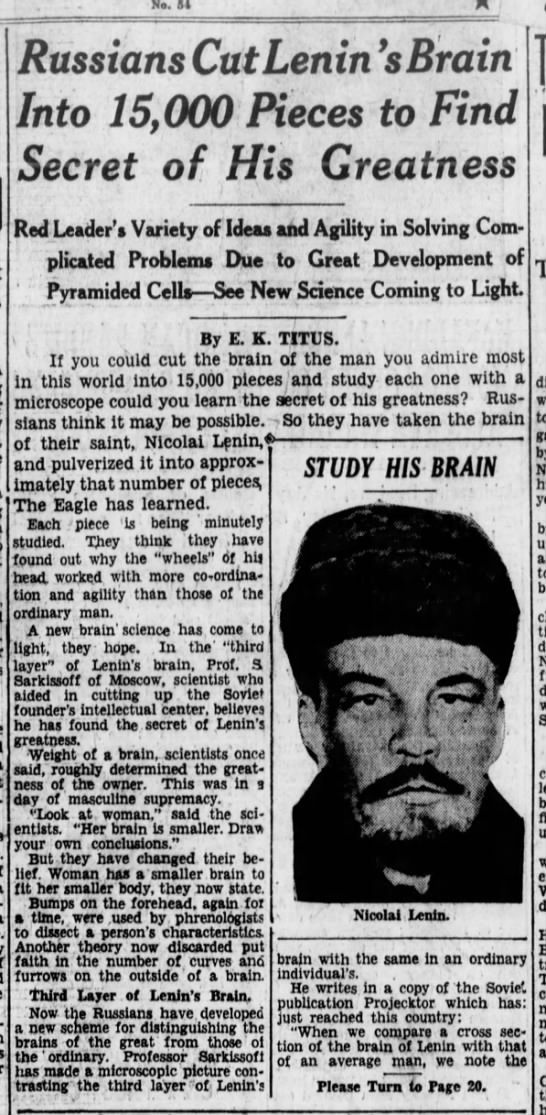
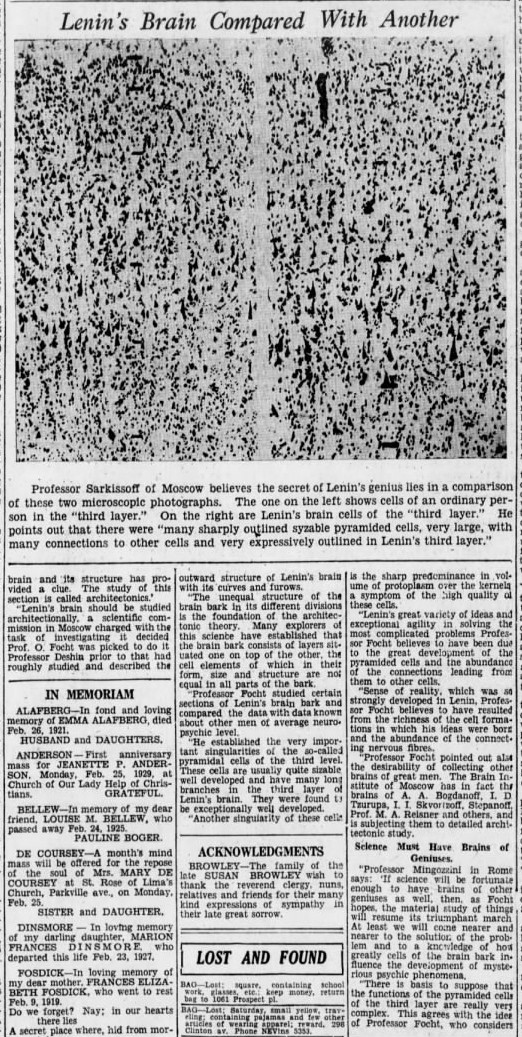
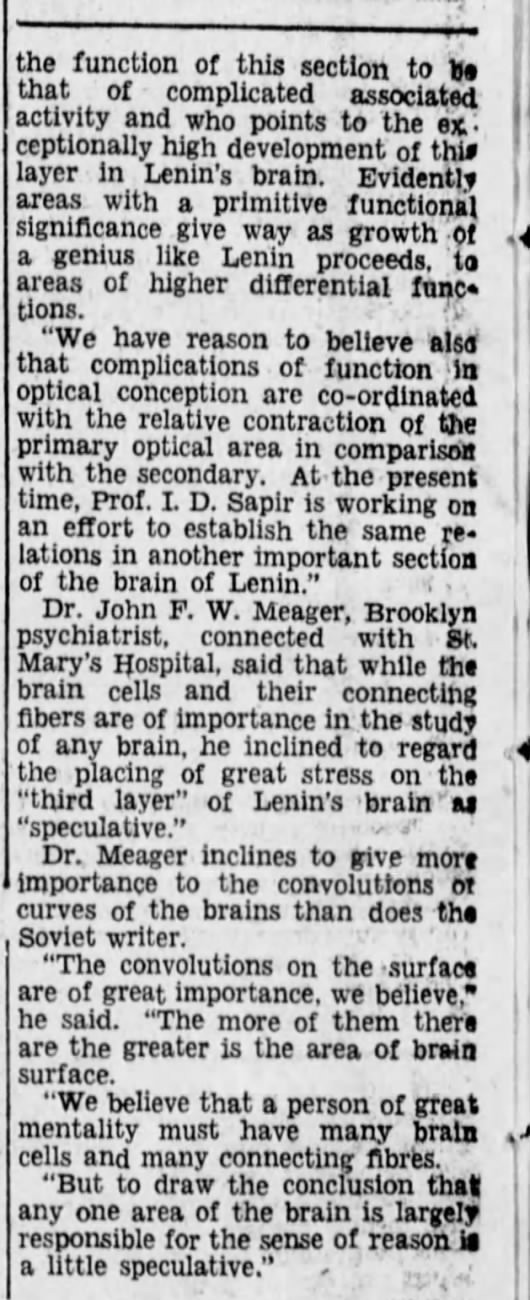
Vladimir Lenin’s corpse has had a perplexing postscript, but one particular body part, his brain, may have had the most fascinating “afterlife” of all, as the Soviet leader’s adoring people sliced it and diced it, hoping to find the source of genius that propelled the Bolshevik Revolution. In an article in the February 24, 1929 Brooklyn Daily Eagle, the paper underestimated the pieces the organ had been pulverized into, numbering it at 15,000 when it was actually more than twice that many.

Tags:

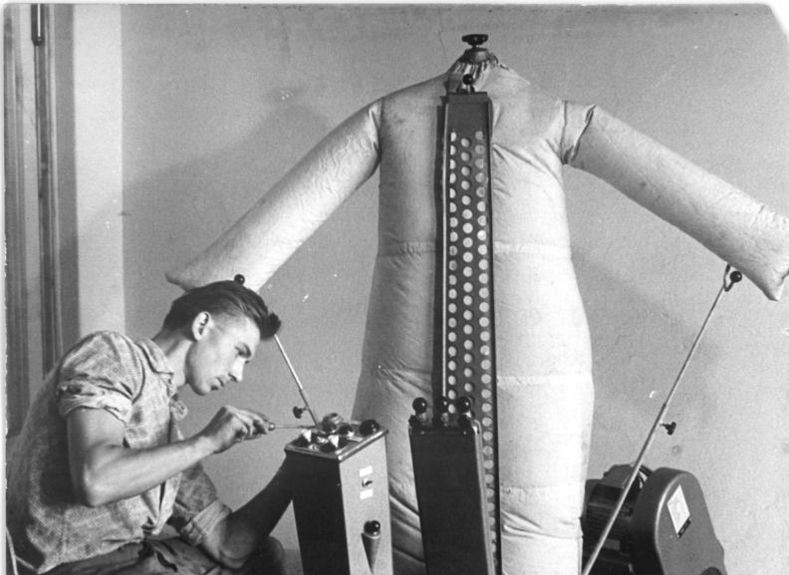
mannequin671

Freeman Dyson said that when the “games” begin, genetic engineering will be messy, and Nick Bostrom pointed out that it will be difficult for people (or nations) to recuse themselves from the proceedings. It’s, of course, important to remember that while the unnatural comes with dangers, so does the natural. The opening of “The Genetics Epidemic,” Jamie F. Metz’s Foreign Affairs meditation on the national-security angle of human enhancement, which might not be the most pressing consideration but is important nonetheless:

“The revolution in genetic engineering that will make it possible for humans to actively manage our evolutionary process for the first time in our species’ history is already under way. In laboratories and clinics around the world, gene therapies are being successfully deployed to treat a range of diseases, including certain types of immune deficiency, retinal amaurosis, leukemia, myeloma, hemophilia, and Parkinson’s. This miraculous progress is only the beginning. The same already existing technologies that will soon eliminate many diseases that have victimized humans for thousands of years will almost certainly be used eventually to make our species smarter, stronger, and more robust.

The prospect of genetic engineering will be exciting to some, frightening to others, and challenging for all. If not adequately addressed, it will also likely lead to major conflict both within societies and globally. But although the science of human genetic engineering is charging forward at an exponential rate, the global policy framework for ensuring this scientific progress does not lead to destabilizing conflict barely exists at all. The time has come for a meaningful dialogue on the national security implications of the human genetic revolution that can lay the conceptual foundation for a future global policy structure seeking to prevent dangerous future conflict and abuse.

The rate of recent progress in human genetics has been astounding.

Tags:

Google does many great things, but its corporate leaders want you to trust them with your private information–because they are the good guys–and you should never trust any corporation with such material. The thing is, it’s increasingly difficult to opt out of the modern arrangement, algorithms snaking their way into all corners of our lives. The excellent documentarian Eugene Jarecki has penned a Time essay about Google and Wikileaks and what the two say about the future. An excerpt follows.

_________________________

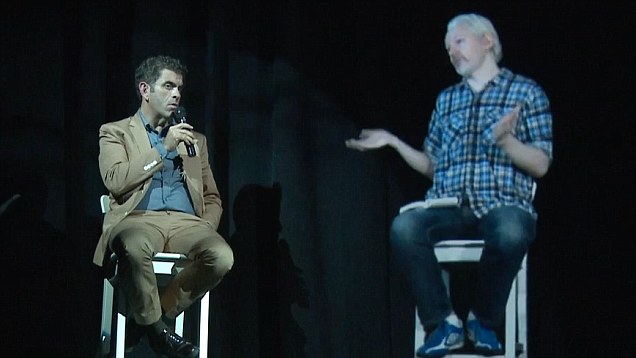
I interviewed notorious Wikileaks founder Julian Assange by hologram, beamed in from his place of asylum in the Ecuadorian Embassy in London. News coverage the next day focused in one way or another on the spectacular and mischievous angle that Assange had, in effect, managed to escape his quarantine and laugh in the face of those who wish to extradite him by appearing full-bodied in Nantucket before a packed house of exhilarated conference attendees.

Beyond the spectacle, though, what got less attention was what the interview was actually about, namely the future of our civilization in an increasingly digital world. What does it mean for us as people to see the traditional town square go digital, with online banking displacing bricks and mortar, just as email did snail mail, Wikipedia did the local library, and eBay the mom and pop shop? The subject of our ever-digitizing lives is one that has been gaining currency over the past year, fueled by news stories about Google Glasses, self-driving cars, sky-rocketing rates of online addiction and, most recently, the scandal of NSA abuse. But the need to better understand the implications of our digital transformation was further underscored in the days preceding the event with the publication of two books: one by Assange and the other by Google Executive Chairman, Eric Schmidt.

Assange’s book, When Google Met Wikileaks, is the transcript (with commentary by Assange) of a secret meeting between the two that took place on June 23, 2011, when Schmidt visited Assange in England. In his commentary, Assange explores the troubling implications of Google’s vast reach, including its relationships with international authorities, particularly in the U.S., of which the public is largely unaware. Schmidt’s book, How Google Works, is a broader, sunnier look at how technology has presumably shifted the balance of power from companies to people. It tells the story of how Google rose from a nerdy young tech startup to become a nerdy behemoth astride the globe. Read together, the two books offer an unsettling portrait both of our unpreparedness for what lies ahead and of the utopian spin with which Google (and others in the digital world) package tomorrow. While Assange’s book accuses Google of operating as a kind of “‘Don’t Be Evil’ empire,” Schmidt’s book fulfills Assange’s worst fears, presenting pseudo-irreverent business maxims in an “aw shucks” tone that seems willfully ignorant of the inevitable implications of any company coming to so sweepingly dominate our lives in unprecedented and often legally uncharted ways.•

Tags: , ,

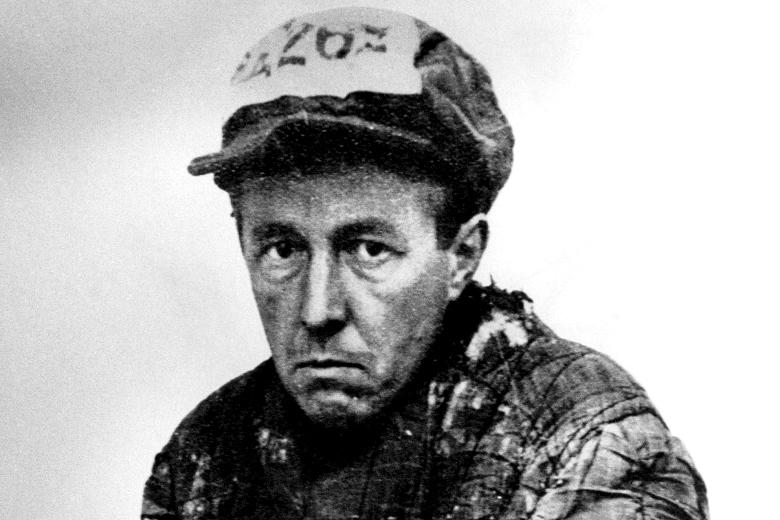
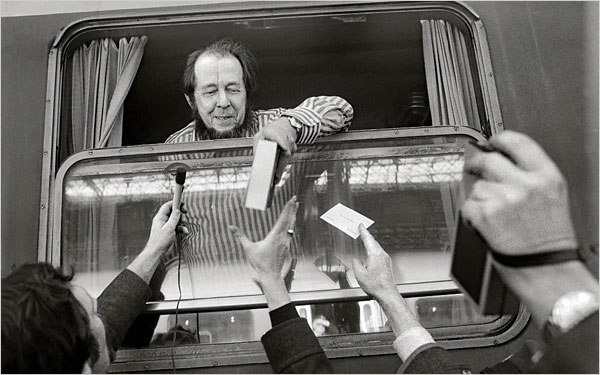
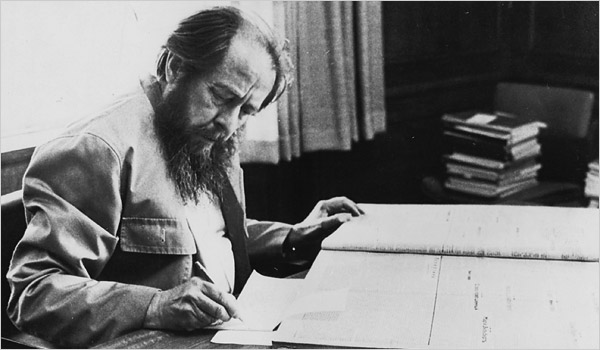
If you’re wondering what Aleksandr Solzhenitsyn would have thought of Putin’s engagement in Ukraine, he pretty much answered the question during a 1994 interview, and he was fully in favor of repatriation of the state. From Paul Klebnikov’s discussion with the once and former dissident, which was reprinted in Forbes at the time of his death in 2008:

Forbes:

Tension is mounting between Russia and the now independent Ukraine, with the West strongly backing Ukrainian territorial integrity. Henry Kissinger argues that Russia will always threaten the interests of the West, no matter what kind of government it has.

Aleksandr Solzhenitsyn:

Henry Kissinger, Zbigniew Brzezinski, [historian] Richard Pipes and many other American politicians and publicists are frozen in a mode of thought they developed a long time ago. With unchanging blindness and stubbornness they keep repeating and repeating this theory about the supposed age-old aggressiveness of Russia, without taking into consideration today’s reality.

Forbes:

Well, what about Ukraine? Hasn’t Russia made threats toward several of the former U.S.S.R. member states?

Aleksandr Solzhenitsyn:

Imagine that one not very fine day two or three of your states in the Southwest, in the space of 24 hours, declare themselves independent of the U.S. They declare themselves a fully sovereign nation, decreeing that Spanish will be the only language. All English-speaking residents, even if their ancestors have lived there for 200 years, have to take a test in the Spanish language within one or two years and swear allegiance to the new nation. Otherwise they will not receive citizenship and be deprived of civic, property and employment rights.

Forbes:

What would be the reaction of the United States? I have no doubt that it would be immediate military intervention.

Aleksandr Solzhenitsyn:

But today Russia faces precisely this scenario. In 24 hours she lost eight to 10 purely Russian provinces, 25 million ethnic Russians who have ended up in this very way–as ‘undesirable aliens.’ In places where their fathers, grandfathers, great-grandfathers have lived since way back–even from the 17th century–they face persecution in their jobs and the suppression of their culture, education and language.

Meanwhile, in Central Asia, those wishing to leave are not permitted to take even their personal property. The authorities tell them, ‘There is no such concept as ‘personal property’!’

And in this situation ‘imperialist Russia’ has not made a single forceful move to rectify this monstrous mess. Without a murmur she has given away 25 million of her compatriots–the largest diaspora in the world!

Forbes:

You see Russia as the victim of aggression, not as the aggressor.

Aleksandr Solzhenitsyn:

Who can find in world history another such example of peaceful conduct? And if Russia keeps the peace in the single most vital question that concerns her, why should one expect her to be aggressive in secondary issues?

Forbes:

With Russia in chaos, it does sound a bit far-fetched to see her as an aggressor.

Aleksandr Solzhenitsyn:

Russia today is terribly sick. Her people are sick to the point of total exhaustion. But even so, have a conscience and don’t demand that–just to please America–Russia throw away the last vestiges of her concern for her security and her unprecedented collapse. After all, this concern in no way threatens the United States.•

Tags: ,

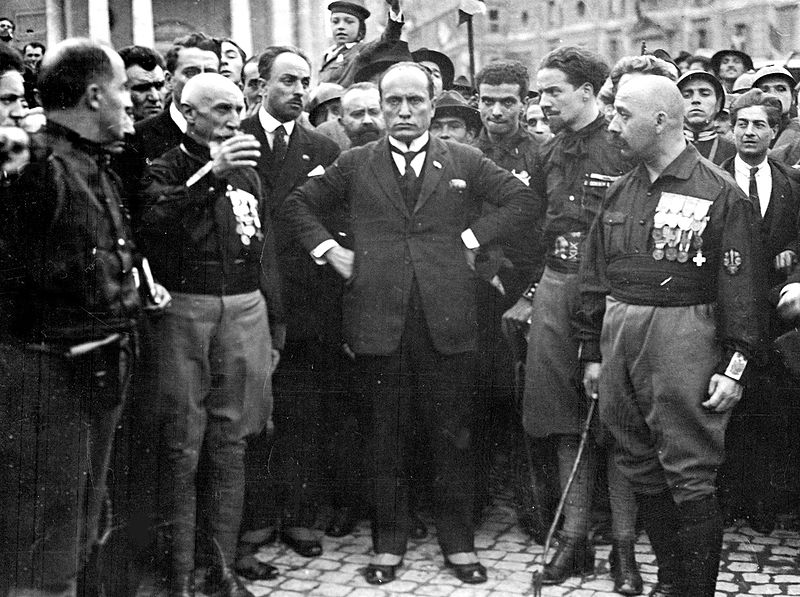
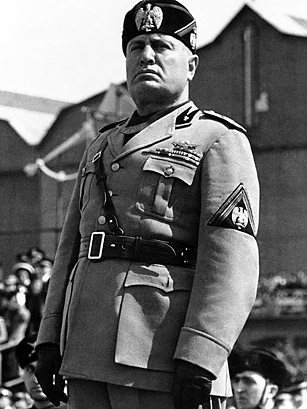
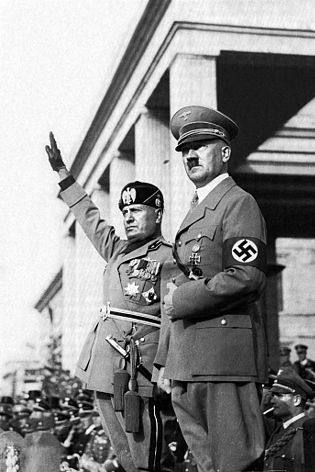
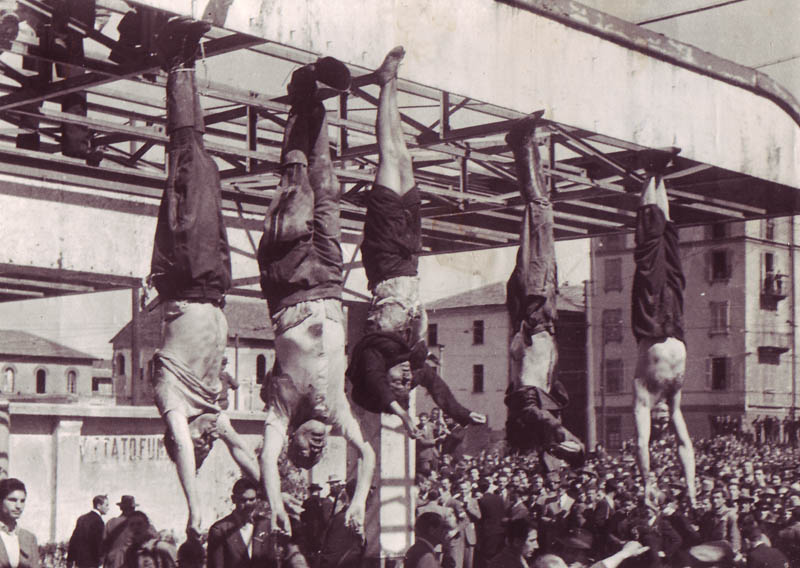
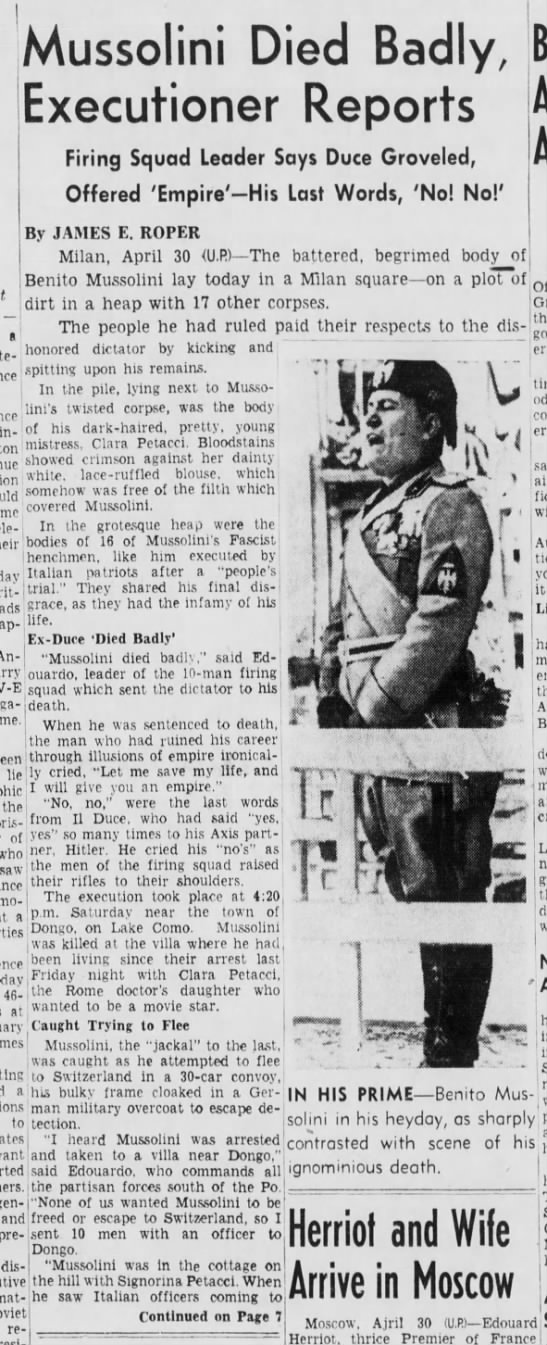
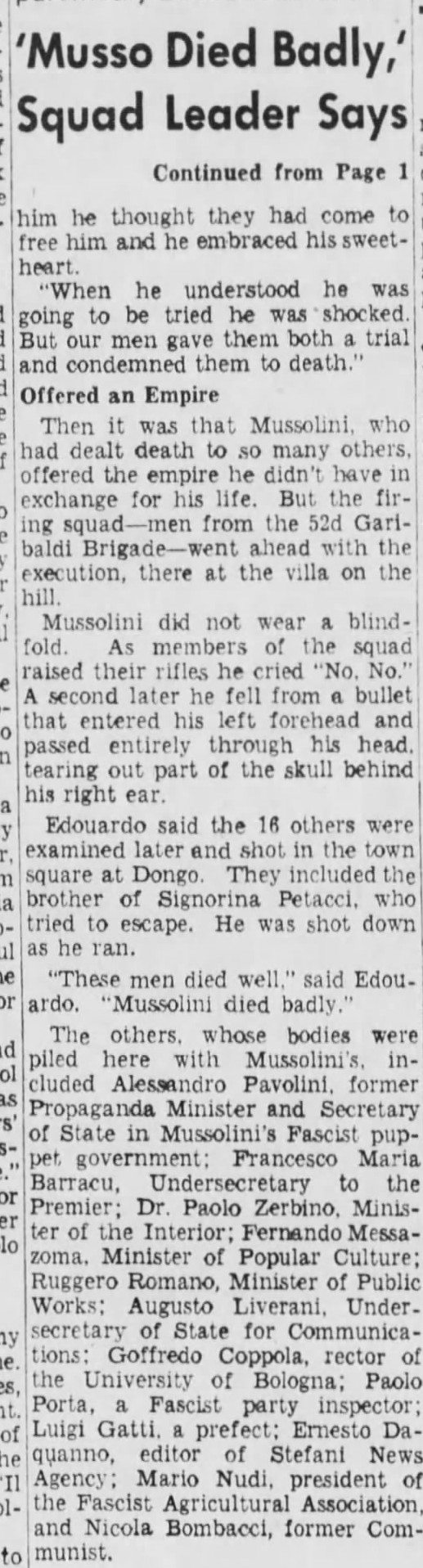
At the time of his death in 1945, Italian dictator Benito Mussolini’s approval ratings were not at their highest.

Il Duce was executed by a firing squad and hung upside down from the roof of an Esso gas station for bringing ruin to the nation during World War II, his corpse later lowered into a pile with 16 other dead Fascists, where it could be further brutalized by an outraged citizenry. In an article in the May 30, 1945 Brooklyn Daily Eagle, Mussolini’s astounding end was described in gory detail.

Tags:

With computers so small they all but disappear, the infrastructure silently becoming more and more automated, what else will vanish from our lives and ourselves? I’m someone who loves the new normal of decentralized, free-flowing media, who thinks the gains are far greater than the losses, but it’s a question worth asking. Via Longreads, an excerpt from The Glass Cage, a new book by that Information Age designated mourner Nicholas Carr:

“There’s a big difference between a set of tools and an infrastructure. The Industrial Revolution gained its full force only after its operational assumptions were built into expansive systems and networks. The construction of the railroads in the middle of the nineteenth century enlarged the markets companies could serve, providing the impetus for mechanized mass production. The creation of the electric grid a few decades later opened the way for factory assembly lines and made all sorts of home appliances feasible and affordable. These new networks of transport and power, together with the telegraph, telephone, and broadcasting systems that arose alongside them, gave society a different character. They altered the way people thought about work, entertainment, travel, education, even the organization of communities and families. They transformed the pace and texture of life in ways that went well beyond what steam-powered factory machines had done.

The historian Thomas Hughes, in reviewing the arrival of the electric grid in his book Networks of Power, described how first the engineering culture, then the business culture, and finally the general culture shaped themselves to the new system. ‘Men and institutions developed characteristics that suited them to the characteristics of the technology,’ he wrote. ‘And the systematic interaction of men, ideas, and institutions, both technical and nontechnical, led to the development of a supersystem—a sociotechnical one—with mass movement and direction.’ It was at this point that what Hughes termed ‘technological momentum’ took hold, both for the power industry and for the modes of production and living it supported. ‘The universal system gathered a conservative momentum. Its growth generally was steady, and change became a diversification of function.’ Progress had found its groove.

We’ve reached a similar juncture in the history of automation. Society is adapting to the universal computing infrastructure—more quickly than it adapted to the electric grid—and a new status quo is taking shape. …

The science-fiction writer Arthur C. Clarke once asked, ‘Can the synthesis of man and machine ever be stable, or will the purely organic component become such a hindrance that it has to be discarded?’ In the business world at least, no stability in the division of work between human and computer seems in the offing. The prevailing methods of computerized communication and coordination pretty much ensure that the role of people will go on shrinking. We’ve designed a system that discards us. If unemployment worsens in the years ahead, it may be more a result of our new, subterranean infrastructure of automation than of any particular installation of robots in factories or software applications in offices. The robots and applications are the visible flora of automation’s deep, extensive, and invasive root system.”

Tags: ,

In the Financial Times, Edward Luce wonders about the deepening of divisions in American among African-Americans and whites during the two terms of our first black President. The Great Recession, I think, is largely to blame. Those most vulnerable got most hosed by that debacle. It was actually a great investment opportunity for others who had the available funds to buy cheap. Without Obama’s maneuverings to save large banks and industries, imperfect though they were, the cratering would have been far deeper. Meanwhile, the Affordable Care Act has been a great boon to lower-income Americans of all races. I would think in the longer term, having our appellate courts stocked with moderates and progressives will eventually be a help to those who have less. From Luce:

“Mr Obama shot to prominence in 2004 when he said there was no black or white America, just the United States of America. Yet as the continuing backlash to the police shooting of an unarmed young black man in Ferguson has reminded us, Mr Obama will leave the US at least as segregated as he found it. How could that be? The fair answer is that he is not to blame. The poor suffered the brunt of the Great Recession and blacks are far likelier to be poor. By any yardstick – the share of those with subprime mortgages, for example, or those working in casualised jobs – African-Americans were more directly in the line of fire.

Without Mr Obama’s efforts, African-American suffering would have been even greater. He has fought Congress to preserve food stamps and long-term unemployment insurance – both of which help blacks disproportionately. The number of Americans without health insurance has fallen by 8m since the Affordable Care Act came into effect. Likewise, no president has done as much as Mr Obama – to depressingly little effect – to try to correct the racial bias in US federal sentencing. Bill Clinton was once termed ‘America’s first black president.’ But it was under Mr Clinton that incarceration rates rose to their towering levels.”


Tags: ,

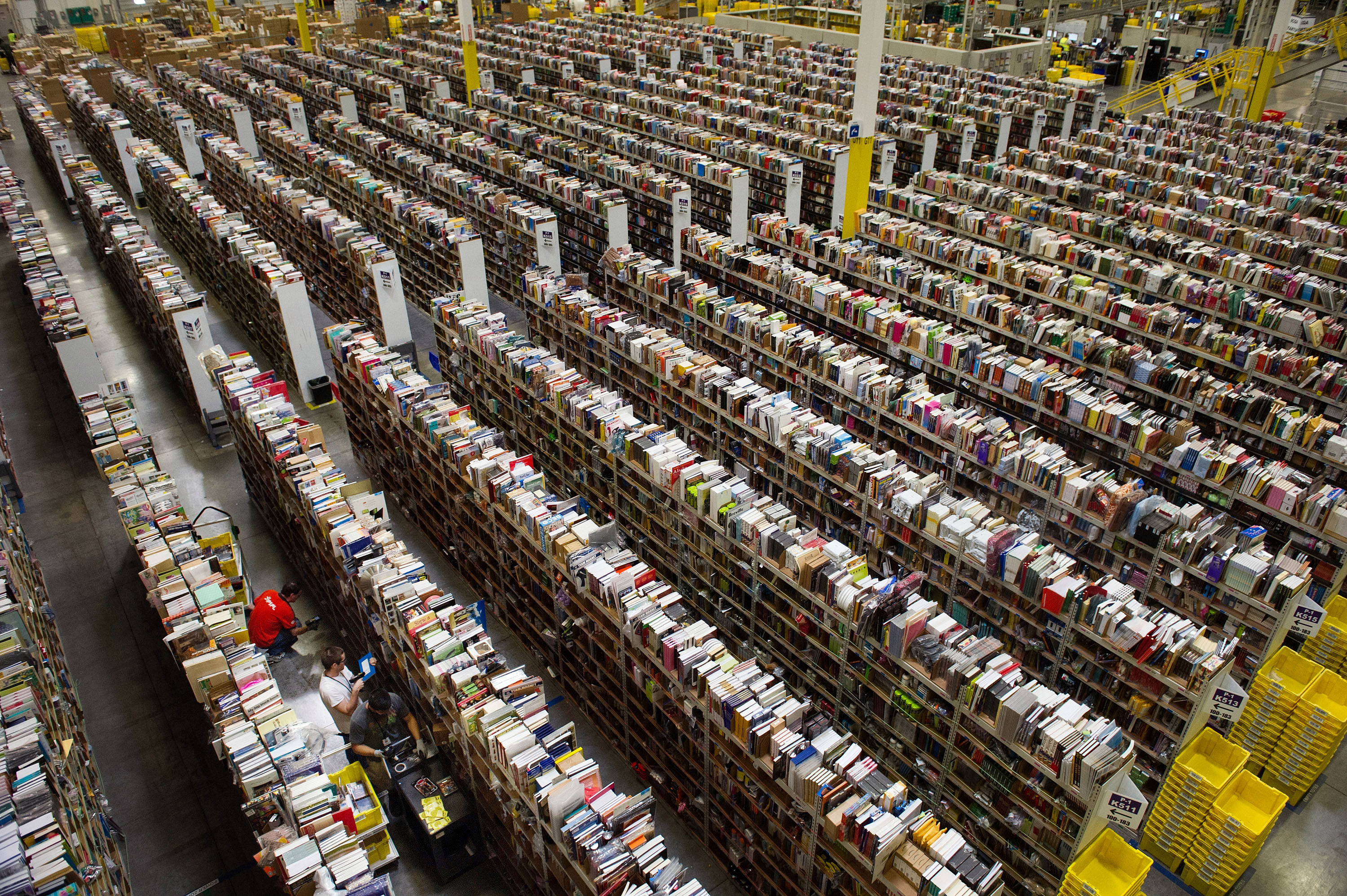
Many of the new corporations of the Information Age have been ostensibly good for consumers, with costs neatly hidden. For instance: Google and Facebook are completely free products, until you consider that you are the product. Amazon’s deep discounts have put all manner of cheap goods in consumers’ hands, great tools like books and tablets and smartphones, but competitors and producers have felt an increasing pinch. Eventually the earth is scorched and prices are largely in the hands of one company and the pipeline seriously shortened. Do the benefits outweigh the costs or vice versa?

In a New Republic article, Franklin Foer makes a convincing case that Amazon is already a clear monopoly, which has brought a virtual Walmartization to America. Those cheap items–Sam Walton’s or Jeff Bezos’–come at a dear price, he argues, favoring the purchaser in the short run but obliterating competitors and suppliers all the while. (And that doesn’t even begin to mention the treatment of workers who are made small so that prices can be likewise tiny.) An excerpt in which Foer looks at the disconnect between Industrial Age laws which govern monopolies and the megacorporations of the Information Age:

“Shopping on Amazon has so ingrained itself in modern American life that it has become something close to our unthinking habit, and the company has achieved a level of dominance that merits the application of a very old label: monopoly. 

That term doesn’t get tossed around much these days, but it should. Amazon is the shining representative of a new golden age of monopoly that also includes Google and Walmart. Unlike U.S. Steel, the new behemoths don’t use their barely challenged power to hike up prices. They are, in fact, self-styled servants of the consumer and have ushered in an era of low prices for everything from flat-screen TVs to paper napkins to smart phones. 

In other words, we’re all enjoying the benefits of these corporations far too much to think hard about distant dangers. Besides, the ideology of Silicon Valley suggests that we have nothing much to fear: If these firms no longer engineer breathtaking technologies, they will be creatively destroyed. That’s why Peter Thiel, the creator of PayPal, has argued that the term ‘monopoly’ should be stripped of its negative connotation. A monopoly, he argues, is really nothing more than a synonym for a highly successful company. Insulation from the brutish spirit of competition even makes them superior organizations—more beneficent employers, better able to both daydream and think clearly. In Thiel’s phrasing: ‘Creative monopolies aren’t just good for the rest of society; they’re powerful engines for making it better.’

Thiel makes an important point: The Internet-age monopolies are a different species; they flummox our conventional ways of thinking about corporate concentration and have proved especially elusive to those who ponder questions of antitrust, the discipline of law that aims to curb threats to the competitive marketplace. Part of the issue is the laws themselves, which were conceived to manage an industrial economy—and have, over time, evolved to focus on a specific set of narrow questions that have little to do with the core problem at hand.”

Tags:

I’m likely in the minority as someone who voted twice for President Obama and is very pleased with the results. He’s been bolder in certain ways than I anticipated, and I think he’s avoided a lot of twentieth-century pitfalls and set us up well for the twenty-first-century landscape. Most of his most ardent critics seem to me frivolous or hypocritical or dangerous. We’re a brighter, better-positioned nation for his leadership. Paul Krugman feels similarly about 44, as he demonstrates in his Rolling Stone essay, “In Defense of Obama.” The opening:

“When it comes to Barack Obama, I’ve always been out of sync. Back in 2008, when many liberals were wildly enthusiastic about his candidacy and his press was strongly favorable, I was skeptical. I worried that he was naive, that his talk about transcending the political divide was a dangerous illusion given the unyielding extremism of the modern American right. Furthermore, it seemed clear to me that, far from being the transformational figure his supporters imagined, he was rather conventional-minded: Even before taking office, he showed signs of paying far too much attention to what some of us would later take to calling Very Serious People, people who regarded cutting budget deficits and a willingness to slash Social Security as the very essence of political virtue.

And I wasn’t wrong. Obama was indeed naive: He faced scorched-earth Republican opposition from Day One, and it took him years to start dealing with that opposition realistically. Furthermore, he came perilously close to doing terrible things to the U.S. safety net in pursuit of a budget Grand Bargain; we were saved from significant cuts to Social Security and a rise in the Medicare age only by Republican greed, the GOP’s unwillingness to make even token concessions.

But now the shoe is on the other foot: Obama faces trash talk left, right and center – literally – and doesn’t deserve it. Despite bitter opposition, despite having come close to self-inflicted disaster, Obama has emerged as one of the most consequential and, yes, successful presidents in American history. His health reform is imperfect but still a huge step forward – and it’s working better than anyone expected. Financial reform fell far short of what should have happened, but it’s much more effective than you’d think. Economic management has been half-crippled by Republican obstruction, but has nonetheless been much better than in other advanced countries. And environmental policy is starting to look like it could be a major legacy.”

Tags: ,

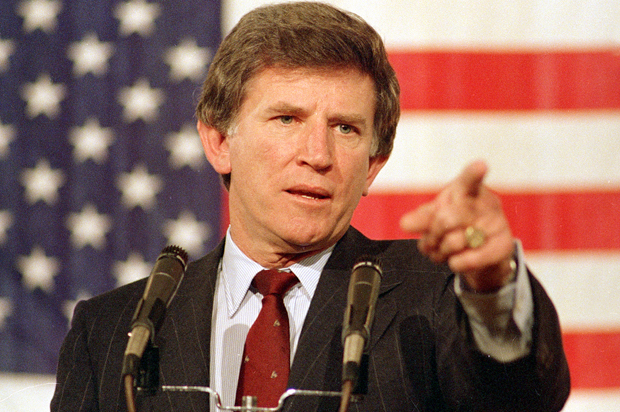
Matt Bai penned one of 2014’s best articles, a New York Times Magazine piece about the Gary Hart scandal and what it tells us about modern politics and media. It’s an excerpt from his new book, All the Truth Is Out: The Week That Politics Went Tabloid, which delves far deeper into the subject. He’s doing an AMA at Reddit, and it breaks my heart a little that Ray Liotta currently has 70 times more questions. I understand it, but I don’t like it. Three exchanges follow.

______________________

Question:

Do you think that a candidate’s moral fortitude should play a role in their political success?

Matt Bai:

Yes. I want moral leaders, don’t you? The question is how we measure moral fortitude. Do we measure it by a single unflattering moment, a single gaffe or stupid decision? Or do we measure it in the full context of a life and political career. If a candidate has lied to his wife, but hasn’t lied to his constituents, or ducked tough votes, or been accused of corruption, then isn’t that worth something? Moral people do immoral things. Truthful people tell lies. I think we all want to be judged with some context (when we want to be judged at all), and so should our politicians.

______________________

Question:

I grew up in NH and witnessed many presidential candidates up close over several election cycles. Gary a Hart was easily the most impressive, decades ahead on a whole range of issues. He also gets little credit for the strength of character it took for him to buck the party crowd in Washington that was mired in the past. How do you think the world would be different if Hart had been elected President?

Matt Bai:

He would appreciate hearing that, and you would love my book. Hart himself told me that had he been elected, George W. Bush would never have become governor of Texas, and we wouldn’t have invaded Iraq. This haunts him. I can’t say how the world would have been different, but I know Hart had thought an awful lot about governing during a time of economic transformation and after the Cold War, and I think there’s a good chance he would have helped us navigate those changes sooner and better. That’s just my own gut feeling.

______________________

Question:

What institutional source of congressional gridlock do you think has been underreported on?

Matt Bai:

Always willing to look at new ideas, thanks. As for gridlock, I really feel like we don’t talk enough about the primary system and how antiquated it is in an age where fewer people want to join anything local, much less a political party. You have a system where fewer and fewer people — the hardcore ideologues — are making choices for the rest of us about who can be on the ballot, and I don’t think that’s sustainable. What happens in Congress is that the representatives are more worried about that small number of activists than they are about the policy or their broader constituency.

Tags: ,

I disagree with that holy fool Slavoj Žižek on some issues, but I agree with him that philosophy is far from dead, our technological and economic situations requiring ethical speculation more than ever. From his Guardian AMA:

Question:

What is the future of philosophy – both within academia and in the so-called ‘collective consciousness’?

Slavoj Žižek:

I think philosophy will become more important than ever, even for so-called “ordinary people.” Why? The incredible social dynamics of today’s capitalism, as well as scientific and technological breakthroughs, changed our situation so much that old ethical and religious systems no longer function. Think about biogenetic interventions, which may even change your character, how your psyche works. This was no even a possibility considered in traditional ethical systems, which means that we all in a way have to think. We have to make decisions. We cannot rely on old religious and ethical formulas. Like: are you for or against biogenetic interventions? In order to decide, to take a stance, you have somehow implicitly to address questions like: do I have a free will? Am I really responsible for my acts? And so on. So I think that 21st century will be the century of philosophy.•

Tags:

In a review of Martin Wolf’s The Shifts and the Shocks in the New York Review of Books, Paul Krugman argues that the financial bubble may not have led to the 2008 crash but merely briefly masked an economy that has stalled in a long-term way. An excerpt:

“Emphasizing the need to reduce financial fragility makes sense if you believe that the legacy of past financial excess is the reason we’re in so much trouble now. But are we sure about that? Let me offer two reasons to be skeptical.

First, while the depression that overtook the Western world in 2008 clearly came after the collapse of a vast financial bubble, that doesn’t mean that the bubble caused the depression. Late in The Shifts and the Shocks Wolf mentions the reemergence of the ‘secular stagnation’ hypothesis, most famously in the speeches and writing of Lawrence Summers (Lord Adair Turner independently made similar points, as did I). But I’m not sure whether readers will grasp the full implications. If the secular stagnationists are right, advanced economies now suffer from persistently inadequate demand, so that depression is their normal state, except when spending is supported by bubbles. If that’s true, bubbles aren’t the root of the problem; they’re actually a good thing while they last, because they prop up demand. Unfortunately, they’re not sustainable—so what we need urgently are policies to support demand on a continuing basis, which is an issue very different from questions of financial regulation.

Wolf actually does address this issue briefly, suggesting that the answer might lie in deficit spending financed by the government’s printing press. But this radical suggestion is, as I said, overshadowed by his calls for more financial regulation. It’s the morality play aspect again: the idea that we need to don a hairshirt and repent our sins resonates with many people, while the idea that we may need to abandon conventional notions of fiscal and monetary virtue has few takers.”

Tags: ,

Oh, it’s fun designing a city on paper or even redesigning one. At i09, Annalee Newitz has a thought experiment for making over New York: Imagine it all of a sudden becomes a megacity with triple the population and figure out how to make that sustainable. Probably good to practice since the number of New Yorkers will likely head to that stratosphere over the decades, if flooding doesn’t become a recurrent issue. An excerpt from the “Disappearing Streets” section:

“New York City is already one of the most densely-packed urban spaces in the world, with 10,724 people on average per square kilometer. To triple the living spaces here, we’ll need to build up — but we’ll also need to build between. The city could no longer afford to devote so much street space to the products of an already-shaky auto industry, and the city’s grid would change immeasurably. So would the laws that govern it.

For efficiency’s sake, Manhattan would have to retain a couple of the major avenues like Fifth, which cuts through the center of the island. But it would be reserved for trucks delivering food — or taking garbage out. Other streets would be for licensed taxis and services like Uber, while cars belonging to individuals might be routed to the edges of island, or to other boroughs entirely. Getting around in Manhattan would mean taking public transit, or paying dearly to get an Uber.

At the same time, there would be a flowering of pedestrian walkways like Sixth and a Half Avenue, which tunnels through the skyscrapers of midtown in between Sixth and Seventh Aves. As more skyscrapers grew, walkways would also take to the skies in bridges between buildings. To keep the ground-level streets less congested, pedestrians would be invited to walk Broadway from the air, hustling from building to building via a growing network of architectural tissues that would nourish a new sidewalk culture fifteen stories off the ground.

Some of these elevated sidewalks would be classic New York, complete with tar-gummed concrete and jagged nubs of rusted rebar poking out at odd angles. But others would look like high-tech works of art.”

Tags:

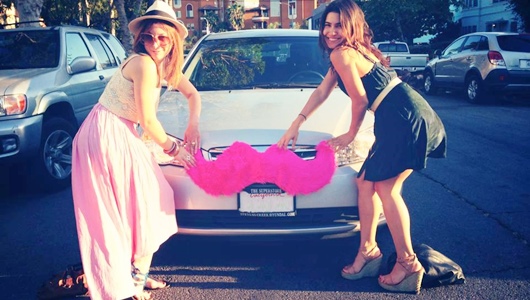
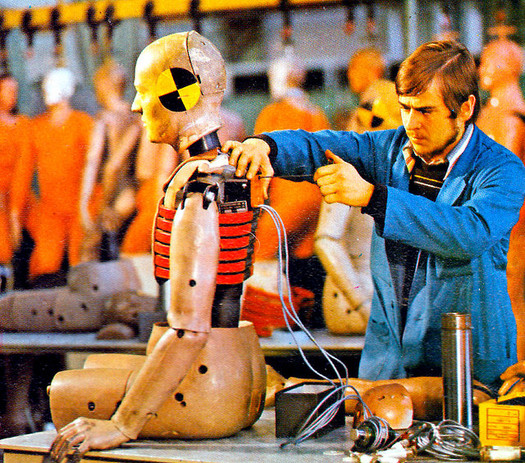
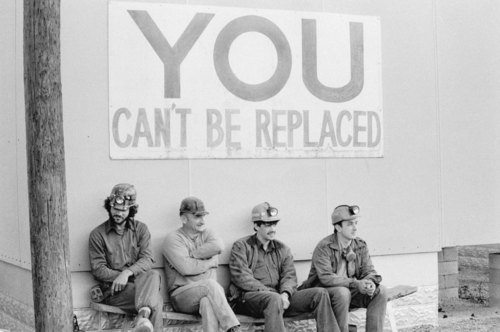
For productivity to increase, labor costs must shrink. That’s fine provided new industries emerge to accommodate workers, but that really isn’t what we’ve seen so far in the Technological Revolution, the next great bend in the curve, as production and wages haven’t boomed. It’s been the trade of a taxi medallion for a large pink mustache. More convenient, if not cheaper (yet), for the consumer, but bad for the drivers.

Perhaps that’s because we’re at the outset of a slow-starting boom, the Second Machine Age, or perhaps what we’re going through refuses to follow the form of the Industrial Revolution. Maybe it’s the New Abnormal. The opening of the Economist feature, “Technology Isn’t Working“: 

“IF THERE IS a technological revolution in progress, rich economies could be forgiven for wishing it would go away. Workers in America, Europe and Japan have been through a difficult few decades. In the 1970s the blistering growth after the second world war vanished in both Europe and America. In the early 1990s Japan joined the slump, entering a prolonged period of economic stagnation. Brief spells of faster growth in intervening years quickly petered out. The rich world is still trying to shake off the effects of the 2008 financial crisis. And now the digital economy, far from pushing up wages across the board in response to higher productivity, is keeping them flat for the mass of workers while extravagantly rewarding the most talented ones.

Between 1991 and 2012 the average annual increase in real wages in Britain was 1.5% and in America 1%, according to the Organisation for Economic Co-operation and Development, a club of mostly rich countries. That was less than the rate of economic growth over the period and far less than in earlier decades. Other countries fared even worse. Real wage growth in Germany from 1992 to 2012 was just 0.6%; Italy and Japan saw hardly any increase at all. And, critically, those averages conceal plenty of variation. Real pay for most workers remained flat or even fell, whereas for the highest earners it soared.

It seems difficult to square this unhappy experience with the extraordinary technological progress during that period, but the same thing has happened before. Most economic historians reckon there was very little improvement in living standards in Britain in the century after the first Industrial Revolution. And in the early 20th century, as Victorian inventions such as electric lighting came into their own, productivity growth was every bit as slow as it has been in recent decades.

In July 1987 Robert Solow, an economist who went on to win the Nobel prize for economics just a few months later, wrote a book review for the New York Times. The book in question, The Myth of the Post-Industrial Economy by Stephen Cohen and John Zysman, lamented the shift of the American workforce into the service sector and explored the reasons why American manufacturing seemed to be losing out to competition from abroad. One problem, the authors reckoned, was that America was failing to take full advantage of the magnificent new technologies of the computing age, such as increasingly sophisticated automation and much-improved robots. Mr Solow commented that the authors, ‘like everyone else, are somewhat embarrassed by the fact that what everyone feels to have been a technological revolution…has been accompanied everywhere…by a slowdown in productivity growth.'”

Speaking of human laborers being squeezed: Open Source with Christopher Lydon has an episode called “The End of Work,” with two guests, futurist Ray Kurzweil and MIT economist Andrew McAfee. A few notes.

  • McAfee sees the Technological Revolution as doing for gray matter what the Industrial Revolution did for muscle fiber, but on the way to a world of wealth without toil–a Digital Athens–the bad news is the strong chance of greater income inequality and decreased opportunities for many. Kodak employed 150,000; Instagram a small fraction of that. With the new technologies, destruction (of jobs) outpaces creation. Consumers win, but Labor loses.
  • Kurzweil is more hopeful in the shorter term than McAfee. He says we have more jobs and more gratifying ones today than 100 years ago and they pay better. We accomplish more. Technology will improve us, make us smarter, to meet the demands of a world without drudgery. It won’t be us versus the machines, but the two working together. The majority of jobs always go away, most of the jobs today didn’t exist so long ago. New industries will be invented to provide work. He doesn’t acknowledge a painful period of adjustment in distribution before abundance can reach all.

Tags: , ,

Sure, we have phones that are way nicer now, but the Technological Revolution has largely been injurious to anyone in the Labor market, and things are going to get worse, at least in the near and mid term. A free-market society that is highly automated isn’t really very free. Drive for Uber until autonomous cars can take over the wheel, you’re told, or rent a spare room on Airbnb–make space for yourself on the margins through the Sharing Economy. But there’s less to share for most people. From an Economist report:

“Before the horseless carriage, drivers presided over horse-drawn vehicles. When cars became cheap enough, the horses and carriages had to go, which eliminated jobs such as breeding and tending horses and making carriages. But cars raised the productivity of the drivers, for whom the shift in technology was what economists call ‘labour-augmenting.’ They were able to serve more customers, faster and over greater distances. The economic gains from the car were broadly shared by workers, consumers and owners of capital. Yet the economy no longer seems to work that way. The big losers have been workers without highly specialised skills.

The squeeze on workers has come from several directions, as the car industry clearly shows. Its territory is increasingly encroached upon by machines, including computers, which are getting cheaper and more versatile all the time. If cars and lorries do not need drivers, then both personal transport and shipping are likely to become more efficient. Motor vehicles can spend more time in use, with less human error, but there will be no human operator to share in the gains.

At the same time labour markets are hollowing out, polarising into high- and low-skill occupations, with very little employment in the middle. The engineers who design and test new vehicles are benefiting from technological change, but they are highly skilled and it takes remarkably few of them to do the job. At Volvo much of the development work is done virtually, from the design of the cars to the layout of the production line. Other workers, like the large numbers of modestly skilled labourers that might once have worked on the factory floor, are being squeezed out of such work and are now having to compete for low-skill and low-wage jobs.

Labour has been on the losing end of technological change for several decades.”

« Older entries § Newer entries »