
Books

You are currently browsing the archive for the Books category.

I will ward off the vampire, Bella, and then lustily remove my shirt. Just like the priest in "The Thorn Birds," but much fucking older.

“He bowed in a courtly way as he said, ‘I am Dracula, and I bid you welcome, young Ms. Bella Swan, to my house. Come in, the night air is chill.’

As he was speaking, he put the lamp on a bracket on the wall, and stepping out, he looked as old as fuck. He was not one of those hunky young vampires Bella was looking for on craigslist. He looked like an effing corpse. She had an opportunity of observing him, and found him of a very marked physiognomy.

Bella: How old are you?
Count Dracula: 17.
Bella: How long have you been 17?
Count Dracula: About 6,000 years.

His face was a strong, a very strong, aquiline, with high bridge of the thin nose and peculiarly arched nostrils, with lofty domed forehead, and hair growing scantily round the temples but profusely elsewhere. The mouth, so far as Bella could see it under the heavy moustache, was fixed and rather cruel-looking, with peculiarly sharp white teeth, though they might have been dentures. The general effect was one of extraordinary pallor.

Bella was completely grossed out. As the Count leaned over and his hand touched her, she could not repress a shudder. It may have been that his breath was rank, but a horrible feeling of nausea came over her.

The Count, evidently noticing it, drew back. And with a grim sort of smile, which showed more of his protuberant teeth, sat himself down again on his own side of the fireplace. They were both silent for a while, and there seemed a strange stillness over everything. But as Bella listened, she heard as if from down below in the valley the howling of many wolves. She really hoped they were hunky, shirtless werewolves, the kind that a teen girl would like, because so far this visit to Count Dracula had been a massive and creepy disappointment.

‘We are in Transylvania, and Transylvania is not Forks, Washington,’ said the Count. ‘Our ways are not your ways, and there shall be to you many strange things.’ Especially that strange old man smell, thought Bella. It was really stanky. She felt uneasy and wished she were safe out of this place, or that she had never come.

I shall cut off his head and fill his mouth with garlic, and I shall drive a stake through his body, she thought. But, no. The old freak’s breath already reeked of garlic, so she just took the keys from his arthritic hands and let herself out. He hobbled after her on his artificial hip into the sunrise. It was there the ancient dude melted into a puddle–a really fucking old puddle.”

Read other Ruined Classics.
Tags: , ,

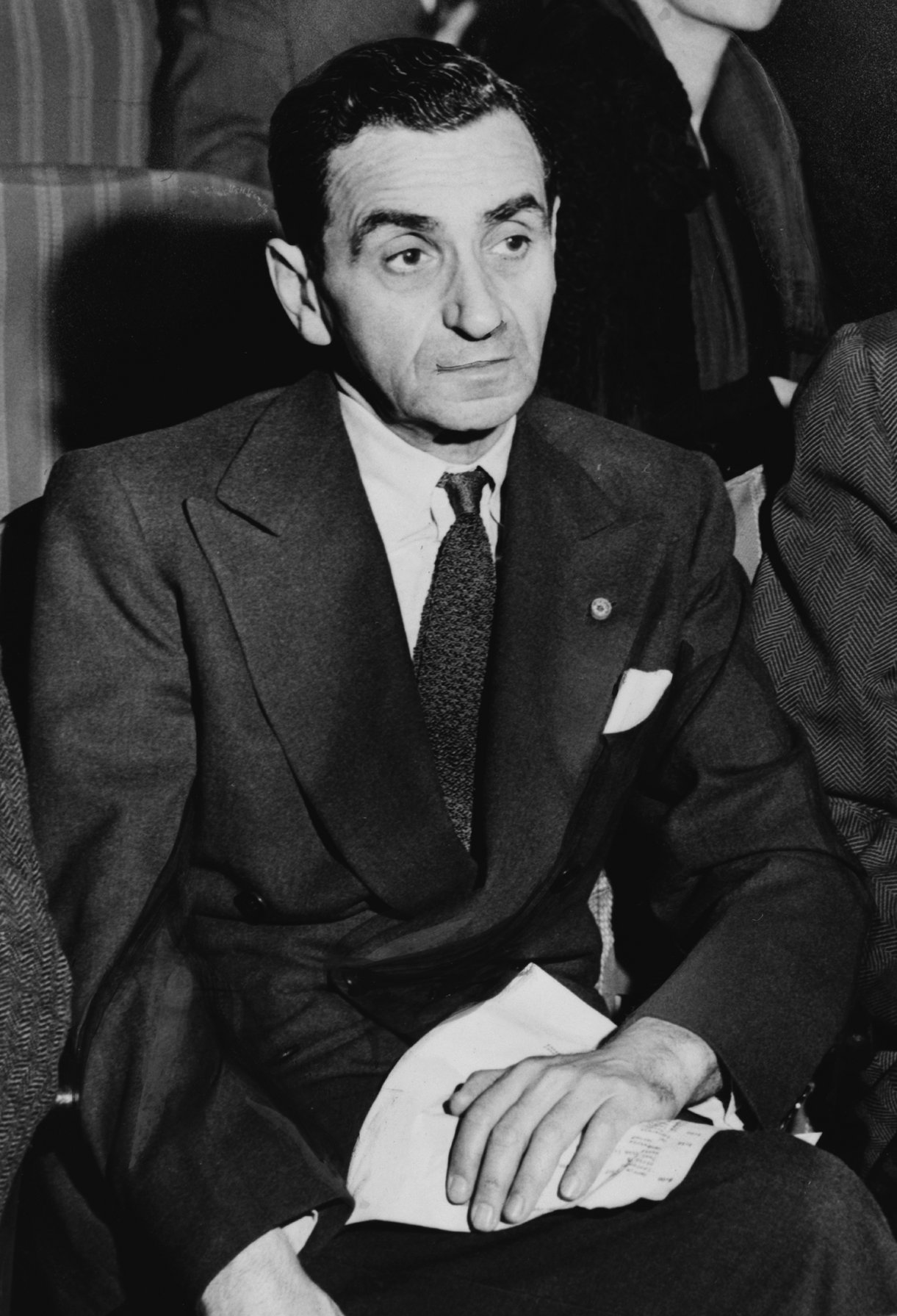
Irving Berlin's first published song was "Marie from Sunny Italy." He would improve. (Photo by Al Aumuller.)

With the aid of the very fun book, New York Year by Year: A Chronology of the Great Metropolis by Jeffrey A. Kroessler, I previously presented you with the ten most amazing historical moments in NYC in 1967. Today, I use the same volume to look at the most significant moments of 1906:

Read other Listeria lists.

Tags: , , , , , , , ,

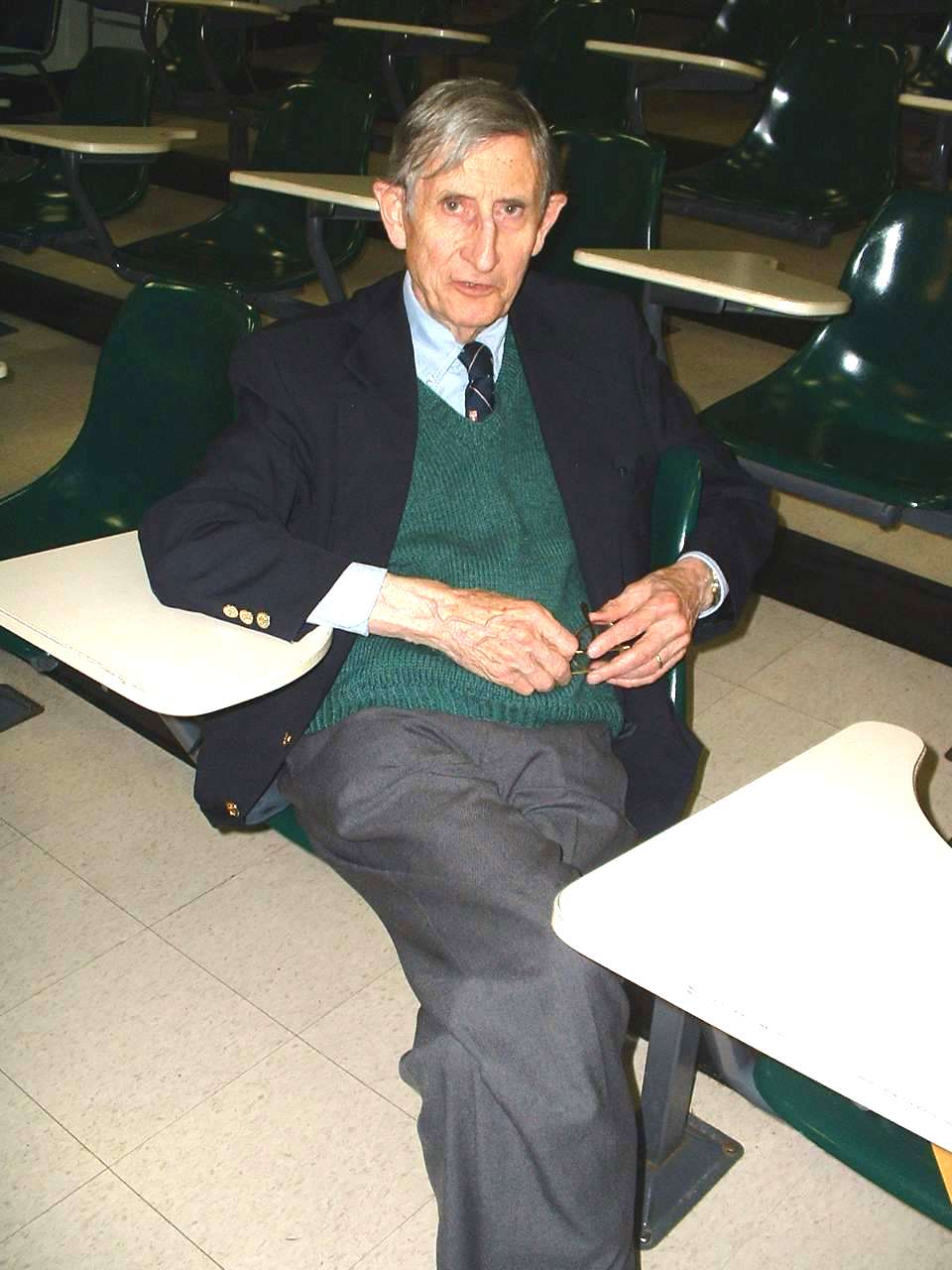
Freeman Dyson, seen here at Harvard, has never won the Nobel Prize. Running afoul of climate-change activists won't likely help on that front. (Image courtesy of Lumidek.)

The always-provocative smarties over at Edge held an event in Long Beach recently to herald “A New Age of Wonder,” as outlined by Freeman Dyson in his speeches and in an article in the New York Review of Books last August. The piece, “When Science and Poetry Were Friends,” is ostensibly a book review of Richard Holmes excellent science tome, The Age of Wonder: How the Romantic Generation Discovered the Beauty and Terror of Science.

But the 86-year-old Dyson also used the assignment to ponder whether we are at the advent of a new Romantic Age, one as reliant on biology and computers as the first was on chemistry and poetry. An excerpt from Dyson’s article:

“Richard Holmes’s history of the Age of Wonder raises an intriguing question about the present age. Is it possible that we are now entering a new Romantic Age, extending over the first half of the twenty-first century, with the technological billionaires of today playing roles similar to the enlightened aristocrats of the eighteenth century? It is too soon now to answer this question, but it is not too soon to begin examining the evidence. The evidence for a new Age of Wonder would be a shift backward in the culture of science, from organizations to individuals, from professionals to amateurs, from programs of research to works of art.

If the new Romantic Age is real, it will be centered on biology and computers, as the old one was centered on chemistry and poetry…If the dominant science in the new Age of Wonder is biology, then the dominant art form should be the design of genomes to create new varieties of animals and plants. This art form, using the new biotechnology creatively to enhance the ancient skills of plant and animal breeders, is still struggling to be born. It must struggle against cultural barriers as well as technical difficulties, against the myth of Frankenstein as well as the reality of genetic defects and deformities.

If this dream comes true, and the new art form emerges triumphant, then a new generation of artists, writing genomes as fluently as Blake and Byron wrote verses, might create an abundance of new flowers and fruit and trees and birds to enrich the ecology of our planet.”

Tags: ,

Come sit by the fire with me, soldier. Why it's warm enough here that you could remove your shirt.

“The cold passed reluctantly from the earth, and the retiring fogs revealed an army stretched out on the hills, resting. As the landscape changed from brown to green, the army awakened, and began to tremble with eagerness at the noise of rumors. Rumors about gay stuff.

Once a certain tall soldier developed virtues and went resolutely to wash a shirt. He came flying back from a brook waving his garment bannerlike. That show-off was always looking for an excuse to be shirtless. And he was swelled with a tale he had heard from a reliable friend, who had heard it from a truthful cavalryman, who had heard it from his trustworthy brother, one of the orderlies at division headquarters. He adopted the important air of a herald in red and gold.

“They’re going to repeal “Don’t Ask, Don’t Tell” t’morrah–sure,” he said pompously to a group in the company street.

“It’s a lie! that’s all it is–a thunderin’ lie!” said another private loudly. His smooth face was flushed, and his hands were thrust sulkily into his trouser’s pockets. He took the matter as an affront to him. “I don’t believe the derned old army’s ever going to repeal. I’ve got ready to come out eight times in the last two weeks, and they ain’t repealed yet.”

The tall soldier felt called upon to defend the truth of a rumor he himself had introduced. He and the loud one came near to fighting over it. But they was always havin’ lovers’ quarrels.

Many of the men engaged in a spirited debate and some slow dancin’. Meanwhile, the soldier who had fetched the rumor bustled about with much importance. He was continually assailed by questions.

“What’s up, Jim?”

“Th’army’s goin’ t’ repeal.”

“Ah, what yeh talkin’ about? How yeh know it is?”

“Well, yeh kin b’lieve me er not, jest as yeh like. I don’t care a hang.”

There was much food for thought in the manner in which he replied. He came near to convincing them by disdaining to produce proofs. They grew much excited over it. Visibly excited.

There was a youthful private who listened with eager ears to the words of the tall soldier and to the varied comments of his comrades. After receiving a fill of discussions concerning the repeal, he went to his hut and crawled through an intricate hole that served it as a door. He wished to be alone with some new thoughts that had lately come to him. Thoughts about how incredibly gay the regiment was. The whole thing was like Charles Nelson Reilly Day at Fort Elton John. It was almost like being in the Navy.

The youth was in a little trance of astonishment. So they were at last going to repeal. He had long despaired of witnessing a Greeklike struggle. But if that’s what the Tall Soldier and the Loud Soldier wanted to do in their tent, who really cared, he thought. After all, I’m not an insecure child and the important thing is we’ve got a fucking war to win.”

Read other Ruined Classics.

Tags: , ,

This novel was as lusty as its cover, but the Hays Code made for a toned-down film version.

“A lusty novel of the Southwest” boasts the copy in this 1947 advertisement for a 25-cent thrift edition of Niven Busch’s melodramatic novel, Duel in the Sun. The story concerns a half-white, half-Native American woman who gets caught up in intrigue–romantic and otherwise–while living with her white rancher relatives.

Before becoming a novelist and Hollywood screenwriter, Busch was a magazine writer for the New Yorker and Time. Duel in the Sun was made into a film by David O. Selznick and King Vidor in 1946 and remains a popular classic, one which Martin Scorsese identifies as one of the most influential films of his childhood. But the out-of-print novel is all but forgotten. An excerpt from the ad copy:

“When hot-headed handsome Lewt McCanles gallops recklessly along a trail that can lead only to flaming gunplay, a million-acre cattle empire trembles in the balance. Brother wars on brother in an action-packed, swift-shooting story of the great American Southwest in its sprawling, brawling infancy.”

See other Old Print Ads.

Tags: , ,

The periodicals section is on the third floor, and, yes, I am a vixen beneath my demure exterior.

Several years ago I picked up a excellent 1969 paperback entitled Good Reading for about a buck in used bookstore in Brooklyn (which has since gone out of business). The Good Reading series was first published in 1935, and this 35th anniversary edition was priced at 95 cents.

Scholars from fields including Middle Ages history, the 19th-century British novel and Mathematics suggested the must-read books in their area of expertise. It lucidly and briefly annotates more than a couple thousand important books. In the fields of reference books and magazines, J. Sherwood Weber, who was the series’ editor and the chairman of the English department at Pratt, picked the best of the best.

The following are his choices for the best periodicals of the era, all but one of which still exist and have made the leap to the Internet. A good number, however, have changed significantly, so you’ll have to judge for yourself how many would still belong among the top publications.

Read other Listeria lists.

Tags:

On the flip side of the note: "Seek ye the Lord while he may be found, call ye upon him while he is near."

Got my hands an early-20th Century bible owned by a family in Ripley, New York, that had pressed in its pages a bunch of notes and clippings. One of the pieces is a faded handwritten note bearing the title, “Central Indian Mission.” I can’t be sure of the author or date, but the note refers to an 1877 Presbyterian mission. If you can look around the ethnocentrism of the note–and, boy, is it hard to do–you have to be sort of in awe of people in that era (before radio, TV, cars, antibiotics, etc.) sailing from North America to a country that they knew so little about. Such is faith. Here is the full transcript of the note:

“Our Canadian church first helped the American Presbyterian mission in North India, but, as we became more interested, a special field known as Central India was given to us in 1879 when the Rev Jim Douglas was sent to Indore.

Central India is a collection of native states north of the central province, it is a fertile section with of approximately 9,000,000, largely Hindus.

Our mission occupies the western section of Central India, with a population of over 800,000. Our stations are at fourteen central points each the centre of hundreds of villages for nine-tenths of India’s population dwell in villages. Fully two-thirds of Central India is yet unvisited by any Christian worker, so there is a great task at hand before our church; also let us not forget that the home life of these people, especially of the women and girls, is a sad one, and that all the men, women and children are like ourselves, subjects of the British Empire. Let’s see to it that India’s empire is Christ’s.”

Tags:

No, I don't have gold in my ear. Please stop asking me that.

Before I reluctantly return Oriana Fallaci’s out-of-print 1976 book, Interview with History, to my shelves, I bring you one more excerpt. I’ve previously presented segments of her tête-à-têtes with Henry Kissinger and Indira Gandhi, and now we look at her meeting with Golda Meir, who was then Israel’s Prime Minister.

Even though Fallaci differed politically with Meir on crucial issues, the journalist acknowledged a sort of love for the politician, who physically resembled her mother. The interview actually took place twice because the first set of microcassettes were stolen from Fallaci’s Jerusalem hotel room. (Fallaci believed that Muammar al-Qaddafi was behind the thievery.) An excerpt from the women’s exchange on the topic of feminism:

“Oriana Fallaci: Shall we talk about the woman Ben-Gurion called ‘the ablest man in my cabinet?’

Golda Meir: That’s one of the legends that have grown up around me. It’s also a legend I’ve always found irritating, though men use it as a great compliment. Is it? I wouldn’t say so. Because what does it really mean? That it’s better to be a man than a woman, a principle on which I don’t agree at all. So here’s what I’d like to say to those who make me such a compliment. And what if Ben-Gurion had said, ‘The men in my cabinet are as able as a woman’? Men always feel so superior. I’ll never forget what happened at a congress of my party in New York in the 1930s. I made a speech and in the audience there was a writer friend of mine. An honest person, a man of great culture and refinement. When it was over he came up to me and exclaimed, ‘Congratulations! You’ve made a wonderful speech! And to think you’re only a woman!’ That’s just what he said in such a spontaneous, instinctive way. It’s a good thing I have a sense of humor….

Oriana Fallaci: The Women’s Liberation Movement will like that, Mrs. Meir.

Golda Meir: Do you mean those crazy women who burn their bras and go around all disheveled and hate men? They’re crazy. Crazy. But how can one accept such crazy women who think that it’s a misfortune to get pregnant and a disaster to bring children into the world? And when it’s the greatest privilege we women have over men.”

Tags: ,

Side effects may include: back pain, blurred vision, cough, decreased sexual ability, diarrhea, dizziness, drowsiness, lightheadedness, runny or stuffy nose, sinus inflammation, trouble sleeping and weakness.

“He was an old man who fished alone in a skiff in the Gulf Stream and he had gone eighty-four days now without taking a fish. Every time he could have caught a marlin, he was too busy going to the men’s room. It made the boy sad to see the old man come in each day with his skiff empty and he always went down to help him either carry the coiled lines or the gaff and harpoon and the sail that was furled around the mast. Then the old man would rush to the can in the Red Lobster because he felt like he needed to take a leak.

Everything about him was old except his eyes which were the color of the sea and were cheerful and undefeated. But his prostate was defeated–enlarged and badly defeated. The old man was thin and gaunt and had deep wrinkles behind his neck, which he noticed one day in a restroom mirror. He sat on the Terrace and many of the fishermen made fun of him but he was not angry. He thought he had a going problem, but then his doctor told him that he had a growing problem. That’s when he discovered Flomax.

‘Bad news for you, fish,’ he said and shifted the line over the sacks that covered his shoulders. ‘I am a tired old man. But I have killed this fish which is my brother.’ Later, up the road in his shack, the old man was sleeping again, dreaming about the lions. He had taken a Cialis, so he rested upon a gigantic boner.”

Read other Ruined Classics.
Tags:

Maybe Septimus couldn't stand your jibber-jabber.

“Mrs. Dalloway said she would buy the flowers herself. It was pretty fucking obvious nobody else was gonna do it. Try to get people to move their asses.

For Lucy had her work cut out for her. The doors would be taken off their hinges; Rumpelmayer’s men were coming. And then, thought Clarissa Dalloway, what a morning—fresh as if issued to children on a beach. But cold as fuck. Was it supposed to be so cold? That’s not what it said in the papers.

She had reached the Park gates. She stood for a moment, looking at the omnibuses in Piccadilly. The park, it smelled like shit, thought Mrs. Dalloway. They probably should clean that place more often. You think bums don’t urinate in there?

She would not say of any one in the world now that they were this or were that. She felt very young; at the same time unspeakably aged. Which really makes very little sense. I mean, I guess she was being poetic, but maybe she’s just middle-aged and confused. She sliced like a knife through everything; at the same time was outside, looking on. She had a perpetual sense, as she watched the taxi cabs, of being out, out, far out to sea and alone; she always had the feeling that it was very, very dangerous to live even one day. Especially if you don’t even know basic stuff like if you’re young or old. Life really is very fucking dangerous when you don’t even have rudimentary knowledge.

Her only gift was knowing people almost by instinct, she thought, walking on. If you put her in a room with some one, up went her back like a cat’s; or she purred. Which inevitably creeped out everyone. She remembered once throwing a shilling into the Serpentine. Because poor people had no use for that money. I bet one of the urinators in the park would have been really grateful for it. But every one remembered; what she loved was this, here, now, in front of her; the fat lady in the cab. But I’ll say one thing for the fat lady, I bet she at least knows if she’s young or old. She might be overweight, but she probably has some concept of time.

But what was she dreaming as she looked into Hatchards’ shop window? Was it that dream where you’re naked but nobody else notices? I hate that one. What was she trying to recover? What image of white dawn in the country, as she read in the book spread open:

Fear no more the heat o’ the sun
Nor the furious winter’s rages.

This late age of the world’s experience had bred in them all, all men and women, a well of tears. But it had not bred in them the ability to use a rhyming dictionary to save their fucking lives.”

Tags:

Christopher Hitchens has used some space on Slate to put a spotlight on an interesting new book about the blighted nation of North Korea, run by the ridiculous and brutal overlord Kim Jong-il. In his article,A Nation of Racist Dwarfs,” Hitchens shares ideas from B.R. Myers’ book, The Cleanest Race: How North Americans See Themselves and Why It Matters. Myers looks not only at how arrogant delusions about racial superiority drive North Koreans but how it has stunted their growth–figuratively and literally. An excerpt from the Slate article:

Here are the two most shattering facts about North Korea. First, when viewed by satellite photography at night, it is an area of unrelieved darkness. Barely a scintilla of light is visible even in the capital city. Second, a North Korean is on average six inches shorter than a South Korean. You may care to imagine how much surplus value has been wrung out of such a slave, and for how long, in order to feed and sustain the militarized crime family that completely owns both the country and its people.

But this is what proves Myers right. Unlike previous racist dictatorships, the North Korean one has actually succeeded in producing a sort of new species. Starving and stunted dwarves, living in the dark, kept in perpetual ignorance and fear, brainwashed into the hatred of others, regimented and coerced and inculcated with a death cult: This horror show is in our future, and is so ghastly that our own darling leaders dare not face it and can only peep through their fingers at what is coming.•

Tags: , , ,

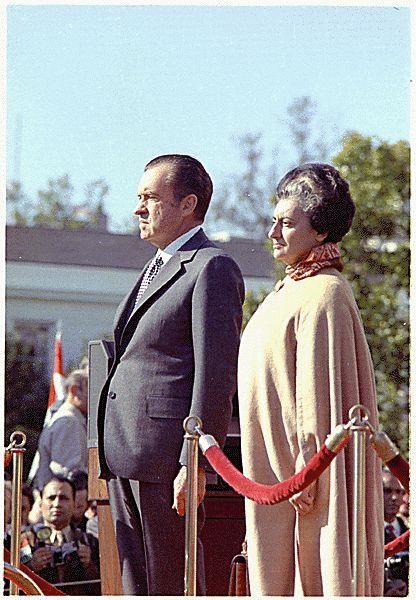
Nixon and Gandhi, together in 1971, despised one another. He referred to her behind the scenes as an “old witch.”


I brought you an excerpt of Oriana Fallaci’s spellbinding 1972 session with Henry Kissinger from the journalist’s great out-of-print book, Interview with History. I’m returning for passage of Fallaci’s 1972 Q&A with Indira Gandhi, one of the most complex and thorniest political leaders of that era.

By the time Fallaci had published her book in 1976, she had renounced her admiration for Gandhi, who had been India’s tough-as-nails Prime Minister and a feminist icon. In 1975, Gandhi, rather than resign as Prime Minister after being convicted of election fraud, declared the Indian version of martial law, had her political opponents imprisoned and repealed many of the citizens’ freedoms. She had, in effect, become a dictator.

Fallaci wrote a new introduction to the four-year-old interview that expressed bitter disappointment in the fallen idol. (“I didn’t hide my regret and shame at having portrayed her in the past as a woman to love and respect.”) Here’s a portentous excerpt from the interview that was conducted in New Delhi:

Oriana Fallaci:

Mrs. Gandhi, I have so many questions to ask you, both personal and political. The personal ones, however, I’ll leave for later–once I’ve understood why many people are afraid of you and call you cold, indeed icy, hard…

Indira Gandhi:

They say that because I’m sincere. Even too sincere. And because I don’t waste time with flowery small talk, as people do in India, where the first half hour is spent in compliments: ‘How are you, how are your children, how are your grandchildren and so forth.’ I refuse to indulge in small talk. And compliments, if at all, I save for after the job is done. But in India people can’t stomach this attitude of mine, and when I say, ‘Hurry up, let’s get to the point,’ they feel hurt. And think I’m cold, indeed, icy, hard. Then there’s another reason, one that goes with my frankness: I don’t put on an act. I don’t know how to put on an act; I always show myself for what I am, in whatever mood I’m in. If I’m happy, I look happy; if I’m angry, I show it. Without worrying about how others may react. When one has had a life as difficult as mine, one doesn’t worry about how others will react.•

Tags: , ,

Worst of all, the topping was anchovies.

“Someone must have been telling lies about Josef K., he knew he had not ordered a pizza but, one evening, a man delivering a pizza showed up at his door. Every day at eight in the evening he was brought his dinner by Mrs. Grubach’s cook–Mrs. Grubach was his landlady–but today she didn’t come. That had never happened before. K. waited a little while, looked from his pillow at the old woman who lived opposite and who was watching him with an inquisitiveness quite unusual for her, and he grew both hungry and disconcerted.

There was a knock at the door and a man holding a pizza box stood there. Josef K. had never seen the man in this house before. He was slim but firmly built so that he could carry many pizzas, his clothes were black and close-fitting, with many folds and pockets, buckles and buttons and a belt, all of which gave the impression of being very practical but without making it very clear what they were actually for. But probably they had something to do with pizza delivery.

‘Who are you?’ asked K. The man, however, ignored the question as if his arrival simply had to be accepted. K. refused payment. He was living in a free country, after all, everywhere was at peace, laws were decent and were upheld, who was it who dared to accost him in his home with a pizza? K., wrenching himself back from his daydreaming, said to the pizza guy, ‘I really don’t know what it is you want of me.’ The strange man in the doorway replied: ‘How about $11.50 plus tip, Dillweed?'”

Tags:

Of course, I look like crap. Do you know how much opium I've taken?

The Manchester-born author and intellectual Thomas De Quincey is most famous for his 1821 drug tell-all, Confessions of an English Opium-Eater. Like all people with a drug addiction, his life was not a happy one. The odd and depressive De Quincey had begun using opium at age 19 while he was in college. He was persuaded to later write about his lifelong addiction and the resulting book was a great success. But the writer was bad with money and remained half a step out of the debtor’s prison for a good part of his adult life. He died in 1859. An excerpt from the book from the section “The Pains of Opium”:

“It will occur to you often to ask, why did I not release myself from the horrors of opium by leaving it off or diminishing it? To this I must answer briefly: it might be supposed that I yielded to the fascinations of opium too easily; it cannot be supposed that any man can be charmed by its terrors. The reader may be sure, therefore, that I made attempts innumerable to reduce the quantity. I add, that those who witnessed the agonies of those attempts, and not myself, were the first to beg me to desist. But could not have I reduced it a drop a day, or, by adding water, have bisected or trisected a drop? A thousand drops bisected would thus have taken nearly six years to reduce, and that way would certainly not have answered. But this is a common mistake of those who know nothing of opium experimentally; I appeal to those who do, whether it is not always found that down to a certain point it can be reduced with ease and even pleasure, but that after that point further reduction causes intense suffering.”

Tags:

You can kick me in the head if you like, but please stop looking at me with your death-ray eyes.

I always thought martial arts became popular in the U.S. in the 1970s because of the TV series Kung Fu. But according to an article I found in a 1968 Life magazine, a different martial art became popular the previous decade. “Karate: New Tough-Guy Cult” examines the sport’s nascent popularity in America. An excerpt from the article’s opening:

“The worried looking would-be strongman, the one who looks like Woody Allen–that crack in the gut is only a sample of the trouble he’s on for. The oddly dressed platoon on its knees in the rain, they are there because rain, like an occasional thrashing with a bamboo pole, builds character. These particular character-builders are members of Brooklyn’s School of Scientific Karate and part of a growing army of U.S. devotees of the muscular cult. Inspired by the manly mayhem of film heroes–the Sinatra who split a table in The Manchurian Candidate, the Spencer Tracy who splintered a bad guy in Bad Day at Black Rock. Americans have made karate a national sport in less than a decade. The School of Scientific Karate (250 students) is only one of 750 karate schools scattered around the country. A dozen years ago there were none.

Developed in China and systemized in Japan, karate (which means “empty hand” in Japanese) is designed to kill or maim. But karateists like these Brooklynites are not aggressors. They practice a year to smash the edge of a hand into a brick, not a solar plexus. In practice they learn to pull their punches. Much of their practice is in pulling punches. And ultimately, according to practitioners, they get from karate the confidence–and the placid equanimity–that less determined souls find in religion.”

A "bigwig" with hair extensions.

I previously brought you synonyms for the words “doctor,” “criminal” and “laborer” from my favorite reference book, 1971’s Webster’s New World Thesaurus. I go to the volume once again to look at how the synonyms for “celebrity” have changed between then and now. What most caught my attention is that the book lists the main antonym of “celebrity” as “disgrace.” Today, they’re more commonly synonyms, of course. Here are the top ten most interesting entries:

  • Ace
  • Big gun
  • Bigwig
  • Figure
  • Lion
  • Lioness
  • Maecenas
  • Magnate
  • Man of note
  • Worthy

Read other lists.

Tags:

The late journalist Oriana Fallaci had a dubious final chapter to her life when in the wake of 9/11, she lived in fear a Muslim planet. But in her younger days, she was one of the greatest interrogators in all of journalism. It’s not likely in this self-conscious age that many of today’s bigwigs would suffer her substance and style, but it’s not like too many interviewers are even trying.

In 1972, as the war in Vietnam raged, Secretary of State Henry Kissinger sat down for an interview with Fallaci and regretted it almost immediately, ultimately dubbing it “the single most disastrous conversation I have ever had with any member of the press.” The piece was published in the New Republic and anthologized in Interview with History. Here’s an excerpt:

Oriana Fallaci:

And what do you have to say about the war in Vietnam, Dr. Kissinger? You’ve never been against the war in Vietnam, it seems to me.

Henry Kissinger:

How could I have been? Not even before holding the position I have today…No, I’ve never been against the war in Vietnam.

Oriana Fallaci:

But don’t you find that [Arthur] Schlesinger is right when he says that the war in Vietnam has succeeded only in proving that a million Americans with all their technology have been incapable of defeating poorly armed men dressed in black pajamas?

Henry Kissinger:

That’s another question. If it is a question about whether the war in Vietnam was necessary, a just war, rather than…Judgments of that kind depend on the position that one takes when the country is already involved in the war and the only thing left is to conceive a way to get out of it. After all, my role, our role, has been to reduce more and more the degree to which America is involved in the war, so as then to end the war. In the final analysis, history will say who did more: those who operated by criticizing and nothing else, or we who tried to reduce the war and then ended it. Yes, the verdict is up to history. When a country is involved in a war, it’s not enough to say it most be ended. It must be ended in accordance with some principle. And this is quite different from saying that it was right to enter the war.

Oriana Fallaci

But don’t you find, Dr. Kissinger, that it’s been a useless war?

Henry Kissinger:

On this I can agree.•


Fallaci was among Dick Cavett’s guests on January 22, 1973 when news broke that former President Lyndon Johnson had died.


Tags: ,

I am pretending to be a working man, and I am displeased with some of your synonyms.

To demonstrate how quickly the language shifts, I posted lists of synonyms earlier in the week for the words “doctor” and “criminal” from my all-time favorite reference book, the 1971 Webster’s New World Thesaurus. Today I bring you the most telling synonyms for the word “laborer” from that same book. Notice that “stooge” is on the lists for both “criminal” and “laborer” and that most of the “laborer” descriptions are none too complimentary.

  • Automaton
  • Beast of burden
  • Chattel
  • Doormat
  • Flunky
  • Hack
  • Hand
  • Helot
  • Hired man
  • Hireling
  • Instrument
  • Mercenary
  • Peon
  • Pick-and-shovel man
  • Robot
  • Roustabout
  • Stevedore
  • Stooge
  • Thrall
  • Villein

Read other Listeria lists.

Tags:

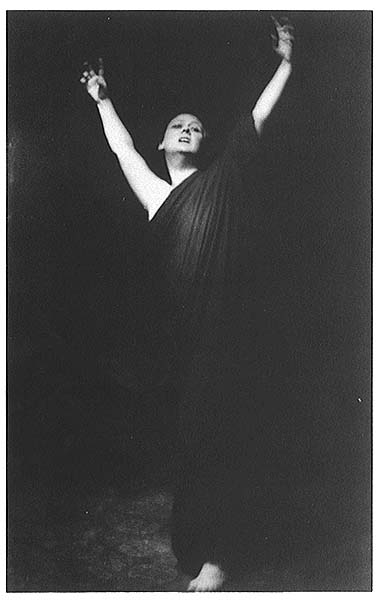
Barefoot Isadora performs during her 1915-1918 American tour in this Arnold Genthe photograph.

In his U.S.A. Trilogy, modernist master John Dos Passos incorporated all manner of experimentation and ephemera, including idiosyncratic biography. One of the towering figures of early twentieth-century America he wrote about was the great dancer Isadora Duncan. An excerpt from his writing about Duncan’s hand-to-mouth upbringing with her mother and siblings (all punctuation and spellings are Dos Passos’):

“she bore a daughter whom she named after herself Isadora

The break with Mr. Duncan and the discovery of his duplicity turned Mrs. Duncan into a bigoted feminist and an atheist, a passionate follower of Bob Ingersol’s lectures and writing, for God read Nature; for duty beauty, and only man is vile.

Mrs. Duncan had a hard struggle to raise her children in the love of beauty and hatred of corsets and conventions and manmade laws. She gave pianolessons, she did embroidery and knitted scarves and mittens.
The Duncans were always in debt.

The rent was always due.

Isadora’s earliest memories were of wheedling grocers and butchers and landlords and selling little things her mother had made from door-to-door.

helping handvalises out of back windows when they had to jump their bills at one shabbygenteel boardinghouse after another in the outskirts of Oakland and San Francisco.

The little Duncans and their mother were a clan; it was the Duncans against a rude and sordid world. The Duncans weren’t Catholics anymore or Presbyterians or Quakers or Baptists; they were Atheists.”

Tags: , , ,

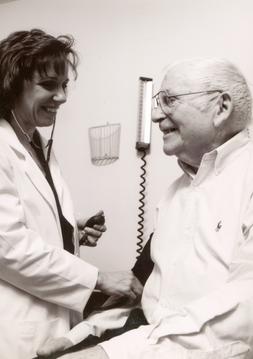
How's my blood pressure looking, you pill bag?

The greatest reference book I have ever come across is the 1971 edition of Webster’s New World Thesauraus. I like its vibrant language and its A-Z listing so much that I have two copies just in case one is struck by lightning (or a “firebolt” as the good book suggests). The English language is a living thing that changes quickly and gets richer in many ways, but I wish we could retain some of the more colorful aspects of its history. Here are the ten best synonyms in this 1971 volume for the word “doctor,” many of which appear in no thesaurus just about 40 years later.

  • Bones
  • Castor-oil artist
  • Doc
  • Fixemup
  • Interne
  • Medicine-dropper
  • Medico
  • Pill bag
  • Sawbones
  • Shaman

Read other lists.

Tags:

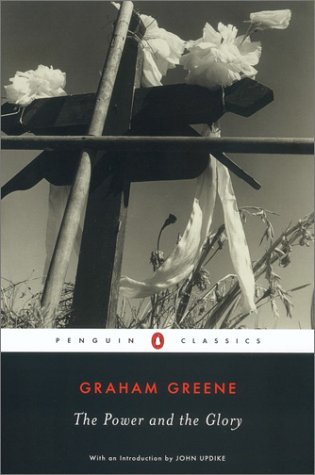
The Power and the Glory made Time's 100 Greatest Novels list.

The Paris Review site has an interesting 1955 interview with Graham Greene (download the full version). This Q&A reveals that while the author had the rare gift to write critically acclaimed work that was also widely popular, he really wanted to try his hand at other things. An excerpt:

Interviewer: Did you always want to be a writer?

Greene: No, I wanted to be a businessman and all sorts of other things; I wanted to prove to myself that I could do something else.

Interviewer: Then the thing that you could always do was write?

Greene: Yes, I suppose it was.

Interviewer: What happened to your business career?

Greene: Initially it lasted for a fortnight. They were a firm, I remember, of tobacco merchants. I was to go up to Leeds to learn the business and then go abroad. I couldn’t stand my companion. He was an insufferable bore. We would play double noughts and crosses and he always won. What finally got me was when he said, “We’ll be able to play this on the way out, won’t we?” I resigned immediately.

Tags:

Just a pawn in the game of life.

Watching the ball drop in Times Square, as many of us recently did, always makes me think of one of my favorite films, Stanley Kubrick’s The Killing. The brilliant 1956 crime story doesn’t have any key scenes that take place on New Year’s Eve, but it has one that’s set right near the New Amsterdam Theatre where the ball drops, in a dingy chess club of yore called the Flea House. For much of its existence (which began during the Great Depression), you could rent a chess board at the dive for 10 cents an hour. Elder chess master Bill Hook recalls the Flea House in Hooked on Chess: A Memoir. Jeremy Silman, an expert on the game, writes about Hook’s book on his site:

“Much of Hook’s twenties and early thirties were spent in abject poverty in New York City. His health precluded steady work and his painting hadn’t taken off but Hook had one good thing that kept him going. Known by different names at different times — The New York Chess and Checker Club, Fischer’s, Fursa’s and finally the Flea House, the game playing establishment on 42nd street near Times Square was  a home away from home for many lost souls. Hooked on Chess has many stories of the characters that passed through this 24-hour New York City institution that ran from the Depression until the early 1970s. Some of the strongest players in the United States like George Treysman and Abe Kupchik were regulars when Hook first started going, but there were also plenty of weak players and odds games for various stakes were always being contested. According to Hooked on Chess, it was the clientele who created the special atmosphere. Certainly it was not the mismatched furniture or smoked stained walls that did. The tables that chess, bridge and various games were played on were frequently covered in a pile of ashes and it was not uncommon to see people sleeping at night in the club. Hook gives a lengthy and moving testimonial to the many people he met daily at the club.”

Tags: , , , , ,

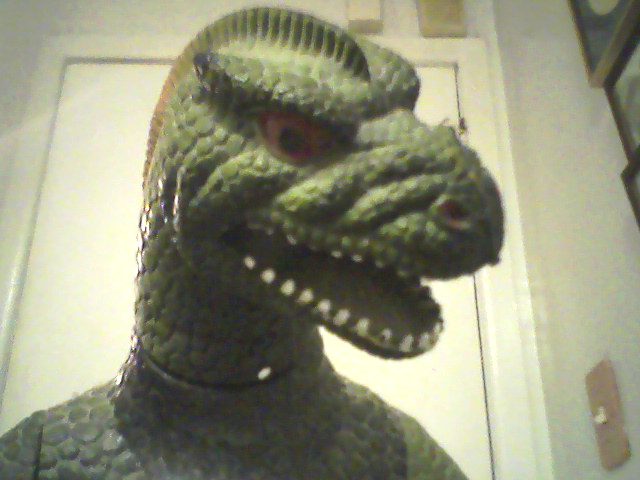
My landlord can be aggressive at times.

Jurassic Park is fiction but a growing group of paleontologists have their sights set on reanimating dinosaurs. Jack Horner and James Gorman’s book, How to Build a Dinosaur was featured on 60 Minutes recently. The authors believe that DNA material from prehistoric creatures found on paleontological expeditions can be used to create real dinosaurs. (Unsurprisngly, Horner was the inspiration for the lead paleontologist character in Jurassic Park and served as a technical advisor on the film.)

At the same time, McGill University scientist Hans Larsson, inspired by Horner’s work, is attempting to manipulate chicken embryos to reanimate dinosaur traits that disappeared millions of years ago. Every bird on Earth is a descendant of dinosaurs, so it seems like it may be possible. An excerpt from a recent Telegraph article:

“Larsson believes by flipping certain genetic levers during a chicken embryo’s development, he can reproduce the dinosaur anatomy. Though still in its infancy, the research could eventually lead to hatching live prehistoric animals, but Larsson said there are no plans for that now, for ethical and practical reasons — a dinosaur hatchery is ‘too large an enterprise.'”

Read the full article.

Tags: , , ,

Like Detroit (sadly,) but more ancient.

Pompeii: Like Detroit, but ancient.

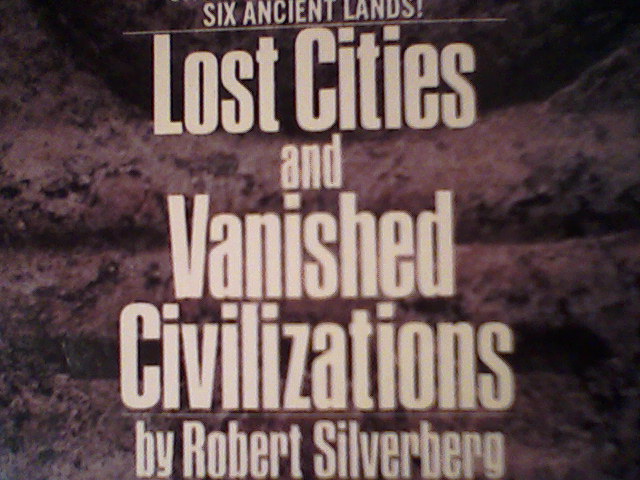
Archaeologists believe they may have discovered the lost city of Atlantis, so it seems appropriate to excerpt Robert Silverberg’s out-of-print 1962 book, Lost Cities and Vanished Civilizations. (Pictured is a 1974 paperback version that cost 95 cents at the time.) Silverberg has enjoyed great success as a science-fiction writer, and this quote about Pompeii sounds very sci-fi but is very real:

“Pompeii was a busy city and a happy one. It died suddenly in a terrible rain of fire and ashes. The tragedy struck on the 24th of August, A.D. 79. Mount Vesuvius, which had slumbered quietly for centuries, exploded with savage violence. Death struck on a hot summer afternoon. Tons of hot ashes fell on Pompeii, smothering it, hiding it from sight. For three years the sun did not break through the cloud of volcanic ash that filled the sky. And when the eruption ended, Pompeii was buried deep. A thriving city had perished in a single day. Centuries passed…Pompeii was forgotten. Then, 1,500 years later, it was discovered again.”

Tags: , ,

Milton Glaser was a Fulbright scholar in Bologna.

Milton Glaser was a Fulbright scholar in Bologna.

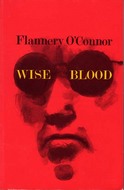
If he had created only theI ♥ New Yorklogo or the multicolored Bob Dylan poster, Milton  Glaser would have secured a place in design history. but he’s done so much more in his 80 years, co-founding New York magazine and doing an unbelievable quantity and quality of work in print, environmental and interior design, posters, etc. My single favorite work of his is a rather obscure book cover he created for the Flannery O’Connor novel, Wise Blood.

O’Connor was a master of the short story and this novel never quite reached the level of the three stories she’d written earlier about Hazel Motes and Enoch Emery. But Glaser’s image of a vague thumbprint-ish face under dark glasses is hypnotic and speaks to the book in literal and figurative ways. It’s just about perfect.

Visit Glaser’s official site to see his numerous other designs.

Tags: , ,

« Older entries § Newer entries »