Books

You are currently browsing the archive for the Books category.

Marriage: In law, a civil contract establishing the status of a man and a woman united in lawful wedlock; the relation of husband and wife. In its ethical sense, it is, in all Christian countries, a mutual compact, based on regard and affection, to live together as husband and wife, until death. Its purpose is to perpetuate the family and the race, to preserve moral and social purity, and to properly rear the young. The marriageable age is especially regulated by statute in the various States; under the common law it is 14 years in the male, and 12 in the female.

Mixed Races: The subject of mixed races is intimately connected with the study of both ethnology and atavism. It involves a consideration of the phenomena attendant upon the sexual union of individuals belonging to different varieties of the human race. Two phases of mixing of races are particularly interesting to North Americans, the result of the mixing of white and negro blood, and the amalgamation of various white races, belonging to every strata of society, from the descendants of generations of oppressed peasants, to scions of high nobility in what has been termed the “American Melting Pot.” The mingling of European nations seems to produce a strong and thoughtful race, combining the finest elements of those who are, from the struggle to emigrate, the best physical specimens of their people, and now the United States is increasing the difficulty of admission, thus aiding the natural principle of selection. The result of amalgamation among more distant races, as exemplified in the population of Central and Southern America and the Eurasians of India, have not commended themselves to the American mind, and there is a strong opposition to the admission of Chinese and Japanese, the finest of non-Caucasian races.

Morgue: Originally a prison court for the identification of prisoners in France, then applied to a building on the Seine behind the cathedral of Notre Dame, Paris, where the bodies of the drowned and other unknown dead are exposed for identification and police inspection. This practice is now usual in all large cities. The period of exposure is usually 72 hours, and the unidentified bodies are then buried by the city or given to anatomists. To avoid morbid curiosity, only adults with an interest in identification are admitted, and a careful record is preserved of physical appearance and peculiarities.

Moving Pictures: About 1903 the stock of films in existence had gradually become sufficiently numerous to enable the establishment of small theaters with frequent changes of views. They became very popular and by 1905 had driven the traveling exhibitors of moving pictures practically out of business. There are now upwards of 10,000 such theaters in the United States alone, and they are proportionately numerous all over the civilized world. Receipts of such theaters range from $200 to $5,000 weekly according to size and location. Over fifty reels (lengths of 1,000 feet) are now produced weekly so that one person could spend two or three hours daily and never see a repeated picture. The business of the ordinary theater has been seriously affected, and the lower class of melodramas has been entirely eliminated. Moving pictures are of course liable to great abuse, as vulgar and vicious films have sensational interest, but the manufacturers have voluntarily submitted their products to a respectable censorship, and they have become the best, cheapest and most instructive amusement. In its far-reaching effects, the invention of moving pictures is one of the greatest in the history of science.

Murder: The crime of killing a human being with malice aforethought; an idiot is irresponsible; an infant under fourteen goes to the reformatory. Killing in hot-blooded quarrel without premeditation is manslaughter, punishable with imprisonment, not death; and killing in self-defense, or when a house is broken into at night is justifiable. But if a man shoots at one and kills another, or kills, even in self-defense, when caught in burglary, it is murder. Intoxication is not an excuse, nor provocation, when it does not give absolute necessity of self-defense. Most American states punish murder by death, but a mawkishness of juries, and the technicalities of evidence and specialist arguments for insanity of criminals often defeat justice. European practice is stricter.

•Taken from the 1912 Standard Illustrated Book of Facts.

See also
 

(Image by Lenore Edman.)

Liberal: A political term meaning, where used, those who take advanced views, and welcome changes that promise betterment in public affairs, in contradistinction to the Conservative who usually favors letting well enough alone.

Lincoln, Abraham: The great president of the United States during the Civil War. He was the son of Thomas and Nancy Hanks Lincoln, born in Hardin County, Kentucky, of English-Quaker stock, and passed his youth amid the then rough frontier environment of the middle west, where anti-slavery sentiment prevailed. His early education was self-acquired, mostly by voracious reading; and his first business training was secured while serving as a clerk in a general store, where, by fair dealing, he earned the nickname of “Honest Abe.” In 1846 he was elected to Congress and in 1860 was nominated for the Presidency. In 1861 Lincoln was elected after a spirited campaign. He came to office at a time when the country was torn with the anti-slavery agitation, when the Civil War, long impending, was breaking out, and throughout the four year struggle he stood, often alone, firmly contending for the abolition of slavery and the preservation of the Union, strong in the faith that ultimately the nation would emerge from the period of stress and strain, greater and more prosperous than ever. He brought the country successfully out if its travail, and by the weight of the burden, “Honest Abe,” became the “Man of Sorrows.” For the service to the nation he paid with his life; he was assassinated by John Wilkes Booth, an actor, while witnessing a play in the box at Ford’s Theatre, Washington D.C., on the night of April 14, 1865, one month after his second inauguration. In personal appearance, Lincoln was very tall with legs out of all proportion to his body. He stood 6 feet, 4 inches in height and weighed about 180 lbs. When he sat, he usually crossed his legs or rested them on the arm of his chair; standing, he stooped slightly, and had the general appearance of a consumptive. His facial expression stamped him a man of long cherished sorrow, yet his sense of humor was exceptionally keen and he possessed a never-failing fund of witty stories. As an orator he is conceded one of the greatest America ever produced.

Literature, American: It may be well to admit at the outset that America has never produced a world writer. The nearest approach to it, in poetry in Longfellow and, in prose, Emerson.

Lottery: A game of hazard in which prizes are drawn by lot. Lotteries are said to have been first employed by the Genoese government for the purpose of increasing its revenue. The first lottery in England seems to have been in the year of 1569 and the profits went to the repair of rivers and harbors. They were long tolerated both in England and the United States, though from 1830 onward until they were abolished there was an ever-growing sentiment against them. The most notorious ever was the Louisiana lottery at New Orleans. It went out of existence in 1890.

Love-apple: An old name for the tomato.

•Taken from the 1912 Standard Illustrated Book of Facts.

See also
 

Kidnapping: The stealing or abduction or carrying off forcibly of any human being whether man, or woman or child, but in common use the term applies to the stealing of a child, as abduction specifically refers to the carrying off of a maid. It was the practice formerly for gypsies and traveling mountebanks to steal young children and initiate them in their arts, and the tradition that they do so still persists.

Kissing Bug: An insect that stings people upon the lips causing swelling and great suffering. The kissing bugs are about an inch in length, dark brown, with wings of a light red color. They fly with great rapidity and are all seldom seen in places where there is a bright light. In stinging they give warning by making a sharp shrill sound. By dodging one may escape the bug.

Know Nothing: The colloquial name of the political party, the so called American Party, in the United States before the Civil War, organized for the purpose of withholding naturalization and the privilege of the franchise from foreigners. It lasted only a short time but was the cause of considerable disorder.

Knuckle-Duster: A formidable apparatus contrived for the purpose of protecting the knuckles and to add force to their use. It is frequently employed by garrotters and other lawless ruffians.

Kuatau: A Japanese method of restoring the apparently lifeless, by concussive or mechanical means. Kuatasu is homeopathic in principle–the concussion of one vital spot renders one unconscious, that of another spot quickly restores the sufferer. It is affected by a stimulation of the accelerator nerves that quickens the heart action and which is best attained by concussing over the region of the seventh cervical vertebra.

•Taken from the 1912 Standard Illustrated Book of Facts.

See also
 

I represent the letter "J," Mavis.

Japanese Question: An important issue in the Pacific States and Western Canada, caused by the anti-Oriental feeling of the population of these regions, especially expressed (1906), when the Board of Education of San Francisco barred Japanese pupils from the public schools for whites; and having received its culmination in the disturbances  of 1907, during which a number of Japanese eating-houses and shops were wrecked and pillaged. The question became so acute that President Roosevelt sent Secretary of the Navy Metcalf to investigate the situation, the result being a presidential message to Congress, and long negotiations with Japan concerning the exclusion of Japanese laborers. This culminated in the treaty of 1911 with Japan, according to which no Japanese subjects may be excluded from the United States for other than reasons applying to every nation, while the Government of the Mikado promises not to give passports to Japanese of the laboring class.

Joe-Miller: An old jest, a stale joke; derived from Joe or Joseph Miller, a comic actor of the early part of the eighteenth century. His name was attached to a jest-book which was published in 1739, the year after his death, and which became very popular.

John Bull: A humorous impersonation of the English people, conceived of as well fed, good natured, honest hearted, justice loving, and plain spoken.

Jugglers: A term now almost synonymous with conjurer was formerly applied to the professional musicians who accompanied the wandering poets, the Troubadours and the Trouveres of France. These musicians soon came to be employed by kings and princes as minstrels. The professions gradually lost respectability. The Romans had their wonder-workers but the greatest of all jugglers are the Hindu, the famous “basket” trick and the trick of causing almost instant vegetation, the seed being planted, and the tree growing to maturity, budding, blossoming and coming to fruit under the eye of the spectator, are peculiar to the Hindus. Reginald Scot, a juggler and conjurer of 1854 enumerates the trick of his day. They are much the same as now, except for the additions and improvements modern mechanism and science have made. Conus and Boseo were clever conjurers of the eighteenth century. To Robert Houdin (1805-1871) belongs the credit for devising and introducing some very ingenious apparatus including the drum that beat itself, and the chest that was light or heavy at command. He understood, it would seem, the application of electro-magnetism. The modern conjurers, like Hartz and Hermann, aim generally at producing their effects with the minimum of accessories and apparatus.

Jumpers: Religious sects or bodies who make jumping or dancing a part of their ceremony of worship. Certain Methodists of Wales, some Irvingites, the Shakers of America, and a Russian sect have adopted the practice of some extent.

•Taken from the 1912 Standard Illustrated Book of Facts.

See also

 

"As an adolescent, not only was Dick asthmatic and overweight, he suffered from eczema and heart palpitations." (Image by Pete Welsch.)

The opening of  Joshua Glenn’s 2000 Hermenaut piece about Philip K. Dick:

“Philip Kindred Dick and his twin sister Jane were born in Chicago-six weeks prematurely, on December 16, 1928-to Edgar Dick, a livestock inspector for the U.S. Department of Agriculture, and his wife Dorothy. Jane died a few weeks later. Edgar was transferred to San Francisco the following year, but when he was transferred again in 1933, his wife Dorothy—a feminist and pacifist who felt at home in Berkeley—divorced him. Dick rarely saw his father (who went on to host a radio show in Los Angeles called This Is Your Government) again, and although throughout his life he was financially and emotionally dependent on his mother, he also deeply resented her… and was convinced she wanted to kill him.

As an adolescent, not only was Dick asthmatic and overweight, he suffered from eczema and heart palpitations. His physical condition may help account for his early discovery within himself—while torturing a beetle, in the third grade—of a powerful capacity for empathy: with insects and animals at first, and eventually with weak and powerless human beings, too. He also immersed himself in the fantasy worlds of opera music, L. Frank Baum’s Oz books, and science fiction. (Although pseudo-scientific adventure stories had existed at least since Verne and Wells, the term ‘science fiction’ was coined shortly before Dick was born by Hugo Gernsback, founder of Amazing Stories, the first sf pulp magazine.) Determined to be a writer, at nine Dick wrote, edited, published, and drew cartoons for a short-lived broadside entitled The Daily Dick; at twelve he taught himself to type (he was eventually able to output 120 words per minute); and at fifteen he got his hands on a printing press and published a newspaper called The Truth. But he did not do well in high school: a self-diagnosed agoraphobic and ‘schizoid personality,’ Dick suffered attacks of vertigo, and dropped out in 1947.”

Tags: ,


(Image by Glenn Fleishman.)

Ice Stove: A device shown to be practical by Dr. Alexander Graham Bell to furnish cool air for households, etc. Into a large box 200 pounds of ice are fed twice every week. Air pipes lead from the ice box and convey the chilled air to where it is needed, the flow being regulated by an electric fan.

Iconoclasts: Originally, an Eastern sect of the eighth and ninth centuries, whose object was to prevent the worship of, and to destroy, images used in religious rites. The term has been applied in modern times to enemies of religious beliefs generally.

Inebriety, Board of: Created September, 1911, in New York City, to undertake a reform of dealing with drink victims, the first of the kind ever created. Its method consists of “moral suasion” and providing proper environment, instead of inflicting punitive measures. A distinction is made between between first and second offenders–the former being put on probation, the latter being sent to a farm. The cost to the city will be $875,000 annually, with $200,000 for maintenance.

Infant Schools: Pestalozzi was the first teacher of modern times who systematized infant instruction, and in the early part of the present century his system, improved and developed by alter writers, reached its culmination. Infant schools were established throughout Europe, but were abandoned after a few years, as they were found to do more injury than good. In 1837, Frederick Froebel introduced a new method of infant training called the Kindergarten (children’s garden).

Insanity: Disordered or defective reason, arising from heredity, malformation of the skull, imprudence, intemperance, or sudden shock. It is classed as Melancholia, with or without delusions and excitement; Mania, often accompanied by frenzy; Ecstasy or religious excitement; Stupor, dullness, dementia; Degeneration of brain and nerve, with weakened moral sense, impulsive and unreasonable action, and hysteria; Weakness of brain caused by generative excess, syphilis, alcohol and old age, Constitutional Imbecility and idiocy. Insanity, in some of its forms, is the most agonizing of maladies, and cause the greatest distress to the family. It is relieved slowly, if at all, by wholesome food, cleanliness, sleep, mental and physical occupation, moderate exercise and wholesome amusement. The total annual cost of caring the insane in the United States is in the neighborhood of $50,000,000 per year. Insanity rates for various industrial occupations show that the rate per cent for shipwrights was 5.8, watchmakers 8.9, builders 7.7, tailors 11, bootmakers 10.5, bakers 6.8, tobacconists 6.0, brewers 6.1, inn-keepers 19.1. Brokers, agents, etc., have a rate of 12.4, bankers 9.3. commercial travelers 15.5, and warehousemen 17.1. Railroad men suffer much less from insanity than seamen. Their rate is 6.9, that of seamen 16.0. General laborers have the high rate of 39.1.

•Taken from the 1912 Standard Illustrated Book of Facts.

See also

"Nun of Amherst"


I NEVER LOST AS MUCH BUT TWICE

I NEVER lost as much but twice,
And that was in the sod;
Twice have I stood a beggar
Before the door of God!

Angels, twice descending,
Reimbursed my store.
Burglar, banker, father,
I am poor once more!

•••••••••• 

Carla Bruni sings Emily Dickinson’s “I went to heaven”:

Tags: ,

Hallucinations: Morbid conditions of the mind in which an object is perceived which is not presented to the senses. They are either persistent, as in some forms of insanity, or occasional. Almost every one has had the experience of hearing one’s name called, for instance, when there was no sound. Their occurrence is often the result of anxiety or overwork.

Hats: Head coverings, distinguished from caps by the brim. The manufacture of fur and beaver hats was an important one in the colonies and early United States. The high silk hat was invented in Florence, 150 years ago. The United States manufactures $27, 811, 187 of hats annually, chiefly felt, wool and straw.

Hospitals: The name is derived from the medieval “hospitia,” or places, where lepers and other sufferers from pestiferous maladies were received. To-day hospitals have been devoted to every kind of disease or injury; and in some countries no part of public benefaction is better organized; in France especially such provisions being made that no patient is ever refused admission, there being no charges or formality of any kind. In the United States hospitals are either private or of a semi-public nature, the latter being endowed by funds supplied by state or municipality, subsequent needs being covered by subscriptions in exchange for so-called free beds. In recent years, the art of building and installing hospitals has made great progress, modern institutions combining absolute sanitation with those pleasant surroundings and comforts which contribute so much to convalescence in the patient.

Hygiene: The science of health, also called sanitary science. Personal hygiene consists in the care of the body, bathing, diet, care of teeth, hair, nails, etc., public hygiene in preventative measures for promotion of health of communities by cleanliness of streets, removal or destruction for breeding places of infection, drainage, pure air and good water supply. Moral hygiene includes those measures taken to secure the moral well-being of communities–includes purity of life, the suppression and regulation of vice and crime, in elevation of the world-standard of people at large, cure and prevention of diseases that arise from an evil life. Individual hygiene or sexual purity is one of the most important subjects and should be more thoroughly taught and inculcated into the minds of the youth, and judicious means taken to promote its practice for the general human welfare.

Hysteria: A morbid condition indicated by flatulency and the feeling of a lump or ball in the throat causing a sense of choking or suffocation. Involuntary laughing and crying precede the hysterical fit, in which the patient tosses about violently, and is liable to self-injury. A fit of hysteria often ends in the sufferer going off into stupor or coma , and sometimes this state is reached without preliminary signs. Hysteria is a curious ailment to deal with, being a nervous affection which feeds upon itself, and simulates many diseases. It is always best to exhibit no sympathy with the patient., who is generally a female, but to throw cold water upon her face, apply ammonia to her nostrils, and administer anti-spasmodics.

•Taken from the 1912 Standard Illustrated Book of Facts.

See also

Gangrene: Instant mortification, a term applied to the death of tissues, following disease of the part, which becomes black and void of sensation. Amputation beyond the seat of mischief is nearly always essential.

Giants: The greatest known giants of the nineteenth century were a Finlander, 112 inches tall; an Australian, 103 inches, a Kalmuck and an Irishman, each 100. The greatest racial averages are the Scotch of Galloway, 71 inch; Scotch, 69.5 inch; Patagonian, Cheyennes, Fulahs, Sikh, 69 inch.

Gloves: An article of luxury in warm countries, of necessity, in protection of the hand, for laborers and drivers in the far north. They are universal among Eskimos, and were used by the cave-men. They were an article of magnificence in the Middle Ages. Gloves are made of kid or lamb-skin (hard to distinguish); doeskin, dogskin, buckskin. The nineteen pieces of a good glove are sewed by machine. Cutting is difficult, and descends in families. Out of 409 manufacturers in the United States 166 center around Gloversville, N.Y., where the trade was introduced by Sir Wm. Johnson, 1760.

Golf: A golf field or links is a tract of flat or rolling turf of 3 to 5 miles. There are 18 holes, 4 1/2 inches in diameter, at distances of 100 to 500 yards, each surrounded by a smooth putting green, 60 ft. square. Each player has a putting ball, and an assortment of of beech or hickory golf-sticks, often shod with iron. The competitors play in turn until one drives his ball in the first hole. Then they all begin again for the second, and the one who makes most holes wins. President Taft says: “If men over fifty, who are in need of something and do not know what, will organize a golf-club and chase balls around 6,000 yards every afternoon, they will grow a great deal more contented with life.”

Gypsies: A wandering Hindu tribe, as can be proved by their language, who roamed into Eastern Europe with the Tartars in the fourteenth century, and have remained a rambling, tinkering, horse-trading and shoeing, poaching, fortune-telling race in every land. The French called them Bohemians, the English, The Egyptians or Gypsies.

•Taken from the 1912 Standard Illustrated Book of Facts.

See also


I gleaned an old hard-covered compilation of Playboy articles on my block in Brooklyn a while back and posted an excerpt from it. In the photo caption, I mentioned that the great name “Stella Bugbee” was inscribed inside, presumably the previous owner. Stella came across the post and sent me the email below. Thanks for the free book, Stella! The email:

“Hi There. I saw on your blog that you gleaned my old Playboy interviews book. Pretty great, no? I had to get rid of a lot of my things last year and that one didn’t make the cut. But I’d had it for about 20 years. Glad it went to a good home!

Best,
Stella Bugbee”

••••••••••

Original post, September 1, 2010:

Gleaned: The Twentieth Anniversary Playboy Reader (1974)

"Stella Bugbee" is inscribed on the inside flap. The previous owner, I suppose. There's a designer by that name, but I don't know if it's the same person.

I gleaned this book a few blocks from my Brooklyn apartment just yesterday. It’s a beat-up hardback copy (sans dust jacket) of a Playboy compilation of interviews, fiction, reportage and humor from the era when Hefner put out a great publication that attracted the best writers. This collection features work from Woody Allen, Murray Kempton, Joyce Carol Oates and Vladimir Nabokov.

One brief, interesting piece from 1971, “World 42-Freaks 0,” recounts conservative author Garry Willis’ visit to a Canadian commune, where he mostly found “dope, dirt and self-indulgence.” An excerpt about a drug deal gone awry:

“A car door slams–Tony, back from taking Dani to the city. His hair is short, the Army crew cut still growing out: his tanned, thin arms are scribbled over with ‘good ole boy’ unsophisticated tattoos. His eyes light up at the sight of two motorcycles, and he kicks one off into the field, wheels slipping as he bangs off thin deciduous trees, then races halfway up the incline till the loose grass and leaves throw him, laughing crazily. the motor kicks and coughs itself to rest on the ground.

‘Bombed out of his head,’ Al mutters. ‘He was supposed to deal some dope in the city, but he got high on the first batch. Well, it always happens. When people first come over the border, they have to stay high for a couple of weeks before they can get themselves together.’ Tony deserted last week, when his company was preparing to ship out for Vietnam. ‘That mean we’ll have nothing but rice and salad for dinner tonight.'”

Tags:

(Image by Mgregoro.)

Fairies: Supernatural beings, generally diminutive in size, a belief in whom is one of the most popular forms of superstition. It is confined to modern Europe (and of course America) and the character of the fairies depends upon the country they inhabit, thus the English fairies are simple and comely, the Scandinavian are harsh and often traitorous. According to the Irish as well as Scottish fairy lore, the elves, though in the main harmless or at most mischief loving, have the bad reputation of stealing away little children from their cradles and leaving a changeling in their place who never thrives.

Fire Alarm: A system of telegraphic wires connecting a central office with convenient signal boxes in every neighborhood. The keys are held by the police or a neighboring house-holder, but sometimes the boxes open freely and are trusted to the public. The circuit is closed by a crank or hook. An automatic alarm in a building operates whenever influenced by heat.

Flagellants: A fanatical sect which sprang into notice at Pérouse in the thirteenth century during a time of plague. They held processions and flogged themselves as they walked naked about the streets until they bled. They declared that sins could not be remitted without such practices. The sect continued down to the sixteenth century, in spite of their being declared heretics by Pope Clement VI, and ninety of them were burnt at the stake.

Flying Machines: Heavier than air. The invention of the flying machine for so many centuries the goal of succesive inventors, marks an epoch of human progress, inspiring and conclusive. The spectacle of men venturing into the skies beyond the range of vision, of darting through space at terrific speeds; lifting over mountains with the ease of the eagle and crossing seas in veritable flocks, are triumphs which stir the emotions and inspire new ambitions in the entire race. But the triumphs of to-day have been won only after centuries of endeavors. As early as 400 B.C., Archtyas, an early philosopher of Tarenium is said to have devised a wooden bird. Leonardo da Vinci, the famous artist (1452-1519) built what was probably a successful gilder, and Henson, in England in the early forties, constructed an “Aerial Steam Carriage” remarkably like the dirigible of Count Zeppelin. Numberless inventors continued working on the problem, and finally the experiments and scientific work of Prof. Langley, Sir Hiram S. Maxim, Otto Lilienthal, Clement Ader, Octave Chanute and others proved that flight was at hand.

Friday: The sixth day of the week, named after Friggs, with wife of Odin. It is the Mohammedan Sabbath, and is a general fast day of the Roman Catholic Church. According to popular superstition, Friday was an unlucky day, and even now there is a general disinclination amongst old-fashioned seafarers to set forth on a voyage on a Friday.

•Taken from the 1912 Standard Illustrated Book of Facts.

See also
Ear-ring: A very ancient form of personal adornment worn by both sexes in Oriental nations. In Anglo-Saxon times ear-rings were worn in Britain, but from the tenth to the fifteenth century were out of fashion. In Elizabethan days they were revived, and have since continued to be used, more or less. In early Victorian days they were common, then they fell out of fashion again; but there has been a revival of them to some extent in recent years.

Edison, Thomas Alva: One of the greatest inventors of our age. His mother was Scotch, his father Dutch; his education was acquired mostly by persistent reading. He early developed a passion for chemistry, and being then a newsboy on the Grand Trunk Railroad, established his first laboratory in an empty car. He became an expert telegraph operator and finally an inventor with an experiment station at Menlo Park and a laboratory at Orange, New Jersey. His inventions are all of practical utility, and number something over 700. Among the most important are the phonograph, electric fire-alarm, megaphone, the kinescope, vitascope and incandescent electric lamp. His latest achievement is the storage battery for the propulsion of street cars and auto-vehicles.

Education: The word implies eliciting the highest ability of the individual; aiming to make the best and not the worst of him, this is the highest duty and ambition of family and State. It is entirely different from memorizing or instruction. Plato said, “Good education is that which gives to the body and the soul all the perfection of which they are capable.” The Greek had no printing and few books, but he knew his notes, sang national noble hymns in inspired chorus; men and women danced gracefully, proudly, in honor of gods and heroes. Eyes were trained by the most perfect forms and colors of art; only beauty was allowed in the presence of a pregnant woman. Every child knew the resounding majesty of Homer, the lyric praise of noble ancestors, the tragedies which told the duty of man, and the destiny and hope of mankind; he heard the philosophy which spoke of the dignity of the soul. The great study of the Roman was oratory and law; the power of swaying the minds and will and lives of others, of advancing the destiny of eternal Rome. Modern education prepares for healthful and happy life, respect of God and man; the greatest good of the greatest number. It teaches self-denial, forethought, duty, loyalty, devotion, temperance, the laws of the seen and the unseen, the possibilities of the race. It develops health, mirth, song, strength, temperance, self-reliance, filial, parental and social obligation. It teaches the practical, finds the most natural and useful sphere of life, and should prepare hand, eye, thought for a life of usefulness.

Evil-eye: A faculty attributed by the superstitious and ignorant to certain persons, the cross-eyed particularly, who inflict injury or bring ill-luck, it is believed, to those they look upon. The sign of the cross with the fingers is supposed to ward it off.

Exhilarating gas: Laughing gas.

•Taken from the 1912 Standard Illustrated Book of Facts.

See also

Dancing: In a general way, dancing may be defined as the expression of inward feelings by means of rhythmical movement of the body, especially of the lower limbs, usually accompanied by music. It may be said to be almost as old as humanity, prevailing among savages as well as among the most highly civilized nations. It was originally a constituent of religious rites. Among the Romans, dancing at a private entertainment was restricted to professional dancers, and this is still the custom in the East. With us it is a favorite form of entertainment, especially among young people. It is doubtless liable to abuse but not more so than other forms of social intercourse.

Drowning: Life often exists after apparent death, and no efforts toward resuscitation should be neglected. Turn the body on the face, life the stomach and gently shake water from the mouth; or roll on a barrel. Lay on the back, gently draw the tongue forward. Imitate breathing by lifting the lower ribs every few seconds, while raising and lowering the arms. Repeat this for hours. Rub hands. Apply hot water bags or bricks to stomach and feet and between thighs. If symptoms of life appear lay in a warm bed with plenty of air. Give teaspoons of brandy, and allow repose.

Drunkenness: In law drunkenness cannot be pleaded to avoid a contract. Coke held that the drunkard had invited the devil which possessed him, and was responsible for its consequences. In criminal law it is no justification for battery, trespass or defamation; if burglary is charged it may be shown that the premises were entered without intent to steal.

Ducking-Stool: The name of an old English instrument of punishment, consisting of a chair suspended by a pole over a sheet of water. It was used for “common-scolds,” the virago being tied in the chair and dipped in the water.

Dwarfs: These deformed creatures were mentioned in Libya by Herodotus and were discovered by Du Chailu (1858), and Stanley (1888). They are small, wild, shy, cunning, hunted by stronger races into the deepest forests, living almost like animals, as the wreckage of a prehistoric race in arrested development, The Bushmen of the Kalahari Desert are also stunted. The dwarf races are found in the Andaman Islands, Malacca, and the Philippines, where the United States government is trying to develop them. Abnormal dwarfs among well formed nations exhibit a defect in the development of the bones, such as is found in rickets. Giants are slow and stupid, dwarfs sensitive, suspicious, jealous, shrewd and observant. A dwarf 21 inches high, 25 years of age, was presented to Henrietta of France in a pie, and this was the height of Francis Flynn at 16; the woman, Hilamy Agyba of Sinai is 15 inches high.

•Taken from the 1912 Standard Illustrated Book of Facts.

See also:


Capital Punishment: The legal infliction of death for crime. In early ages, for want of public organization, it was conducted as a bloodfeud by the family wronged, and could be compounded, under the Saxons, by regulated payments. In later Europe, with organized states, but with lack of prisons and police and dread of violence, it was very common, being the penalty for petty thefts. It is now practically inflicted only for murder, and the sentimentality of American juries with an exaggerated exactness in rules of evidence, has made it much rarer than in England. There is a tendency in Southern Europe to change all capital punishment into life imprisonment, but much stricter and more hopeless than in the United States. Death is inflicted by hanging, electrocution, the guillotine or garrote, and no longer in public.

Chewing gum: A tough flavored gum, used for taste and nervous relief in the United States.

Child Sanitation: The larger cities of the United States are now following the German system of regular free medical and dental inspection and treatment of school children, followed, where necessary, by visits at home. Careful attention to imperfect eyes, prescription of glasses, and removal of adenoids, have great influence in the development of future citizens. Free parks and playgrounds are introduced wherever possible; the school and school-grounds employed out of hours and in vacation time, for voluntary classes; amusements and calisthenics, singing, dancing, and games are taught, and a system of school teams and friendly competition fostered. Roof-gardens, amusement piers, free-baths, and excursions are beneficial in crowded neighborhoods.

Clitoris: A small muscular organ, the most sensitive part of the genitals of the female mammal, very much subject to a diseased condition caused by malpractices.

Colic: A spasmodic and painful affection of the bowels, more especially of the colon, known to exist in several forms–the nervous, hysteric, bilious, hepatic, etc. A considerable accumulation of wind, neglected constipation and also the contrary, the action of powerful purgatives, also exposure to cold, are some of the causes of colic. The paroxysmal pain is often relieved by pressure or massage over the pained part, usually in the region of the navel. When flatulence is accountable for colic, it is often relieved by warm water injections. Narcotics and anodynes should never be used without the order of a physician as they often do more harm than good.

•Taken from the 1912 Standard Illustrated Book of Facts.

See also:

(Image by Gonzalo Rivero.)

Baseball: A glorified and systematized development of the old English game of “rounders,” now recognized in the United States as a distinctively national pastime. It is played spectacularly by highly-paid professional experts as well as by skilled amateurs, with a hard leather-covered ball of lightly twisted yarn, over a rubber core, and a rounded wooden bat or club not exceeding 42 inches long or 2 1/2 inches in diameter. Nine men constitute each side: one team takes the field and the others go to bat in rotation. The pitcher of the outside delivers the ball to the selected striker of the inside, who endeavors to hit it so as to elude the fielders and run around the bases without being caught or put out. Occasionally the hit may result in a “home run,” i.e., a round of the bases without being put out; usually the strikes are one, two, but sometimes three “base hits.” As each safe hit is made those on the bases run to the next and so on until one run is scored by the third baseman reaching the “plate.” Should the batsman miss three balls from the pitcher and the third ball be caught by the catcher, the striker is out. Upon three men being put out by catching or touching with the ball when off the bases, the fielding side go in; and after nine innings have been completed the side having registered most runs is declared to have won. The catcher stands behind the striker, to catch and throw to the basemen in the field the balls pitched to the striker. All the fielding side need to be good throwers, swift runners, and sure at a catch. The game is governed by very elaborate rules, and the umpire’s position is very responsible. Baseball is played upon level expanses of turf not less than 500 feet by 350 feet.

Beard: The hair on a man’s face. Little is found among Africans, Chinese and Eskimos. It is heavy with the Europeans and the Semitic races. The Egyptians shaved the whole body, the Greeks and later Romans the whole face, and this was the European custom of the eighteenth century.

Bicycle: A two-wheeled machine (successor to the velocipede of large wheel) which about 1870 came into vogue. It then consisted of one high wheel, driven by the pedals, and a small connecting wheel, behind. In its present form, with two wheels of even circumference, pneumatic tires, and effective gearing, it is a much more manageable affair, and obtained for a while a very wide adoption by all classes, young and old, male and female. The motor-bicycle is the latest form of this two-wheeled road machine.

Birth-mark: A discoloration, like the so-called “port wine stain,” on the skin of a human being. It sometimes disfigures the whole countenance. It is usually a case of enlarged blood vessels and is attributed popularly to some ungratified longing on the part of the mother of the sufferer during her pregnancy.

Black Hand: A secret organization of Italians, Sicilians and Neapolitans mainly, so-called from the emblem used by it in making its demands. Has been active in New York City and wherever there is a large Italian element, giving much trouble to the detective force. The assassination of Giuseppe Petrosino, a New York City detective in Italy, was laid at its door. The better class of Italians in this country have organized to pull it down.

•Taken from the 1912 Standard Illustrated Book of Facts.

See also:


Tags:

Abduction: A term for the forcible carrying off of a woman, either against her own will or the right of her legal protector. It is an offense severely punished as a felony. The abduction of an unmarried girl under sixteen is punishable as a misdemeanor even when there has been no intent of detention against the will of her parents or guardian.

Abortion: The expulsion of a fœtus from the womb before it is capable of life. Prior to the sixth month of pregnancy it is called miscarriage. It is hereditary and may be prevented, by repose, good regimen and the avoidance of constipation. If intentional it is a statutory offense and if the woman dies it is felony. In domestic animals it may be avoided by isolation, proper food and level stalls.

Alcoholism: The symptoms of alcohol poisoning. In acute alcohol-poisoning the victim’s face becomes flushed, his hands shaky, his speech rapid and incoherent, his control of his limbs uncertain and finally his entire nervous system becomes paralyzed so that he falls into a coma from which he cannot be moved. Others instead of becoming conscious grow frantic and try to injure those about them, and thus, especially after a long debauch, the most frightful crimes are committed.

Astrology: The science of discovering the past and determining the future by the movement of the stars. It was the science of sciences in olden times, but today has only a small number of adepts, besides the always numerous number of persons easily victimized by charlatans claiming to be able to read the “past, present and future.”

Automobile: The name generally applied to a self-propelled vehicle which carries its own fuel. The pleasure of moving at great speed and for great distances has made automobiles a permanent feature in modern life, thought and action, though law has not been able to control the abuse of this new force. They are coming more and more into employment for commercial purposes, and their great cleanliness in the streets is a sanitary advantage. In time they will diminish the loneliness and hardship of life upon the farm.

•Taken from the 1912 Standard Illustrated Book of Facts.

“Law,” by Charles Bukowski:

“Look,“ he told me,
“all those little children dying in the trees.”
And I said, “What?”
He said, “look.”
And I went to the window and sure enough, there they were hanging in the trees,
dead and dying.
And I said, “What does it mean?”
He said, “I don’t know it’s authorized.”

The next day I got up and they had dogs in the trees,
hanging, dead, and dying.
I turned to my friend and I said, “What does it mean?”
And he said,
“Don’t worry about it, it’s the way of things. They took a vote. It was decided.”
The next day it was cats.
I don’t see how they caught all those cats so fast and hung them in the trees, but they did.
The next day it was horses,
and that wasn’t so good because many bad branches broke.

And after bacon and eggs the next day,
my friend pulled his pistol on me across the coffee
and said,
“Let’s go,”
and we went outside.
And here were all these men and women in the trees,
most of them dead or dying.
And he got the rope ready and I said,
“What does it mean?”
And he said, “It’s authorized, constitutional, it past the majority,”
And he tied my hands behind my back then opened the noose.
“I don’t know who’s going to hang me,” he said,
“When I get done with you.
I suppose when it finally works down
there will be just one left and he’ll have to hang himself.”
“Suppose he doesn’t,” I ask.
“He has to,” he said,
“It’s authorized.”
“Oh,” I said, “Well,
let’s get on with it.”

••••••••••

Tags:

"Just like the old man in that book by Heinz von Lichberg" would have been the worst Police lyric ever.

The opening of Jonathan Lethem’s excellent long-form 2007 Harper’s essay, “The Ecstasy of Influence: A Plagiarism,” which looks at the way artists borrow, whether through cryptomnesia, repurposing or stealing:

“Consider this tale: a cultivated man of middle age looks back on the story of an amour fou, one beginning when, traveling abroad, he takes a room as a lodger. The moment he sees the daughter of the house, he is lost. She is a preteen, whose charms instantly enslave him. Heedless of her age, he becomes intimate with her. In the end she dies, and the narrator—marked by her forever—remains alone. The name of the girl supplies the title of the story: Lolita.

The author of the story I’ve described, Heinz von Lichberg, published his tale of Lolita in 1916, forty years before Vladimir Nabokov’s novel. Lichberg later became a prominent journalist in the Nazi era, and his youthful works faded from view. Did Nabokov, who remained in Berlin until 1937, adopt Lichberg’s tale consciously? Or did the earlier tale exist for Nabokov as a hidden, unacknowledged memory? The history of literature is not without examples of this phenomenon, called cryptomnesia. Another hypothesis is that Nabokov, knowing Lichberg’s tale perfectly well, had set himself to that art of quotation that Thomas Mann, himself a master of it, called ‘higher cribbing.’ Literature has always been a crucible in which familiar themes are continually recast. Little of what we admire in Nabokov’s Lolita is to be found in its predecessor; the former is in no way deducible from the latter. Still: did Nabokov consciously borrow and quote?” (Thanks Essayist.)

••••••••••

Vladimir Nabokov discusses Lolita in the 1950s:

Tags: , ,

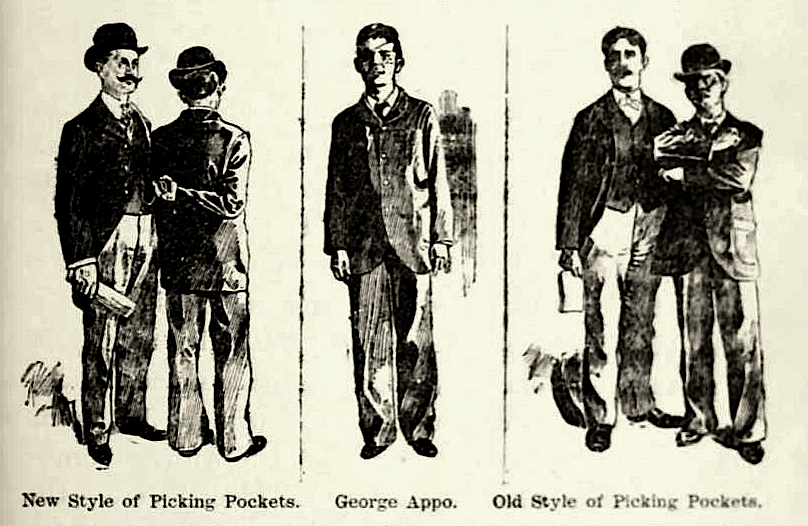
Joe Keohane has an interesting piece, “The Lost Art of Pickpocketing,” on Slate. An excerpt:

“Pickpocketing in America was once a proud criminal tradition, rich with drama, celebrated in the culture, singular enough that its practitioners developed a whole lexicon to describe its intricacies. Those days appear to be over. ‘Pickpocketing is more or less dead in this country,’ says Harvard economist Edward Glaeser, whose new book Triumph of the City, deals at length with urban crime trends. ‘I think these skills have been tragically lost. You’ve got to respect the skill of some pickpocket relative to some thug coming up to you with a knife. A knife takes no skill whatsoever. But to lift someone’s wallet without them knowing …'”

Tags: ,

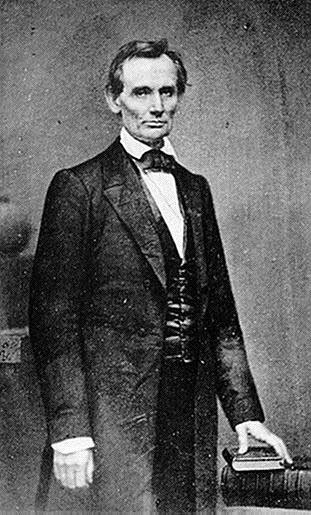
Thanks for ruining the ceiling, jackass. (Image by Mathew Brady.)

I recently posted about Abraham Lincoln’s less-than-graceful youth, using examples from Carl Sandburg’s great biography, The Prairie Years. Here’s another brief tale of Lincoln’s boorish behavior from that tome:

“He put barefoot boys to wading in a mud puddle near the home trough, pulled them up one by one, carried them to the house upside down, and walked their muddy feet across the ceiling. The stepmother came in, laughed at their foot tracks, told Abe he ought to be spanked–and he cleaned the ceiling so that it looked new.”

Tags:

pkd89

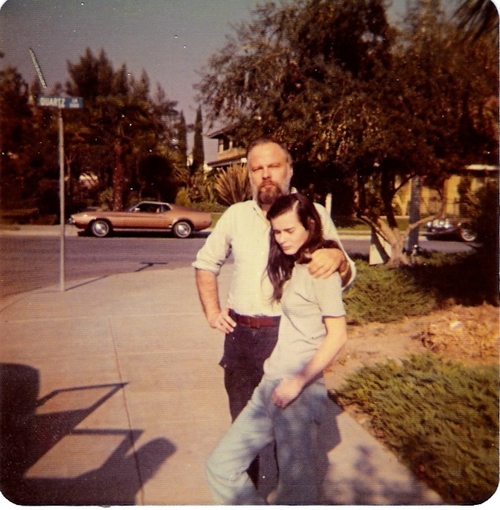
Long Form pointed me to a great 1993 New Republic article by Alexander Star about Philip K. Dick. An excerpt:

A heavy man with an absent smile and an intent gaze, Philip Dick typed 120 words a minute even when he wasn’t on speed, drank prodigious quantities of scotch and completed five marriages and over fifty novels before the pills and the liquor conspired to kill him at 54. His busy life has been ably narrated by Lawrence Sutin in his biography, Divine Invasions, which appeared a few years ago. Born in 1928, Dick witnessed the Depression from inside a broken home. His father, an employee of the Department of Agriculture, left the family in 1931 and went on to host a radio show in Los Angeles called This is Your Government. Dick grew up with his mother on the fringes of Berkeley’s fledgling bohemia. A troubled student, he was often “hypochondriacal about his mental condition,” as one of his wives later put it. And like many troubled boys of the time, he became a voracious reader of the science fiction pulp magazines that were then at their peak. In Confessions of a Crap Artist, a novel written in 1959, he wryly portrayed himself as an awkward kid spouting oddball ideas from Popular Mechanics and adventure stores: “Even to look at me you’d recognize that my main energies are in the mind.”•

Tags: , ,

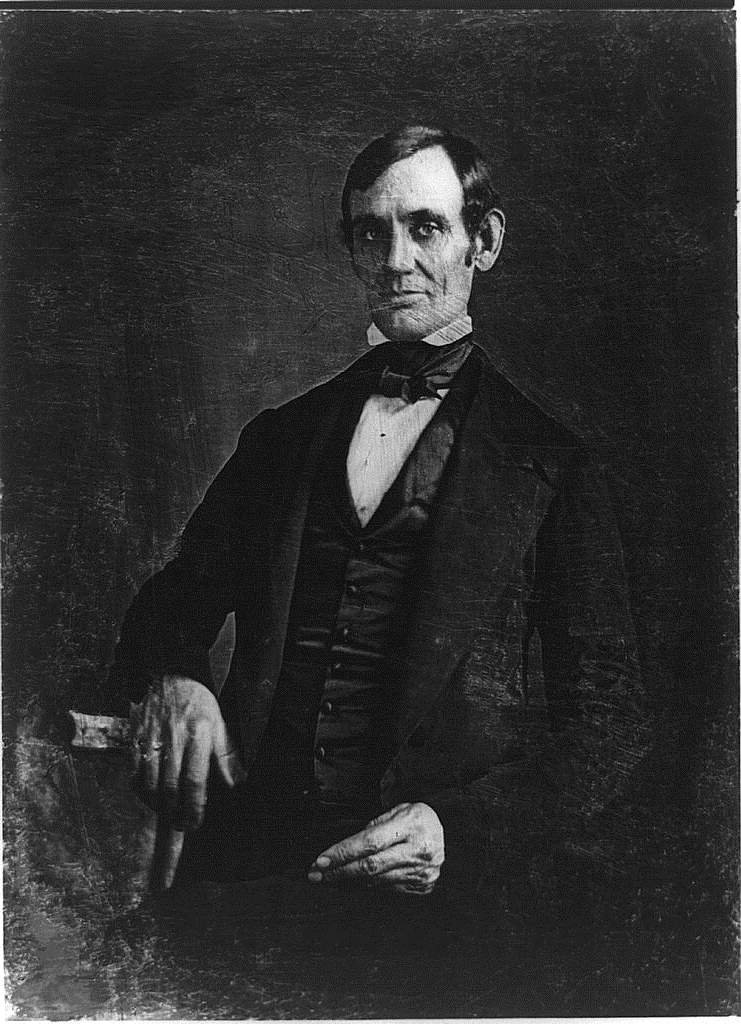
A daguerreotype of young Abe Lincoln, from 1846 or 1847.

Three passages from The Prairie Years, Part 1, the opening section of Carl Sandburg’s lyrical book about Abraham Lincoln’s life up until the Civil War.

••••••••••

“Offut talked big about Lincoln as a wrestler, and Bill Clary, who ran a saloon thirty steps north of the Offut store, bet Offut that Lincoln couldn’t throw Jack Armstrong, the Clary’s Grove champion. Sports from miles around came to a level square next to Offut’s store to see the match; bets of money, knives, trinkets, tobacco, drinks were put up, Armstrong, short and powerful, aimed from the first to get in close to his man and use his thick muscular strength. Lincoln held him off with long arms, wore down his strength, got him out of breath, surprised and ‘rattled.’ They pawed and clutched in many holds and twists till Lincoln threw Armstrong and had both shoulders to the grass.”

••••••••••

“The Clary’s Grove boys called on [Lincoln] sometimes to judge their horse races and cockfights, umpire their matches and settle disputes. One story ran that Lincoln was on hand one day when an old man had agreed, for a gallon jug of whisky, to be rolled down a hill in a barrel. And Lincoln talked and laughed them out of doing it. He wasn’t there on the day, as D.W Burner told it, when the gang took an old man with a wooden leg, built a fire around the wooden leg, and held the man down until the wooden leg was burned off.”

••••••••••

“When a small gambler tricked Bill Greene, Lincoln’s helper at the store, Lincoln told Bill to bet him the best fur hat in the store that he [Lincoln] could lift a barrel of whisky from the floor and hold it while he took a drink from the bunghole. Bill hunted up the gambler and made the bet. Lincoln sat squatting on the floor, lifted the barrel, rolled it on his knees till the bunghole reached his mouth, took a mouthful, let the barrel down–and stood up and spat out the whisky.”

••••••••••

Carl Sandburg on What’s My Line? in 1960:

Tags: , , , , ,

“All Watched Over
by Machines of Loving Grace”

by Richard Brautigan, 1968.

I’d like to think (and
the sooner the better!)
of a cybernetic meadow
where mammals and computers
live together in mutually
programming harmony
like pure water
touching clear sky.
I like to think
(right now, please!)
of a cybernetic forest
filled with pines and electronics
where deer stroll peacefully
past computers
as if they were flowers
with spinning blossoms.

I like to think
(it has to be!)
of a cybernetic ecology
where we are free of our labors
and joined back to nature,
returned to our mammal brothers and sisters,
and all watched over
by machines of loving grace.

Tags:

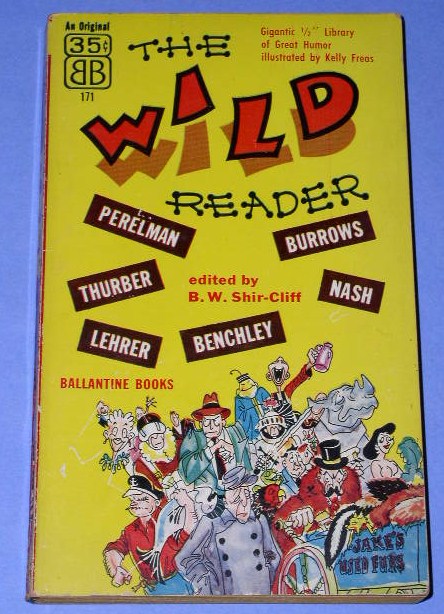
"In this book are powerful satires to help restore your sanity."

This 35¢ Ballantine paperback collection of pieces by some of the most famous humorists of the 1950s is so out of print that even Amazon doesn’t seem to have a readily available bare listing for it. Within its 154 pages are essays, illustrations and song lyrics by Robert Benchley, S.J. Perelman, James Thurber and Ogden Nash, among others. Leading off the book is “The Night the Old Nostalgia Burned Down: My Own New York Childhood,” a ridiculous “memoir” by Frank Sullivan. He’s all but forgotten now, but Sullivan was a prominent humorist for the New York World and the New Yorker from the 1920s to the 1950s. A page about him on a website about Saratoga Springs (his hometown) recalls Sullivan as being “known for his gentle touch and for the collection of fictitious characters he created: Aunt Sally Gallup, Martha Hepplethwaite, the Forgotten Bach (a member of the Bach family who was tone deaf), and Mr. Arbuthnot, the cliché expert.” An excerpt from his piece in The Wild Reader:

“Father was very strict about the aristocratic old New York ritual of the Saturday-night bath. Every Saturday night at eight sharp we would line up: Father; Mother; Diamond Jim Brady; Mrs. Dalrymple, the housekeeper; Absentweather, the butler; Aggie, the second girl; Aggie, the third girl; Aggie, the fourth girl; and the twelve of us youngsters, each equipped with soap and a towel. At a command of our father, we would leave our mansion on East Thirtieth Street and proceed solemnly up Fifth Avenue in single file to the old reservoir, keeping a sharp eye out for Indians. Then, at a signal from Papa, in we’d go. Everyone who was anyone in New York in those days had a Saturday-night bath in the reservoir.”

Tags: , , , ,

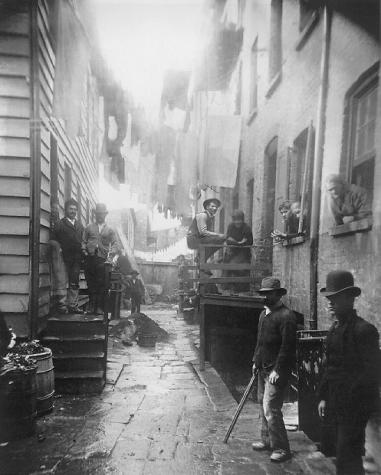
Bandits Roost, an alleyway in the notorious slum known as the Bend. (Image by Jacob Riis.)

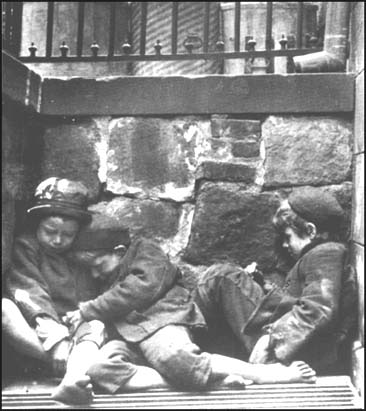
Muckraking newspaperman Jacob Riis wasn’t any sort of radical socialist, just a very humane police reporter who knew how to use his abundant writing talent for forces of good. His 1890 book, How the Other Half Lives: Studies Among the Tenements of New York, was a landmark work of photojournalism that sought to expose the well-to-do classes of the city to the incredible hardships (child labor, sweatshops, unsanitary conditions, etc.) endured by the denizens of its poorest quarters, who were out of sight and out of mind.

The book succeeded tremendously in alerting the city to its Dickensian lack of social safety nets, but it continues to be a great read because it’s a genuine work of art, beautifully written and photographed. An excerpt from the chapter, “The Bend”:

“WHERE Mulberry Street crooks like an elbow within hail of the old depravity of the Five Points, is ‘the Bend,’ foul core of New York’s slums. Long years ago the cows coming home from the pasture trod a path over this hill. Echoes of tinkling bells linger there still, but they do not call up memories of green meadows and summer fields; they proclaim the home-coming of the ragpicker’s cart. In the memory of man the old cow-path has never been other than a vast human pig-sty. There is but one ‘Bend’ in the world, and it is enough. The city authorities, moved by the angry protests of ten years of sanitary reform effort, have decided that it is too much and must come down. Another Paradise Park will take its place and let in sunlight and air to work such transformation as at the Five Points, around the corner of the next block. Never was change more urgently needed. Around ‘the Bend’ cluster the bulk of the tenements that are stamped as altogether bad, even by the optimists of the Health Department. Incessant raids cannot keep down the crowds that make them their home. In the scores of back alleys, of stable lanes and hidden byways, of which the rent collector alone can keep track, they share such shelter as the ramshackle structures afford with every kind of abomination rifled from the dumps and ash-barrels of the city. Here, too, shunning the light, skulks the unclean beast of dishonest idleness. ‘The Bend’ is the home of the tramp as well as the rag-picker.”

Mulberry Street: It was like "Our Gang" with lots of pulmonary tuberculosis.


Tags:

« Older entries § Newer entries »