Books

You are currently browsing the archive for the Books category.

A deeply haunted soul capable of brilliance or dreck, novelist Jerzy Kosinski was a world literary figure who, like a lot of people who move to New York City to remake themselves, was a confusing blend of fact and fiction. He was such an inveterate observer–voyeur, really–that even he must have lost track of what was his own real experience and what was not. A 1979 People magazine piece by Andrea Chambers profiled the writer while he was still a formidable public figure, a dozen years before he committed suicide. An excerpt:

“His current novel, Passion Play, his seventh, is about a middle-aged loner who, like Kosinski, is a polo fanatic. ‘The character, Fabian, is at the mercy of his aging and his sexual obsession,’ he says. ‘It’s my calling card. I’m 46. I’m like Fabian.’

Fabian is not likely to win the hearts of critics. They routinely attack Kosinski’s work as dirty and violent, and Passion Play has scenes of suicide, sadism and transsexualism. ‘The violence is never gratuitous,’ he says. ‘I write about what I see in society.’

To enlarge that vision, Kosinski collects bizarre experiences as methodically as more timorous authors do library research. At night he prowls the streets of Manhattan. ‘I have always been fascinated by sexual experiences,’ he says. ‘I stop women on the street, introduce myself and say, ‘I like you. I want to photograph you.” Usually they assent. At other moments he studies ‘how man refashions nature’ by watching various kinds of surgery (though an operation turning a man into a woman frightened him: ‘There’s no return’). He also stops at hospitals to read to patients suffering from terminal illnesses. 

Sometimes Kosinski takes odd jobs like selling used cars or driving a limousine under the name José. ‘Short of murder, I have an intimate knowledge of everything I write about,’ he says. To know, he is quick to point out, does not necessarily mean to practice.’I have no chains under my bed,’ he smiles. ‘Only writing paper.’

It is actually a roll of adding machine paper he carries on his ramblings and uses for first drafts. A gypsy by nature, Kosinski shuttles between apartments in New York and Switzerland, with frequent detours to polo fields. Wherever he is, Kosinski has access to lethal chemicals. ‘I’m not a suicide freak, but I want to be free,’ he says. ‘If I ever have an accident or a terminal disease that would affect my mind or my body, I will end it.'”

Tags: ,

As President Nixon was drowning in the cesspool of Watergate, Professor Irwin Corey accepted the National Book Award in 1973 at Carnegie Hall on behalf of reclusive Gravity’s Rainbow author Thomas Pynchon.

The opening of Gravity’s Rainbow rivals that of A Tale of Two Cities and Anna Karenina:

“A screaming comes across the sky. It has happened before, but there is nothing to compare it to now.

It is too late. The Evacuation still proceeds, but it’s all theatre. There are no lights inside the cars. No lights anywhere. Above him lift girders old as an iron queen, and glass somewhere far above that would let the light of day through. But it’s night. He’s afraid of the way the glass will fall–soon–it will be a spectacle: the fall of a crystal palace. But coming down in total blackout, without one glint of light only great invisible crashing.”

Tags: ,

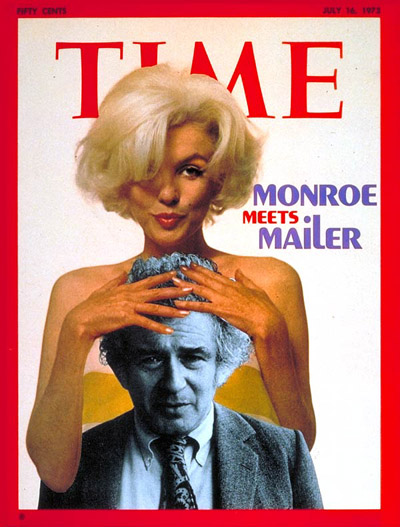
Norman Mailer visits Merv Griffin in 1980 tied to the release of his fictionalized Marilyn Monroe book, Of Women and Their Elegance. “Aquarius” had settled somewhat into middle age at this point. That same year, the writer also defended the book in a hokey, interminable New York magazine piece.

Tags: , ,

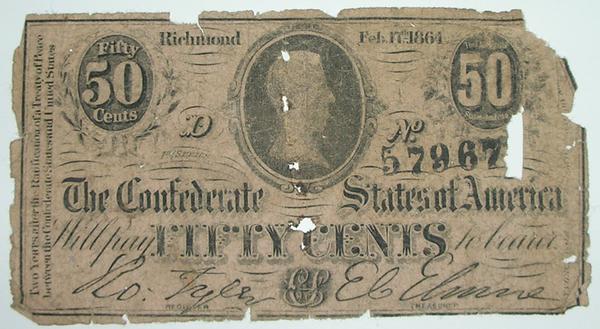
It would be a disaster if America’s Northern and Southern states separated into seas of blue and red, forming discrete nations–and it won’t happen. But it’s an interesting thought-experiment to work out in your head. What would the future hold for each if the national divide led to a mutually agreed upon division?

Chuck Thompson, author of Better Off Without ‘Em: A Northern Manifesto for Southern Secession, has considered the separation–with the North being proactive about it–not as mere mental exercise but in earnest. Salon has an interview between Joshua Holland and the author. An excerpt follows.

______________________________________

Joshua Holland:

So we know we have an overtly religious political culture down South, and a culture today that is pretty hostile toward organized labor. What is it in your travels or in your research that prompted you to call for Southern secession?

Chuck Thompson:

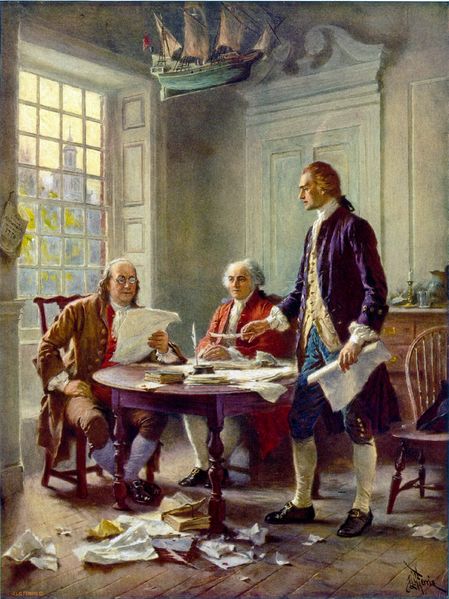
I get tired of everybody bitching about the problem. It’s like what Mark Twain said about the weather. Everybody complains about it, but nobody does anything about it. People have been having this problem with the South for my entire lifetime, and as my research pointed out to me, since even before there was a United States of America. Even in the Continental Congress, before the Declaration of Independence was signed, there were a lot of Southerners from South Carolina – particularly a family called the Rutledge family – sort of running the show back then and didn’t want any part of the United States. So a lot of the problems that have arisen between North and South have been around for a long time.

So, as I’ve said, I’ve spent a lot of my life hearing from everybody from Seattle to Savannah. Almost every American, at one time or another, has said that it’s too bad the country didn’t just split when we had the chance. We didn’t let the South go when we had the chance. We would have avoided a lot of problems. We – meaning this group in the north as we might identify ourselves – could take the country we want into a direction that we think is befitting of America without this push and pull that comes from the Southern states. At the same time the South could do the same thing.

What really led to this call for secession was understanding that a lot of people from the South are just as sick and tired of people like Barack Obama and Nancy Pelosi and Harry Reid having an impact on their country as I am sick of people like Newt Gingrich and Jeff Sessions, Eric Cantor, and Haley Barbour having an impact on my country.

So why shouldn’t each of these societies that are really very different from each other in the way they approach the fundamental building blocks of society – education, religion, commerce, politics … both sides of the country really approach their problems in the way they want to put their societies together in very diametrically opposed ways. Why shouldn’t people be allowed to live in a pseudo-theocracy if they want to? If the majority of the people in a very large part of the country wants to have the Ten Commandments emblazoned in front of their legislative houses, why shouldn’t they be allowed to do so?

••••••••••

If the South had won the Civil War:

Tags: ,

Helen Gurley Brown just passed away. She sure knew how to work that bony ass. Here she is in the ’60s surviving original shock jock Joe Pyne, touting her eyebrow-raiser Sex and the Single Girl.

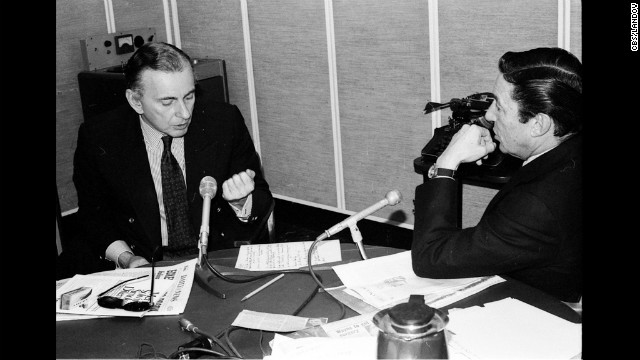
Like a lot of super-intelligent, self-satisfied people, Gore Vidal could never shut the fuck up and was often wrong. He was a fascinating character and a master showman, but he seemed to exist mostly to hear his own voice and flatter himself. There was some greatness along the way, but I doubt one word he wrote or uttered will ever effect the world in any meaningful way. I know that’s a high threshold by which to rate a writer, but I think such self-importance demands an important contribution. Yes, I mourn the absence of public intellectuals in America, but that realm had its limitations.

Because CBS is still living in the distant technological past, I’m unable to embed the video of Mike Wallace conducting a 1975 60 Minutes interview with Vidal, whom he astutely described as an “intellectual vaudevillian.” But go here to watch it.

••••••••••

See also:

Tags: ,

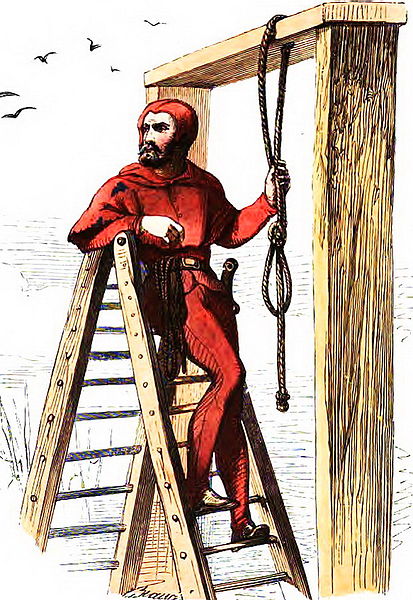
How is it possible that I only recently read A Handbook on Hanging by smart-ass British historian Charles Duff? Acerbic beyond belief, Duff’s book, originally published in 1928 and updated decades later, is a droll yet furious account of the way we officially murder one another. From the introduction:

As a form of capital punishment, hanging was introduced to Britain by the Germanic Anglo-Saxon tribes as early as the fifth century. The gallows were an important element in Germanic culture. The worthy Hengist and Horsa and their colleagues used a very rough and out-of-hand method of hanging, one that resembled our clean and tidy modern method in only this respect: it worked quite well.

William the Conqueror subsequently decreed that it should be replaced by castration and blinding for all but the crime of poaching royal deer, but hanging was reintroduced by Henry I as the means of execution for a large number of offenses. Although other methods of execution, such as boiling, burning and beheading were frequently used in the mediaeval period, by the eighteenth century hanging had become the principle punishment for capital crimes.

The eighteenth century also saw the start of the movement for the abolition of the death penalty. In 1770 [the British Politician] William Meredith, suggested ‘more proportionate punishments’ for crimes. He was followed in the early nineteenth century by [the legal reformer and Solicitor General] Samuel Romilly and [the Scottish jurist, politician and historian] James Mackintosh, both of whom introduced bills into Parliament in an attempt to de-capitalise minor crimes.

Perhaps unsurprising, considering the fact that in Britain at the time there were no less than 222 crimes which were defined as capital offenses, including the impersonation of a Chelsea pensioner and damaging Westminster Bridge. Moreover, the law did not distinguish between adults and children, and ‘strong evidence of malice in a child of 7 to 14 years of age’ was also a hanging matter.”

••••••••••

“They were hanging in the trees, dead and dying / And I said, ‘What does it mean?'”:

“Into our town the hangman came / Smelling of blood and gold and flame”:

Tags:

Some sort of Italian promotional trailer for Philip K. Dick’s 1969 novel, Ubik.

Tags:

Northeast Asia Trade Tower, New Songdo. (Image by Wikipedia.)

The result of Greg Lindsay’s collaboration with John D. Kasarda, Aerotropolis: The Way We’ll Live Next, grew from a 2010 article the journalist wrote for Fast Company about New Songdo City, South Korea’s ambitious airport-centric, insta-city. The opening:

Stan Gale is exultant. The chairman of Gale International yanks off his tie, hitches up his pants, and mops the sweat and floppy hair from his brow. He’s beaming like a proud new papa, sprung from the waiting room and handing out cigars to whoever happens by. Beckoning me to follow, he saunters across eight lanes of traffic toward his baby, delivered prematurely days before.

Ten years ago, Gale was a builder and flipper of office parks who would eventually become known for knocking down the Boston landmark Filene’s Basement and replacing it with a hole in the ground. But Gale’s fate began to change in 2001 with a phone call from South Korea. The Korean government had found his firm on the Internet and made an offer everyone else had refused. The brief: Gale would borrow $35 billion from Korea’s banks and its biggest steel company, and use the money to build from scratch a city the size of downtown Boston, only taller and denser, on a muddy man-made island in the Yellow Sea. When Gale arrived to see the site, it was miles of open water. He signed anyway.

New Songdo City won’t be finished until 2015 at least, but in August, Gale cut the ribbon on the 100-acre ‘Central Park’ modeled, like so much of the city, on Manhattan’s. Climbing on all sides will be a mix of low-rises and sleek spires — condos, offices, even South Korea’s tallest building, the 1,001-foot Northeast Asia Trade Tower. Strolling along the park’s canal, we hear cicadas buzzing, saws whining, and pile drivers pounding down to bedrock. I ask whether he’s stocked the canal with fish yet. ‘It’s four days old!’ he splutters, forgetting he isn’t supposed to rest until the seventh.

As far as playing God (or SimCity) goes, New Songdo is the most ambitious instant city since Brasília 50 years ago. Brasília, of course, was an instant disaster: grandiose, monstrously overscale, and immediately encircled by slums. New Songdo has to be better because there’s a lot more riding on it than whether Gale can repay his loans. It has been hailed since conception as the experimental prototype community of tomorrow. A green city, it was LEED-certified from the get-go, designed to emit a third of the greenhouse gases of a typical metropolis its size (about 300,000 people during the day). It’s an ‘international business district’ and an ‘aerotropolis’ — a Western-oriented city more focused on the airport and China beyond than on Seoul. And it’s supposed to be a ‘smart city,’ studded with chips talking to one another, designated as such years before IBM found its ‘Smarter Planet’ religion.”

••••••••••

A Cisco video about Songdo:

Tags: , ,

In the New Republic, David A. Bell looks at the future role of brick and mortar libraries in a world without paper, pages and print. The opening:

“THEY ARE, in their very different ways, monuments of American civilization. The first is a building: a grand, beautiful Beaux-Arts structure of marble and stone occupying two blocks’ worth of Fifth Avenue in midtown Manhattan. The second is a delicate concoction of metal, plastic, and glass, just four and a half inches long, barely a third of an inch thick, and weighing five ounces. The first is the Stephen A. Schwarzman Building, the main branch of the New York Public Library (NYPL). The second is an iPhone. Yet despite their obvious differences, for many people today they serve the same purpose: to read books. And in a development that even just thirty years ago would have seemed like the most absurd science fiction, there are now far more books available, far more quickly, on the iPhone than in the New York Public Library.

It has been clear for some time now that this development would pose one of the greatest challenges that modern libraries—from institutions like the NYPL on down—have ever encountered. Put bluntly, one of their core functions now faces the prospect of obsolescence. What role will libraries have when patrons no longer need to go to them to consult or to borrow books?”

Tags:

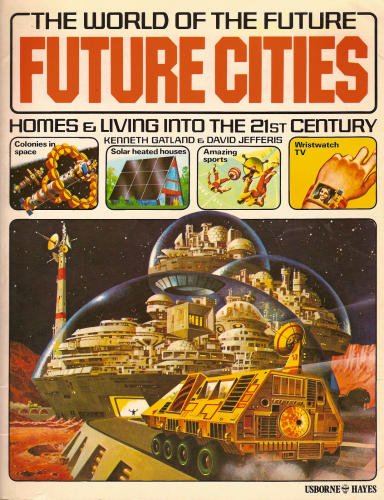
Xeni Jardin at Boing Boing put up a fun post about Future Cities: Homes and Living into the 21st Century, a 1979 children’s book by Kenneth William Gatland and David Jefferis. It envisioned a brave new world, some of which has come to pass, though not yet the domestic robot that rolls into the living room with drinks. From the section “Computers in the Home”:

“The same computer revolution which has resulted in calculators and digital watches could, through the 1980s and ’90s, revolutionize people’s living habits.

Television is changing from a box to stare at into a useful two-way tool. Electronic newspapers are already available–pushing the button on a handset lets you read ‘pages’ of news, weather puzzles and quizzes.

TV-telephones should be a practical reality by the mid 1980s. Xerox copying over the telephone already exists. Combining the two could result in millions of office workers being able to work at home if they wish. There is little need to work in a central office if a computer can store records, copiers can send information from place to place and people can talk on TV-telephones.”

Tags: , ,

This week I’m going to read Thomas Fleming’s essay-length Kindle book, What America Was Really Like in 1776. The excerpt in the Wall Street Journal is well-written and informative, though it’s odd to comment on the U.S. economy of 236 years ago without mentioning slave labor. I’m sure the book goes into that topic, but the WSJ passage doesn’t. An excerpt:

“Those Americans, it turns out, had the highest per capita income in the civilized world of their time. They also paid the lowest taxes—and they were determined to keep it that way.

In the northern colonies, according to historical research, the top 10% of the population owned about 45% of the wealth. In some parts of the South, 10% owned 75% of the wealth. But unlike most other countries, America in 1776 had a thriving middle class. Well-to-do farmers shipped tons of corn and wheat and rice to the West Indies and Europe, using the profits to send their children to private schools and buy their wives expensive gowns and carriages. Artisans—tailors, carpenters and other skilled workmen—also prospered, as did shop owners who dealt in a variety of goods. Benjamin Franklin credited his shrewd wife, Deborah, with laying the foundation of their wealth with her tradeswoman’s skills.”

Tags:

From “Hotel Offers Guests Electronic Bibles,” by Oliver Smith in the Telegraph:

“From today, all 148 rooms at the Hotel Indigo will contain a Kindle e-reader pre-loaded with a copy of the Bible. The hotel is claiming to be the first in Britain to offer such a service.

Guests are also permitted to download a copy of any other religious text – to the value of £5 or less – during their stay. Regular fiction books can also be purchased, with the costs added to guests’ bills.”

••••••••••

That’s why the bible is the best seller in the world,” 1968:

Tags:

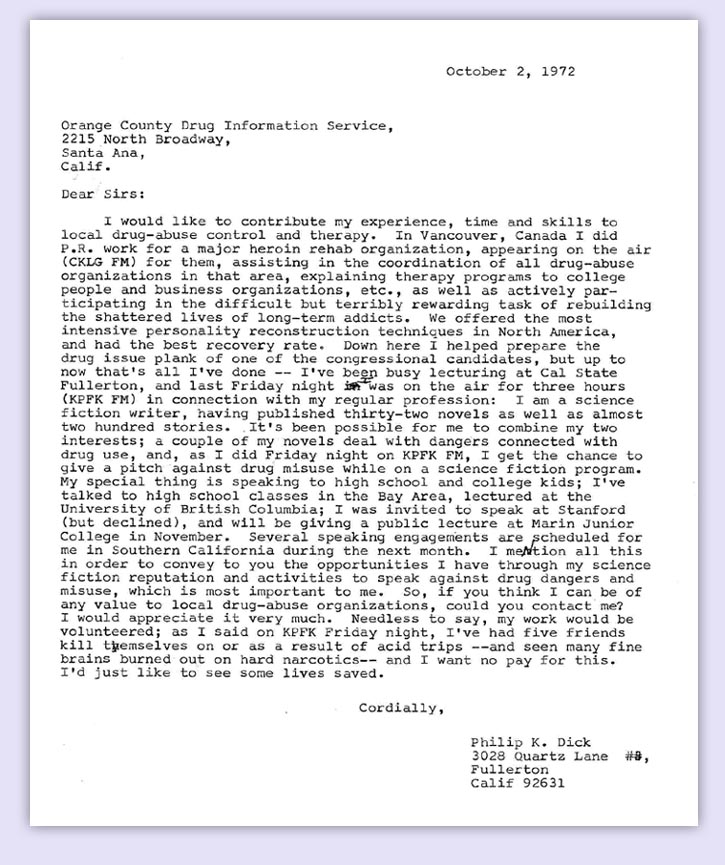
Funny and sad, this 1972 letter published at philipkdick.com was an insane attempt by the speeded-up sci-fi author to offer his knowledge about drugs (which was considerable) to the Orange County Drug Information Service.

Tags:

In a smart NPR post, Amanda Katz wonders what the advent of e-books will mean to the generational passing down of volumes, using as an example a boyhood copy of War of the Worlds owned by pioneering rocketeer Robert Goddard. The opening:

“In 1898, a man bought a book for his 16-year-old nephew. ‘Many happy retoins [sic]. Uncle Spud,’ he wrote on a blank page at the front.

The book: H.G. Wells’ The War of the Worlds, then just out in America from Harper & Brothers.The ripping tale of a Martian attack that set the mold for them all, it’s almost more striking to a reader today for its turn-of-the-century detail: carriage-horse accidents, urgent telegrams, news only via newspapers. Toward the end of the novel, the narrator gets ahold of a first post-attack copy of the Daily Mail: ‘I learned nothing fresh except that already in one week the examination of the Martian mechanisms had yielded astonishing results. Among other things, the article assured me what I did not believe at the time, that the ‘Secret of Flying’ was discovered.’

This was, of course, science fiction. But it was also prophetic. Uncle Spud’s teenage nephew — who stamped his name on the first page of the novel and read it religiously once a year — would himself go on to discover many secrets of flying. That nephew was Robert Hutchings Goddard, inventor of the liquid-fuel rocket.” (Thanks Browser.)

See also:

Tags: , ,

Short profile of Alex Haley in 1977, after the novel Roots made him a household name. Previously best known as an ace interviewer for Playboy, Haley would later face charges of having plagiarized passages (which the author copped to as part of an out-of-court settlement). Whatever the origins of the work and despite a simplification of the subject, the novel and subsequent TV miniseries had a powerful effect in awakening America to its past.

Read also:

Tags:

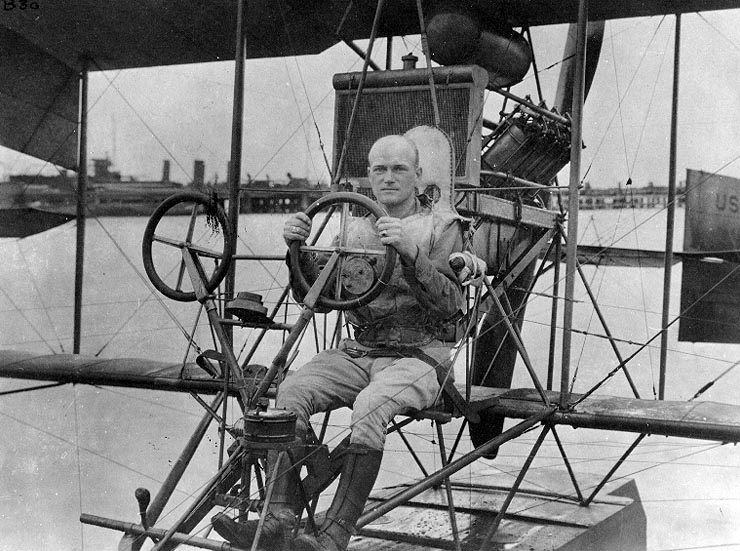
There’s an excellent interview about aviation history at the Browser with Joseph Corn, author of The Winged Gospel. An excerpt:

Material and popular culture provided plenty of support for your thesis that the world expected manned flight to magically transform humanity. Please cite some of that colourful evidence for us.

Joseph Corn: ‘An Airplane in Every Garage’ was the name of an article that appeared in Harper’s Magazine in 1930, a publication for the intellectual elite. During the wind-down of World War II, as the defeat of the Germans and Japanese became obvious in late 1944 and early 1945, Ladies’ Home Journal asked its readers whether they expected to own an airplane and an amazing percentage said yes – 30-odd percent, as I recall, and this was at a time when a far smaller percentage of people had cars. The percentage of people who actually got airplanes was less than 1% at its peak. Planes per population peaked in 1946 and basically it’s been going down ever since.

Remember, America rapidly moved from the development of the Model T to mass automobility by 1915. England didn’t reach the level of car ownership that California had in 1906 until 1956. So people thought, first we had horses and carriages and then we had bicycles and then we had cars and next, soon, it’ll be airplanes. And there was a brief moment after the war when the evidence suggested that the dream of owning an airplane would be within reach of almost anyone. Macy’s Department Store in New York sold airplanes in 1946. One newspaper article reported that the elevator men would call out, ‘Furniture, bed settings and airplanes 5th floor.’. Another bit of evidence of ‘the winged gospel’ – there was a movement, centred at Columbia University Teachers College to push ‘air-age education’ into all schools. Textbooks were written on subjects like ‘air-age English,’ ‘air-age geography’ and ‘air-age mathematics.’ Geography made some sense because the airplane seemed to be shrinking the globe. 

Perhaps the best evidence were the ritualistic observances that went along with ‘the winged gospel.’ People would go up in airplanes to get married and at least in one case a couple parachuted out to start their honeymoon. One woman in Florida took off with her husband piloting when she was in labour and her obstetrician delivered her baby at 5,000 feet – she named the girl Aero Jean. These little observances are all testimony to the tremendous excitement people had for flight and their tremendous optimism as to how flight was changing the world.”

Tags: ,

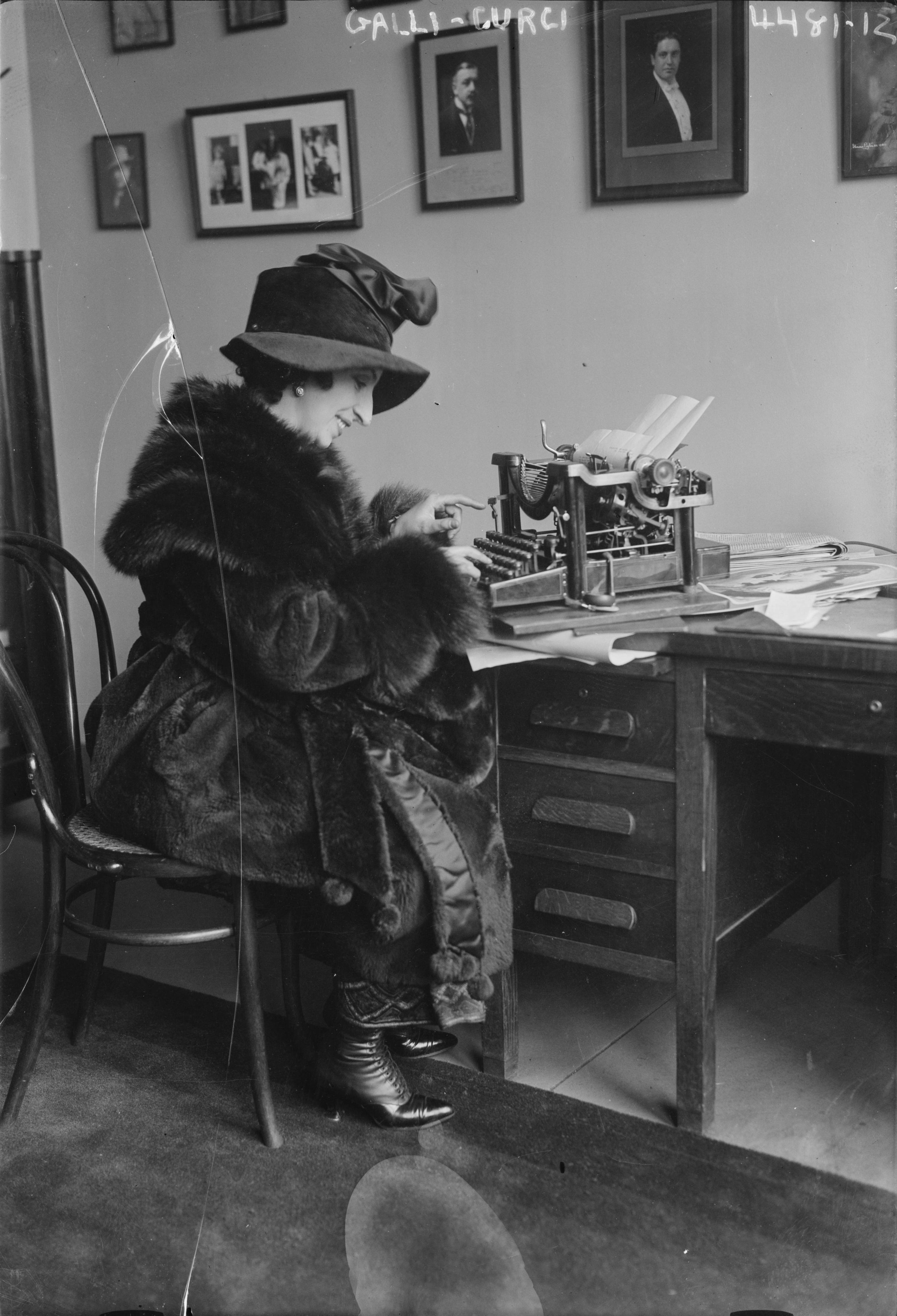
Bruce Sterling’s thoughtful New York Times homage to Ray Bradbury reminded me that the recently deceased sci-fi author wrote his greatest work, Fahrenheit 451, on a coin-operated typewriter. The machine, invented in 1938 by Martin Tytell, was located in train stations and hotel lobbies and cost a couple of dimes an hour. From Tytell’s 2008 Economist obituary:

“His love affair had begun as a schoolboy, with an Underwood Five. It lay uncovered on a teacher’s desk, curved and sleek, the typebars modestly contained but the chrome lever gleaming. He took it gently apart, as far as he could fillet 3,200 pieces with his pocket tool, and each time attempted to get further. A repair man gave him lessons, until he was in demand all across New York. When he met his wife Pearl later, it was over typewriters. She wanted a Royal for her office; he persuaded her into a Remington, and then marriage. Pearl made another doctorly and expert presence in the shop, hovering behind the overflowing shelves where the convalescents slept in plastic shrouds.

Mr. Tytell could customise typewriters in all kinds of ways. He re-engineered them for the war-disabled and for railway stations, taking ten cents in the slot. With a nifty solder-gun and his small engraving lathe he could make an American typewriter speak 145 different tongues, from Russian to Homeric Greek. An idle gear, picked up for 45 cents on Canal Street, allowed him to make reverse carriages for right-to-left Arabic and Hebrew. He managed hieroglyphs, musical notation and the first cursive font, for Mamie Eisenhower, who had tired of writing out White House invitations.”

Read also:

Tags: ,

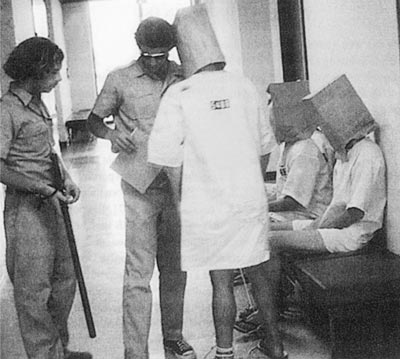
Psychologist Philip Zimbardo, mastermind of the notorious Stanford Prison Experiment, which provided a chilling look at how quickly and thoroughly jailers can become dehumanized–a dress rehearsal, if you will, for Abu Ghraib–just did an Ask Me Anything on Reddit. He discusses the SPE and his new e-book about the effect Internet porn and video games have on boys. A few exchanges about Stanford.

_____________________

Question:

For those unaware, modern-day psychological studies (or anything even remotely involving testing humans) have to go through fairly rigorous scrutiny from ethics committees to ensure that no harm lasting damage is done. Up until relatively recent times these committees weren’t necessary and researchers had much more freedom – often at the expense of their subjects.

I remember seeing a video of one of John Watson’s experiments, on operant conditioning, where he would purposely scare a baby every time it showed interest in animals. Eventually the baby was conditioned to fear the animals.

In short: You learn a lot without ethics, but you often harm the people involved.

Dr. Philip Zimbardo:

In the olden days researchers had total power to do anything to their “subjects” whether human or animal, children or prisoners– in the name of science. Some abused this privilege and Human Research committees were developed in order to create a better balance of power between researchers and their participant,and are now essential for the conduct of all research. A problem is created however, when they become excessively conservative and reject almost all research that could conceivably “stress” participants even by having them think about a stressful situation. Thus nothing like the Milgram study or my Stanford Prison study could ever be done again. Is that good? Is that bad? Open issue for debate.

_____________________

Question

I think we need to be careful when using expectations in describing how people act in these situations though. For example with Milgram I think obedience to authority was more of a factor than expectations. Thus the higher success rate(shock rate)with the teacher wearing a lab coat. There are other problems with Milgram too, he used the same teacher each time who got efficient at producing a specific result, which is interesting I think when we use him in talking about perpetrators of genocide. But it’s worth noting that the individual encouraging the shocks was also learning. With the SPE, Zimbardo got results from ‘irst timers’ which is surprising, or not depending on your view.

Dr. Philip Zimbardo:

In the Milgram study, SPE, and many other similar studies on the power of social situations to transform the behavior of good people in evil directions, the conclusion is the majority can easily be led to do so, but there is always a minority who resist, who refuse to obey or comply. In one sense, we can think of them as heroic because they challenge the power of negative influence agents (gangs, drugs dealers, sex traffickers; in the prison study it’s me, in the Milgram experiment it’s Milgram). The good news is there’s always a minority who resist, so no, not everyone has the capacity to do anything regardless of the circumstances. I recently started a non-profit, the Heroic Imagination Project in an attempt to increase the amount of resistors who will do the right thing when the vast majority are doing the wrong thing. There needs to be more research though, and we are in the process of studying heroism and the psychology of whistleblowing; curiously, there is very little so far compared to the extensive body of research on aggression, violence, and evil.

_____________________

Question: 

Based on your results, how would you suggest American imprisonment be altered, if at all?

Dr. Philip Zimbardo:

Shortly after the time we first published the results of SPE, the head graduate student of the research, Craig Haney, and I became very much involved in prison reform in California, working with the department of corrections, teaching courses on the psychology of imprisonment, organizing courses for prisoners in Soledad prison, being expert witnesses in trials about solitary confinement as cruel and unusual punishment, and also working to highlight the psychologically and physically devastating effects of “supermax” prisons.

However, in 1973, there were about 350,000 Americans in prison. This year there are more than 2 million Americans caged in the prison system at local, state, and federal levels. More than twice as much as any other country in the world. It is a national disgrace as far as I’m concerned, and with those big numbers goes reduced programs for rehabilitation, recreation, therapy, and really any concern about prisoners ever being able to live a normal life outside the prison. And this is because 3 factors: economic, political, and racial. Prisons have become a big business for many communities; many prisons are becoming privatized, which means they are for profit only. They have become political in so far as politicians all want to be seen as tough on crime, encouraging prosecutors and judges to give prisoners maximum sentences, including 25 years to life, for non-violent offenses. Racially, prisons have become dumping grounds for black and hispanic young men, so that there are now more of these young men in prisons than in college.

The whole system is designed not to help prisoners. At this point, my optimism about improving the American prison system has been severely tested and it will really take a major change in public opinion and also in basic attitudes from the top down. It’s a systemic problem; it’s not like some warden in a particular prison is a bad guy, everyone’s attitudes needs to change to become more humane. This needs to start with the President, governors, and mayors taking a strong compassionate stance. Pragmatically, citizens have to realize that it costs them through their taxes $1 million to keep one prisoner locked up for 25 years.”

_____________________

“Jesus Christ, I’m burning up inside–don’t you know?”:

Tags: ,

At the Browser, economist Tim Harford comments on Charles Perrow’s book Normal Accidents, which suggests that our technological systems growing more complex inevitably leads to greater chaos:

Tim HarfordFor him, at the time he published the first edition of this book, Three Mile Island [the nuclear core meltdown in Pennsylvania in 1979] was the definitive one. It prefigured Chernobyl. And then he revisits the subject at the end of the 1990s. The book goes through awful accidents in complex systems and explores why they happened – the human failings that go into them, the systemic consequences, the fact you could have a very small error that propagates and propagates. It’s quite a technical book, but it’s wonderful and completely compelling.

I originally read the book because I wanted to write about a particular accident. My sister is a qualified safety engineer, and she gave me a bunch of safety engineering books. But as I read Perrow’s book, I realised that it could have been written about the financial crisis. That was really shocking to me – this realisation that these banks and their interconnections were, in many ways, the same kind of system as a nuclear reactor, or at least had very important similarities.

And is there any way of avoiding this kind of disaster in future? Does the book shed any light on that?

Tim Harford: Perrow is, in many ways, a pessimist. He says that if the system is too complicated, you will have accidents. There’s nothing you can do about it. Looking back at the history of financial crises, that’s probably appropriate. But one thing that comes out of the book is the idea that we tend to make systems more complex by adding safety systems on top of them, and that the safety systems themselves create new ways for things to go wrong. That was a key problem in the financial crisis. A lot of banks were taking bets and then insuring themselves with credit default swaps (CDS). Credit default swaps were, basically, insurance contracts that banks wrote, often with [the big insurance company] AIG. Or banks were repackaging sub-prime mortgages into vehicles that were supposed to make risky loans safe. These two innovations – the packages of sub-prime loans and the credit default swaps – were both safety systems. But they were both absolutely crucial in explaining why the system blew up. I think that’s a central and really useful idea, that these safety systems are probably not helpful – and even when they are helpful, they will have unintended consequences.”

Tags: ,

I read the 1996 New York Time Magazine article “James Is a Girl” some time ago but hadn’t recalled that it was written by Jennifer Egan, who has, of course, since become a hugely acclaimed novelist. The titular girl with the boy’s name was the 16-year-old Nebraska-born model James King, a scary mix of adult and child, who is known today as the actress Jaime King. Unmentioned in the piece was that the teen already had a raging heroin habit. An excerpt:

“When James has finished her breakfast — tea, a small pain au chocolat and a chain of Marlboros — I walk with her and Samersova to the Theatre des Champs-Elysees, where the Galliano show is to take place. Despite the balmy weather, Paris has been a mess — a general strike and the resulting gridlock have filled the air with a throat-scorching smog; the proliferation of terrorist bombs in subways and garbage cans has led to a heavy police presence on the streets. Yet the fashion world feels eerily removed from all this. At the backstage entrance to the Galliano show, the most pressing question is who will get in and who won’t. Fashion shows used to be sedate affairs catering mostly to magazine editors and department-store buyers. Now that models have become icons, the shows have about them an air of exquisite urgency: they’re cultural high-low events, like a Stones concert in the 1970’s.

Though the show isn’t scheduled to start until 6:30 P.M., models like James who aren’t yet stars are summoned hours ahead to have their hair and makeup done, so that the top models can arrive last and enjoy the full attention of the staff members. In a windowless backstage area, time drifts by on a languorous haze of smoke and hair spray and blow-dryer heat. A dance beat throbs unnoticed, like a pulse. James sips a can of Heineken and smokes. She picked up a horrible cough in Milan and developed shingles on her back from stress — a wide brush stroke of tiny purple blisters that she takes obvious glee in showing people. Samersova nags at her to take her medicine.

James likes to tell people that she and Samersova are Tauruses. ‘I mean she is the second me,’ James says. ‘That’s why I bring her here, because I know that when I’m too frazzled to make a rational decision I can trust her because we think exactly the same. I mean she’s like a boyfriend but not.’

James seems quite childlike at times — she’s easily distracted, prone to slouching and staring into space, then snapping to attention in a fit of enthusiasm. She’s physically affectionate in a sweet, unself-conscious way, always hugging people and leaning against them. She can be insecure, like the time she accused a Company Management driver of preferring to drive another model rather than herself, then stalked away, looking as if she might cry. Yet other moments she seems much older than 16, so jaded as to be unshockable. She has a pierced nipple, a large tattoo of a winged fairy on her lower back, refers to people in their 20’s as ‘kids’ and frequently invokes her ‘whole life,’ as if this were an endless expanse of time. These contradictions are all present, somehow, in her face, which looks freshly minted in its innocence yet, somehow, knowing.”

Tags: , ,

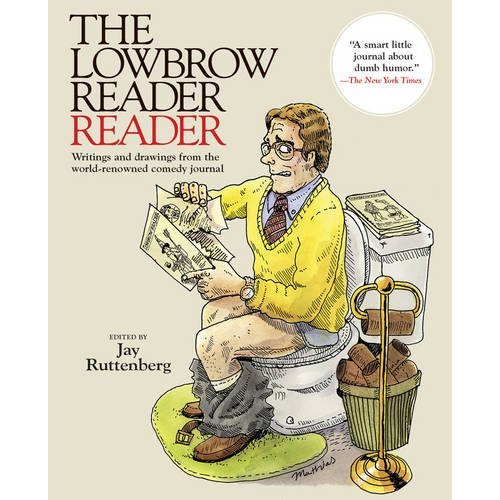
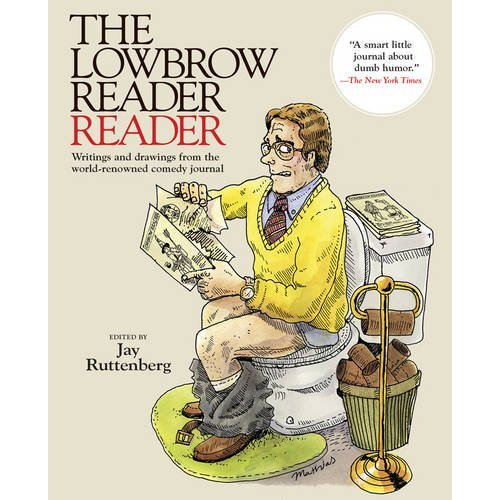
This post is the final reminder about tonight’s publication party for Jay Ruttenberg’s excellent humor compilation, The Lowbrow Reader Reader, at 7pm at the Housing Works Bookstore in Manhattan. (See details and directions.) There will be great entertainment by Wyatt Cenac of the Daily Show with Jon Stewart, singer-songwriter Adam Green of Moldy Peaches fame, wonderful teen music group Supercute!, and, God willling, a special appearance by the legendary 97-year-old comedian Professor Irwin Corey.

If you could show up, it would really help lift Jay’s sagging spirits. A lot of you don’t know about this, but Jay has been very depressed since late March, when he was punched in the vagina by a hobo. I don’t mean a homeless person who deserves our concern and help, but the kind of archetypal hobo who travels by boxcar and carries his belongings in a bindle and punches men in their vaginas. Let Jay know that you care about his aching ladyparts.

Thanks!

Jay Ruttenberg: Bruised labia.

Fresno Slim: Bruised fist.

Tags: , , , , ,

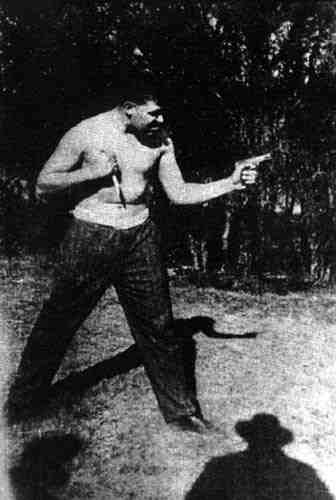
An excerpt (via the Believer: Pt. 1 + Pt. 2) from Killer of the Road: Violence and the American Interstate, Ginger Strand’s hard-boiled book about serial murderers, who’ve been given aid by our car culture and star treatment by our pop culture:

“In June of 1983, Henry Lee Lucas was arrested in Texas for possession of a firearm. Five days later, he confessed to the brutal murder of an elderly neighbor, Kate Rich. If his famous predecessor Ted Bundy evoked the serial killer’s ‘mask of sanity,’ Lucas, a one-eyed former mental patient who had already done time for killing his mother, seemed to embody the monster behind the mask. Born in the backwoods ofVirginia, Lucas was a nasty piece of work. His father, according to stories, was a moonshiner who had passed out on a railroad track in a drunken stupor and had had both legs severed by a passing train. He hopped around legless for a while before dragging his sorry self into the cold one night to freeze to death. Henry’s mother was no better: allegedly a prostitute, she forced her family to watch her meetings with ‘clients,’ it was claimed, and regularly beat her children with a club. Not surprisingly, young Henry’s life of crime began at an early age.

Seemingly remorseless, Lucas admitted upon arrest that he had murdered his elderly neighbor and raped her dead body. But that was only the beginning. Once in custody, he spontaneously began confessing to more murders. First it was 27 women. Then 100. Then 150. Then 165. He offered up the name of his frequent accomplice: Ottis Toole, who was already in jail in Jacksonville, Florida. Police declared that between them, Lucas and Toole were good for at least 28 murders in eight states, including some of what were being called ‘the I-35 killings’—the late-’70s murders of around 20 hitchhikers and women with car trouble along Interstate 35 in Texas. By October of 1983, Lucas was admitting to 200 murders. Then Ottis Toole—perhaps greedy to share some of that airtime—confessed to having killed Adam Walsh. The son of a wealthy Florida hotel developer, six-year-old Adam had been kidnapped in 1981 from a Florida shopping mall. When Adam’s severed head turned up sixteen days later, his father, John, dedicated his life to preventing crimes against children. John Walsh went on to found the National Center for Missing and Exploited Children, and would eventually find his niche as host of the Fox network’s longest-running program, America’s Most Wanted.

The Lucas confessions picked up where Ted Bundy left off. Exaggerated though they turned out to be, the confessions of Lucas and Toole confirmed what many already believed: the nation was being haunted by traveling murderers.”

Tags:

Since I put up posts this week about Fran Lebowitz and George Plimpton, it makes sense to offer this excerpt from Lebowitz’s 1993 Paris Review Q&A, in which her maternal nature rears its ugly head:

INTERVIEWER

Young people are often a target for you.

FRAN LEBOWITZ

I wouldn’t say that I dislike the young. I’m simply not a fan of naïveté. I mean, unless you have an erotic interest in them, what other interest could you have? What are they going to possibly say that’s of interest? People ask me, Aren’t you interested in what they’re thinking? What could they be thinking? This is not a middle-aged curmudgeonly attitude; I didn’t like people that age even when I was that age.

INTERVIEWER

Well, what age do you prefer?

LEBOWITZ

I always liked people who are older. Of course, every year it gets harder to find them. I like people older than me and children, really little children.

INTERVIEWER

Out of the mouths of babes comes wisdom?

LEBOWITZ

No, I’m just intrigued by them, because, to me, they’re like talking animals. Their consciousness is so different from ours that they constitute a different species. They don’t have to be particularly interesting children; just the fact that they are children is sufficient. They don’t know what anything is, so they have to make it up. No matter how dull they are, they still have to figure things out for themselves. They have a fresh approach.”

Tags:

I told you recently about the publication of The Lowbrow Reader Reader, a new book form of Jay Ruttenberg’s great zine about comedy. (You can buy it from Amazon or the publisher.) Now comes news that there will be a publication party and music and comedy showcase at 7pm on May 29 at Housing Works Bookstore in Manhattan. And you are invited! It’s a free event, though the organizers ask that you contribute a couple of bucks or buy some refreshments while you’re there to help AIDS charities. Featured performers at the event: 

  • Wyatt Cenac: Hilarious Senior Correspondent of The Daily Show with Jon Stewart, one of my all-time favorite TV shows and a program that I would never criticize.
  • Professor Irwin Corey: The 97-year-old comedian used to hang out with the Rolling Stones but now is stuck with Jay Ruttenberg.
  • Supercute!: A great band made up of teenage girls. Sadly, they are amazingly talented and have their whole lives ahead of them. On the bright side: We’ve already ruined the planet and every time they try to text, the sun melts their little thumbs. Too bad, sweethearts.
  • Adam Green: The more doelike half of the Moldy Peaches, and one of the best songwriters on Earth.

Find out all the information you’ll need here.

••••••••••

The Official Announcement:

Dear Friends,

I am thrilled to announce the imminent arrival of our Pulitzer-worthy book, The Lowbrow Reader Reader, which will be published by Drag City in just a couple of weeks. To celebrate, we’re having an extra special Lowbrow Reader Variety Hour concert on Tuesday, May 29, at the lovely Housing Works Bookstore in Soho (126 Crosby Street, just below Houston). It will start promptly at 7pm and end around 8:30pm. Admission is free, but I would encourage everybody to give some money to Housing Works, whether by throwing some dollars in the pot or simply buying food and drinks while at the store. It’s a really wonderful charity that fights AIDS and homelessness.

Now check out this all-star line-up of performers! The night will include short sets from:

Adam Green (one of the greatest songwriters in New York City and hence the known universe; a veteran of the Moldy Peaches and several outstanding solo albums including my favorite, 2010’s Minor Love)

Wyatt Cenac (ludicrously, unjustly sharp stand-up comedian and senior correspondent for The Daily Show with Jon Stewart)

Supercute! (your new favorite band, Supercute! stars three teenage girls: Julia Cumming, Olivia Ferrer, and Rachel Trachtenburg, of the Trachtenburg Family Slideshow Players)

–plus a special appearance by….Professor Irwin Corey (comedy LEGEND)

More information about the concert can be found here: http://www.housingworks.org/events/detail/the-lowbrow-reader-variety-hour-featuring-adam-green-supercute-and-more

More information about the book (including ordering information and whatnot) can be found here: http://www.dragcity.com/products/the-lowbrow-reader-reader

It goes without saying, but I would love to see all of you at the show: Tuesday, May 29, 7pm, Housing Works Bookstore. Of course, please let me know if you have any questions!

Thank you!

Jay

Jay Ruttenberg: Hideous tee shirts, awkward pauses.

Professor Irwin Corey: Give me a call, Mick. Please.

Tags: , , , ,

« Older entries § Newer entries »