The great Karl Pilkington isn’t sure what science is, but he loves it.
You are currently browsing the yearly archive for 2011.
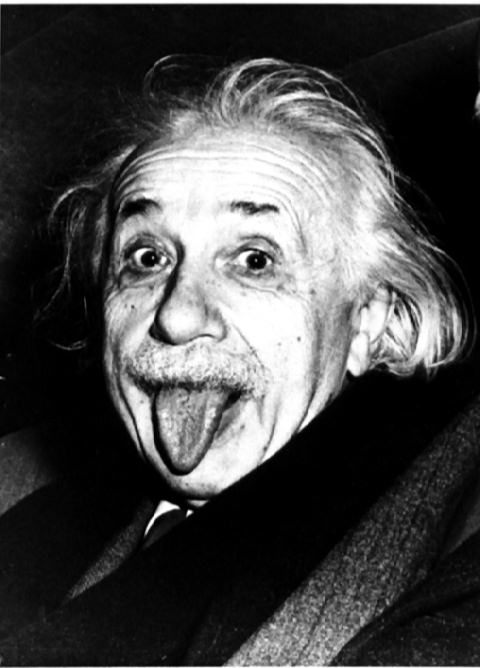
"It belonged to Albert Einstein in the late 1930's to early 40's."
Einstein’s Personal Table (Long Island,NY)
I have an interesting table with a story…… I acquired it from my old work center supervisors mother (Ms. Praul) when I was in the Navy in Va Beach all because I was the only one to volunteer to help move her items out of her apartment… she gave it to me to show her appreciation for the outstanding effort I put out and she didnt know how to repay me other then giving me this table with a great story….That is it belonged to Albert Einstein in the late1930’s to early 40’s… This table was an exchange that took place for some carpentry work that was done on Einsteins 112 Mercer street residence near Princeton University. Ms. Praul worked at Princeston while her husband did carpentry and had the opportunity to do work on Alberts house when he was still around… I am exploring the interests of the public and what its worth to you. I have a good idea on its value and I am exploring the market for any potential interest.The table has its historical value that’s for sure and may be appealing to a potential buyer , I will let it go if the price is right.
Predictions about the year 2000 from 1957 Germany.

They’ve put the cash register in your pocket, Amazon has, and it is shiny and compact and beautiful. No, the Kindle Fire is apparently not a great tablet, but that isn’t the point. Jeff Bezos’ willingness to sell each Kindle Fire at a loss let’s you know that his goal is to ensure you are able to make impulse buys no matter where you are, that you will always be at a check-out line, that you will load up on media. You can do these things with your laptop or your phone, but no previous tech item has been as aggressive as the Fire in regard to ancillary sales. The razor will be cheap, but the blades will be expensive. From Rebecca J.Rosen’s new Atlantic piece:
“There is one thing, however, that the Fire seems to excel at: Being a store. As Jon Philips writes at Wired, ‘Indeed, the Fire is a fiendishly effective shopping portal in the guise of a 7-inch slate.’ And that’s no surprise, since it’s been known for quite a while that the Fire is a loss leader, meant as a gateway to other Amazon purchases.
But with Amazon as one of only four companies competing in the Great Battle to Rule Our Digital Future (Facebook, Apple, and Google being the three others), the Kindle Fire is our best and latest clue as to what Amazon’s vision for that future is: The Internet as a store — and that store is Amazon. As Amazon continues to increase its offerings beyond Amazon.com, expect those offerings (tablets, e-readers, apps) to always in some way have the growth of Amazon.com’s sales as a fundamental purpose. “
Read also:
Tags: Jeff Bezos, Rebecca J. Rosen
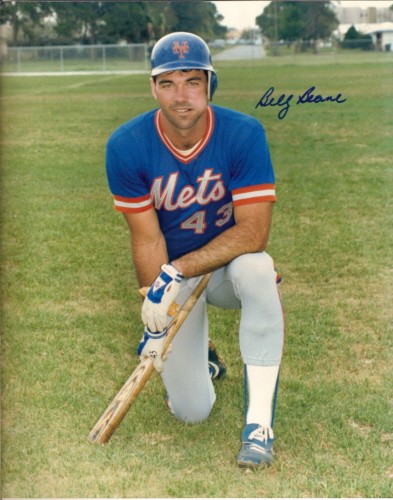
To the avid baseball fan, it would seem Billy Beane has ceased being an elite GM, the architect of Moneyball who could outsmart his peers, mostly because his interests are too broad. Among other things, he’s involved professionally with major-league soccer, computer software and finance. Beane’s restless mind stems in part from being a working-class kid who grudgingly passed on a Stanford scholarship he dearly wanted to accept in order to pocket a signing bonus from the Mets. Simon Kuper of the Financial Times was on hand recently when Beane caught up with author Michael Lewis, the two forever linked by baseball statistics, market inefficiencies and Brad Pitt. An excerpt:
“And so Moneyball became in large part the drama of Billy Beane: the autodidact who gave himself an education. When Beane was 18 years old, Stanford University had offered him a football and baseball scholarship. He and his parents – bright people without much money who had married young and joined the military middle class – were ecstatic. A good college was everything they wanted. But then the New York Mets offered Beane $125,000 to play baseball instead, and he felt he ought to do it. The movie shows the teenager, around the kitchen table with his parents in the simple family home, making the fateful decision. The filmmakers catch the scene well, but, as Beane says, ‘I’m not sure they could capture the complete horror.’
‘Listen,’ he adds, ‘I’m trying not to talk about myself here. I don’t look at life as a bunch of hindsight reviews of your decisions. But that’s exactly what I wanted to do, to attend Stanford University.’
Billy Beane was 18 when Stanford University offered him a football and baseball scholarship, but he went to play or the New York Mets instead
Beane’s life since – his compulsive reading, his discovery of the Moneyball system, his later discovery of soccer – is a long attempt to give himself the university education he never had. Just as Sergey Brin and Larry Page created Google partly because they went to Stanford, Beane created Moneyball partly because he didn’t.”
Tags: Billy Beane, Michael Lewis, Simon Kuper

"Miss Gilbert entered the court room carrying a pumpkin pie."
Ella Gilbert was a good girlfriend if not a particularly bright person. An excerpt from a story about her in the November 22, 1886 edition of the Brooklyn Daily Eagle:
“Early Sunday morning Officer Masters saw two men and a woman lounging on Dean Street and told them to go away. One of the men did so, but the other, Andrew Brogan and the woman Ella Gilbert, of 82 Schenck Street, refused to move and were arrested. On the way to the station house, Ella, who is young and active, managed to escape. Today Brogan was sent to the Penitentiary for sixty days, and soon after he had been put back in the pen, Miss Gilbert entered the court room carrying a pumpkin pie which she told Officer Waldron was for Andy. Policeman Masters saw her and promptly placed her under arrest again. She pleaded not guilty and was committed until Wednesday.”
Tags: Andrew Brogan, Ella Gilbert, Officer Masters, Officer Waldron
The Carpenters before they were fully the Carpenters, in 1968. Lousy video quality, but still worth it.
See also:
Tags: Karen Carpenter, Richard Carpenter
From Natasha Singer’s smart and scary New York Times article about advances in face-recognition technology:
“FACIAL recognition technology is a staple of sci-fi thrillers like Minority Report.
But of bars in Chicago?
SceneTap, a new app for smart phones, uses cameras with facial detection software to scout bar scenes. Without identifying specific bar patrons, it posts information like the average age of a crowd and the ratio of men to women, helping bar-hoppers decide where to go. More than 50 bars in Chicago participate.
As SceneTap suggests, techniques like facial detection, which perceives human faces but does not identify specific individuals, and facial recognition, which does identify individuals, are poised to become the next big thing for personalized marketing and smart phones. That is great news for companies that want to tailor services to customers, and not so great news for people who cherish their privacy. The spread of such technology — essentially, the democratization of surveillance — may herald the end of anonymity.”
Tags: Natasha Singer

"Once I was able to fully understand the size of the universe..." (Image by T bone.)
Alien Invaders (Manhattan)
I used to think that there was no other life in the universe. I said look at mars, look at the moon- no life. Clearly. This is probably what most people think who agree there is no other life out there. Once I was able to fully understand the size of the universe and the possibilities and the increasing entropy, I am convinced that there must be some other life somewhere in the universe. Then why haven’t they came to earth to invade us? They might not have the idea of “invasion” or even of leaving their planet. They might not think as we do. They don’t live on our planet, they do not live on our time, and may not have the same ideas like in different languages some ideas do not exist and there are no words to express them. We worry about alien invasion and attack and war because these are our ideas that we believe in on this planet.
A 1979 TV commercial for Star magazine’s coverage of Patty Hearst’s wedding.
Tags: Patty Hearst

In his smart Awl article which explains why the utterly gross McRib sandwich likely only makes occasional appearances on the McDonald’s menu, Willy Staley also recalls why the sandwich originally came to be. An excerpt:
“The McRib was, at least in part, born out of the brute force that McDonald’s is capable of exerting on commodities markets. According to this history of the sandwich, Chef Arend created the McRib because McDonald’s simply could not find enough chickens to turn into the McNuggets for which their franchises were clamoring. Chef Arend invented something so popular that his employer could not even find the raw materials to produce it, because it was so popular. ‘There wasn’t a system to supply enough chicken,’ he told Maxim. Well, Chef Arend had recently been to the Carolinas, and was so inspired by the pulled pork barbecue in the Low Country that he decided to create a pork sandwich for McDonald’s to placate the frustrated franchisees.” (Thanks Longform.)
••••••••••
McNugget rage surveillance video, 2010:
Ray Kroc explains why the chain is called “McDonald’s”:
Tags: Rene Arend, Willy Staley
I’ve never played the video game Tetris even once in my life, but this new doc looks interesting. (Thanks Ars Technica.)
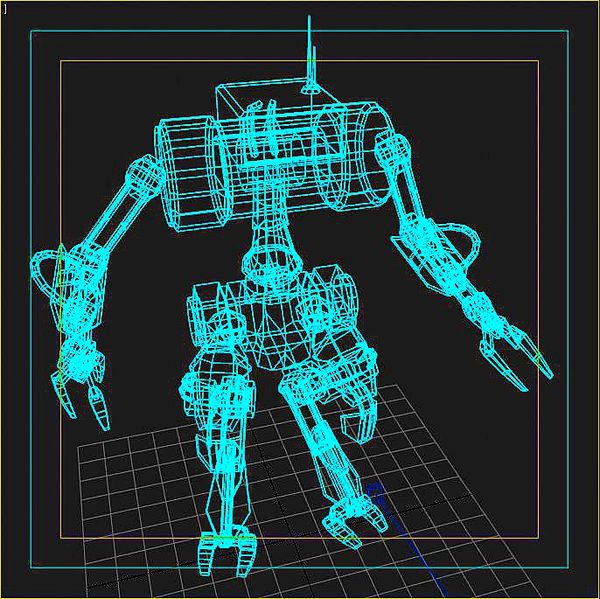
It’s easy to get robots to walk, but difficult to get them to walk like humans. An excerpt from Physorg.com:
“AIST researchers, like other scientific groups dedicated to robotics, have been working hard to create the ‘perfect’ walking robot and to design walking technologies that can make their robots most closely resemble the way humans walk.
This has not been easy. Developing a robot to walk like a human has been a challenge for engineers, but that has only motivated more work toward this end in robotics.
The AIST researchers focused on a few key areas of the robot to improve results. The robot’s toes now support the legs better during each stride, and the legs straighten out more.
Details about how they got ‘Miim’ to walk in a more human fashion than in previous iterations are in the paper, ‘Human-Like Walking with Toe Supporting for Humanoids,’ by Kanako Miura, Mitsuharu Morisawa, Fumio Kanehiro, Shuuji Kajita, Kenji Kaneko, and Kazuhito Yokoi.”
William F. Buckley and the In Cold Blood author on capital punishment, in 1968.
Trailer for Into the Abyss, Werner Herzog’s new film about capital punishment:
Some search-engine keyphrases bringing traffic to Afflictor this week:
Afflictor: Thinking it's nice that Newt Gingrich's ex-wives get along so well.
- Old Print Articles: Men are growing taller (1890) + Monkey is terrible at shaving (1887) + Cow produces beer instead of milk (1892).
- Classic Photographs: Houdini, at Hippodrome, debunks spirtualists. (1925)
- Featured Videos: David Bowie and Marianne Faithfull sing Sonny & Cher (1973) + New exoskeleton suit for Japanese nuclear workers + Devo sells Honda Scooters (1984) + Smokin’ Joe Frazier in his heyday + Eerie robot likeness of Marlin Perkins + The miracle of call waiting (1977) + Fred Astaire dances for Dick Cavett (1970) + The World’s Fair goes bankrupt (1984) + Promotional trailer for release of Frost-Nixon videocassettes + 3-D short by Pixar founder Ed Catmull (1973) + Idiotic hi-tech dress + Asimo robot serves a beer + Make your clothing superhydrophobic.
- Recently Posted on Craigslist: Well, maybe not 100% legal + There aren’t quite enough people on Earth for me to hate + Why would someone throw away perfectly good cat food? + Proving he’s still a regular guy, Herman Cain takes the subway + I am a licensed psychologist in Nevada.
- My 5 favorite non-fiction articles so far this year.
- For some reason, I was thinking about Abbott & Costello the other day.
- Henry Hitchings wonders what is the lingua franca of the future.
- Frederick Seidl wonder if motorcycles are all but dead culturally.
- Bret Victor offers a philippic about the tyranny of touchscreens.
- Laurie Winer provides an inside look at the demise of the L.A. Times.
- Cop cars become part of a central swarm brain.
- Futurist Scott Smith argues that large-scale DIY warfare is upon us.
- Hunter S. Thompson fondly recalled J. Edgar Hoover in 1974.
- The emergence of Telexistence.
- What access to telephones was like just 16 years ago.
- Listen to Harry Houdini speak.
- Steve Jobs even fussed over what washing machine he would buy.
- Michael Lewis profiles psychologist Daniel Kahneman.
- Alex Pappademas profiles young rap producer Lex Luger.
- Elizabeth Dwoskin examines why Americans won’t do dirty work.
- Charles Babbage’s 1830s computer finally being built.
- This week’s Afflictor keyphrase searches.

"His reflection in the glass at first caused him considerable uneasiness." (Image by Chris huh.)
Unfortunately, the August 7, 1887 edition of the Brooklyn Daily Eagle featured just one article about a monkey in the back of a saloon attempting to shave. Here it is:
“Max Beyer’s hostelry, on Fulton Street, has an attraction in the shape of an intelligent monkey. Yesterday, the animal, when on a shed in the rear of a saloon, found a piece of looking glass. His reflection in the glass at first caused him considerable uneasiness until he evolved an idea. He had seen Adolph Beyer shave himself frequently, and he put in practice what he had seen. The monkey got an old knife and, with the most comical grimace commenced to scratch away at his chin until it was so sore that he desisted in disgust. Darwin never had a better supporter of his theory.”

"It was an amazing little adventure." (Image by Gage Skidmore.)
A Woman In Pantyhose Last Evening
I was on the subway last evening with my gf and spotted a pretty, dark hair business woman in black pantyhose, knee length skirt, and 3 inch black pumps. She was talking with some associates who left her alone after their train came. I watched her for a bit while she talked to those associates, and I noticed she kept trying to pull her foot out of her heel. Her pantyhose foot would halfway slide out, and then back in. When she became alone, she headed for the staircase and sat down, and promptly removed more of her foot from her heel. I was mesmerized. I could not look away, even though my gf stood right next to me, talking. So our train came, and she gets on right next to us. She is standing, and immediately her right high heeled shoe is off, and her pantyhose foot was right there for me to see. I was in a panic literally. I wanted to look and did to a degree, but again my gf was right there. I managed to notice her painted red toenails under her hose, and her reinforced toe. She got out at the next stop. I was standing right by the door, and when she left i whispered to her that she had beautiful pantyhose feet. I do not think she heard me because I had to speak softly. It was an amazing little adventure.
Tags: Herman Cain
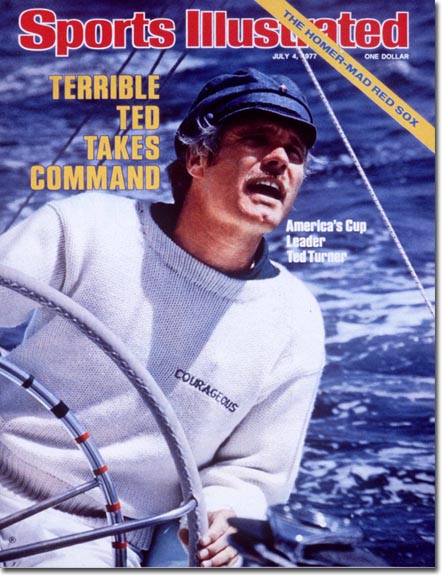
From a 1978 Playboy Interview with Ted Turner, who was always batshit crazy, probably a necessary personality type if you aspire to turn a billboard advertising business into a billion-dollar cable TV company:
“PLAYBOY: It wasn’t long before you took over the company, right?
TURNER: That’s right. My father committed suicide when I was 24 years old. Blew his brains out. I think he made the mistake of limiting his horizons. When he was a boy in Mississippi, he had told his mother that someday he would make $1,000,000. And when he did that, he had nowhere to go from there. When he killed himself, he was extended for about $5,000,000 or $6,000,000 and had assets of only about $2,000,000. But the situation was not hopeless.
PLAYBOY: How did you handle it?
TURNER: Well, just before he shot himself, he had actually sold the company. But I wanted to keep it. So I had to return the down payment, plus a penalty to the guys who had bought it, to annul the deal. Everybody said I was crazy. I could have taken that money and started something else. Those were very bad times in outdoor advertising. Television was killing billboards.
PLAYBOY: How did you survive?
TURNER: By hustling. We doubled our profits at a time when the industry went down 16 percent. But it’s fun, too, getting up at five in the morning to get out and install a new sign before the traffic gets started. And painting billboards, you’re Michelangelo in the Sistine Chapel, except that you don’t have to work lying on your back. One night, the guys were doing this 50-foot billboard with the Coppertone girl stretched out across it, you know. So they just left off the bikini. Painted on tits and a nice bush at the right spot, see. But we made them dress her before it went out of the warehouse. After about four years in the business, I could have retired.
PLAYBOY: Why didn’t you?
TURNER: I heard about a television station for sale. It was Channel 17, a U.H.F. independent in Atlanta. When I bought that, everybody just hooted at me. The station was really at death’s door–we lost about $2,000,000 in the first two years. I didn’t bullshit anybody: I told them I didn’t know anything about TV. But now we’re socko. We’ve got all the reruns, all the sports in Atlanta and people love us. Our movie inventory includes about half of the 6000 or 7000 movies ever made. We even have news: It comes on at four in the morning. Our news director gets pies thrown in his face a lot.”
••••••••••
Turner interviews Carl Sagan, 1989:
Tags: Ted Turner
Made by Honda. (Thanks Techcrunch.)
Sneakers are now impervious to chocolate syrup.
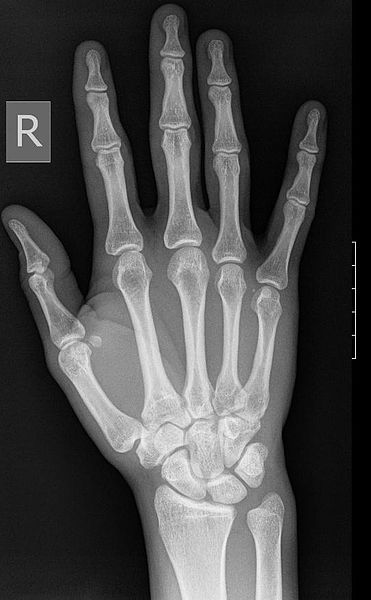
From “A Brief Rant On the Future of Interaction Design,” a really smart illustrated essay by Bret Victor about, among other things, the limitations of the touchscreen:
“I believe that hands are our future.
So then. What is the Future Of Interaction?
The most important thing to realize about the future is that it’s a choice. People choose which visions to pursue, people choose which research gets funded, people choose how they will spend their careers.
Despite how it appears to the culture at large, technology doesn’t just happen. It doesn’t emerge spontaneously, like mold on cheese. Revolutionary technology comes out of long research, and research is performed and funded by inspired people
And this is my plea — be inspired by the untapped potential of human capabilities. Don’t just extrapolate yesterday’s technology and then cram people into it.,,Our hands feel things, and our hands manipulate things. Why aim for anything less than a dynamic medium that we can see, feel, and manipulate?” (Thanks Browser.)
••••••••••
Monkey with touchscreen playing Angry Birds:
Tags: Bret Victor
Devo for Honda Scooters, 1984.
Tags: Devo
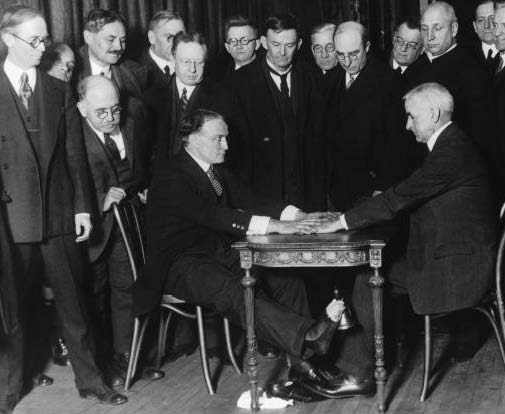
This classic photo shows Harry Houdini, in the year before he died, revealing tricks used by opportunistic spiritualists to an assemblage of New York clergyman. (Notice beneath the table that the illusionist rings a bell with his toes.) The meeting took place at the Hippodrome, which seven years earlier was the site of Houdini’s famous vanishing elephant trick. What the photo doesn’t show is the magician’s young assistant, Dorothy Young, 17, who he hired that year to help with his stage act. Young lived to 103, passing away earlier this year. From her New York Times obituary:
“Born on May 3, 1907, in Otisville, N.Y., Dorothy Young was the daughter of a Methodist minister, Robert Young, and Lena Caldwell Young, a church organist. It took some convincing for her parents to allow Dorothy to sign a contract with Houdini after she won an audition in Manhattan in early 1925. She was 17.
Though she was with the Houdini tour for only a little more than a year, Miss Young gained notice. Soon after, her dancing skills were paired with those of Gilbert Kiamie, the son of a silk lingerie magnate. As Dorothy and Gilbert, they toured the country and became known for their own Latin dance, the ‘rumbalero.’ She also danced in several movies, among them the Fred Astaire musical comedy Flying Down to Rio (1933).
Miss Young’s first marriage, to Robert Perkins, ended in divorce. She married Mr. Kiamie in 1945; he died in 1992. Besides her granddaughter, she is survived by a son, Robert Jr., two other grandchildren and nine great-grandchildren. Though she took her husbands’ names in marriage, she preferred to be known professionally as Dorothy Young.
In 2003, with a considerable inheritance from Mr. Kiamie, Miss Young was able to donate more than $10 million to the creation of the Dorothy Young Center for the Arts at Drew University in Madison, N.J.
In her later years, Miss Young sometimes attended ‘séances’ organized by magicians and Houdini aficionados to celebrate and, perhaps, hear from the master. In November 2006, at a gathering in Manhattan, she sat in one of the 12 occupied chairs on the stage. The 13th chair remained empty.
Miss Young had talked with Houdini about returning from the dead, she said, while he was alive. He told me, ‘It’s humanly impossible, but I’ll be there in spirit.'”
Tags: Dorothy Young, Harry Houdini

Can anyone help me??? (Anywhere)
Does anyone know the name of the movie where people died or exploded because they drank the water? I think there was a court scene where the judge drink the water and exploded or die and in the town scare people drank the water and they started to die or explode. And then at the end the two main characters jump out a window to theres deaths because there was no way to escape.
can someone help me please!!!